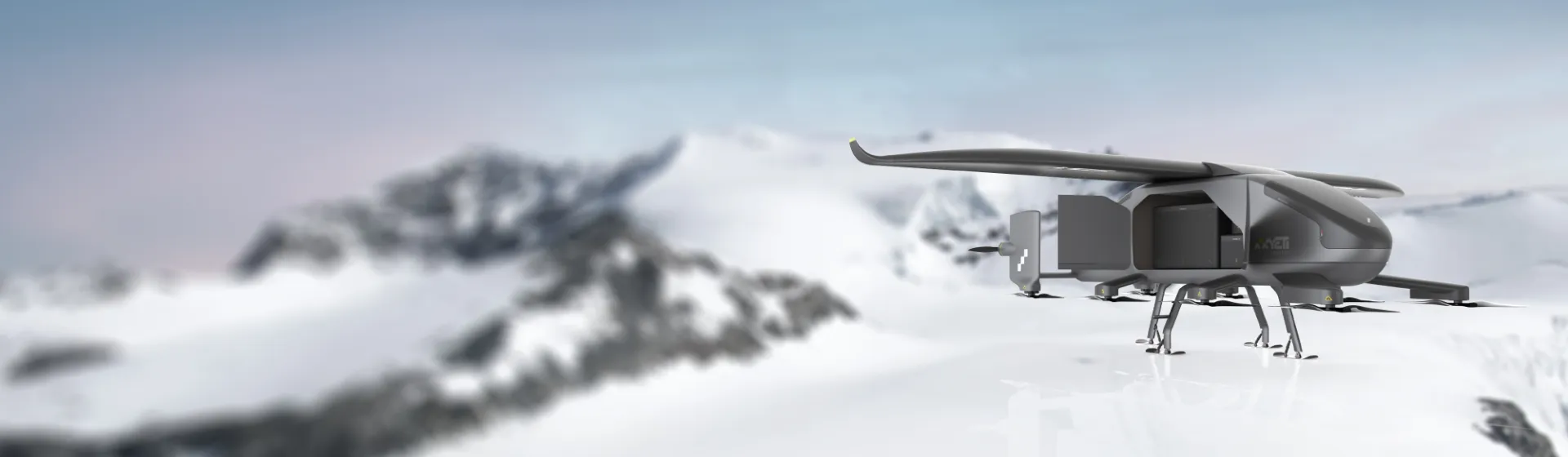
The Technology Development Board announced on 14 October that it has signed a ₹151 crore debt-financing agreement with ideaForge Technology for YETI, a heavy-lift autonomous cargo aircraft. The government puts the total development cost at ₹302 crore, with the programme intended to advance the aircraft towards deployment.
The company's exchange filing dates the agreement to 9 October. It says the formal term sheet arrived on 7 October and was countersigned and delivered the next day. At the time of that filing, the loan had not been disbursed. The announcement therefore establishes a financing agreement, rather than confirming that the entire amount is already in the company's bank account.
From initial approval to a signed loan
That is a change from the earlier approval stage. In its 31 July disclosure, ideaForge reported a letter of intent dated 27 July. That document expressly described the support as in-principle and said it would not become a final binding commitment or sanction until definitive agreements were executed after due diligence and the prescribed conditions were met.
The July offer specified simple interest of 4% a year and a three-year tenure or project-completion period from first disbursement. Release in instalments depended on equivalent funding from non-government sources and corresponding milestones. These were the terms disclosed at the letter-of-intent stage.
The agreed public loan accounts for half of the stated project cost. Under the earlier matching-funds condition, ideaForge would have to arrange the balance from non-government sources. That financing requirement sits alongside the engineering work, so signing the agreement does not remove the company’s responsibility to fund the rest of the programme.
The October filing confirms matching-funding obligations, intellectual-property retention terms and standard lending covenants. It also refers to promoter share-transfer restrictions above 20%, without explaining how that threshold applies. Proposed security is a first-ranking charge over identified project assets, plant, machinery and equipment created or acquired using the facility. The detailed intellectual-property provisions are not included in the filing.
The company says the agreement grants no special director-appointment or capital-structure rights and is not a related-party transaction. Its October summary does not restate the interest rate or a repayment calendar, so the July terms should not be presented as a complete account of the signed contract.
Payload and range must be read together
The new government release describes a fixed-wing aircraft that can take off and land vertically. It sets a payload target of up to 200 kg and a range target of up to 200 km. Those maximum figures do not establish that the aircraft will carry its heaviest load over its longest route.
Chief executive Ankit Mehta explained that relationship in the 11 August earnings call: a 200 kg load could limit range to around 50 km, while reducing the load to 50 kg could extend it to 200 km. The distinction matters for remote supply missions, because the weight to be transported determines which destinations fit the planned operating envelope.
The same call reported a tethered hover test of YETI's first technical demonstrator with all subsystems integrated, while a second demonstrator was being designed. These are dated development updates. They do not establish that the full payload, range and high-altitude targets have already been demonstrated together, or that commercial cargo operations have begun.
On its YETI product page, ideaForge describes proposed industrial uses including moving construction materials to inaccessible sites and carrying cargo for offshore platforms, mines and remote infrastructure projects. It also invites organisations into a co-innovation programme for tailored applications. These descriptions set out the markets the company is pursuing; they do not identify signed customer orders or a delivery timetable.
The ministry also specifies a targeted operating altitude of 6,500 metres above sea level.
TDB says the funded work includes engineering, integration, testing and validation, with progress subject to technical, safety and regulatory requirements. It does not announce a launch date.
Dalimss News has separately reported on the RDI Fund's first group of financing managers and GalaxEye's satellite-development support. Those are separate approvals; this agreement finances ideaForge's YETI programme.