Luminous has opened an EDGE GO portable power station offer for Indian buyers from 13 October to 8 November 2026. Its official terms say the series has reduced prices and explicitly rule out further price cuts, coupons or discounts during the promotion.
The official e-shop currently lists seven models. All prices below include taxes, price as of 14 October 2026, 07:33 IST. The listings show an Add to Cart option and ask for a delivery postcode. That establishes a listed buying option, rather than confirmed stock or delivery for every address.
Compare storage and output
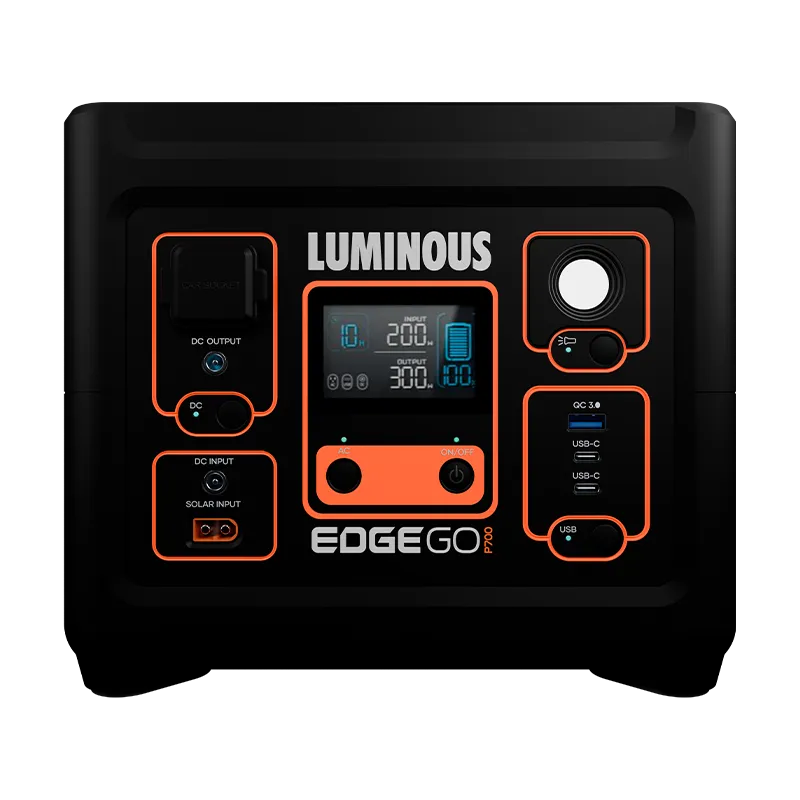
The P700 is listed at Rs 18,899 with 288Wh of storage, 500W output and a stated weight of 5.1kg. Luminous specifies a built-in LiFePO4 (lithium iron phosphate) battery, five output ports and charging through an AC socket, a car connection or a compatible solar panel. Its page lists a five-year warranty.
The P1000 costs Rs 30,399 and the P1200 Rs 54,999. Both are rated at 800W, but battery capacity rises from 576Wh to 864Wh. The higher-priced model therefore adds stored energy without increasing the stated output rating. Weight also rises, from 9.2kg to 10.8kg. Buyers should read the watt rating separately from the model name when matching equipment to either unit.
The E1050 and E1150 make a similar distinction. They cost Rs 24,999 and Rs 35,999 respectively, with 256Wh and 512Wh batteries. Luminous rates both at 600W, with 1,200W peak power. Spending the extra Rs 11,000 doubles the listed battery capacity; it does not double rated output. The peak figure should not be substituted for the lower rated figure when comparing products.
Both E-series pages specify an AC socket, USB-C, two USB-A connections and a cigarette-lighter output, plus AC and solar charging support. Their stated weights are 3.7kg and 5.6kg, and both list a digital display. Luminous advertises a five-year replacement warranty for these two models. These are manufacturer specifications, not results from a Dalimss News runtime or charging test.
Neither E-series listing gives a port-by-port USB-C wattage table. A 600W power-station rating should therefore not be read as a promise of that output from its USB-C connector. Buyers planning to run a laptop directly over USB-C need the separate port specification before deciding whether an adapter can be left behind.
Audio models add equipment and weight
The EDGE GO 1100, priced at Rs 56,599, combines a 500W power station and 470.4Wh battery with a built-in 90W speaker. Its listing includes one wireless microphone, Bluetooth connectivity and a guitar connection. At a stated 11.8kg, it is a different carrying proposition from a small phone power bank. The product description also lists an emergency light and support for AC, solar and vehicle charging.
The 1500 costs Rs 67,999 and increases the stated power rating to 1,200W and capacity to 1,120Wh. It has a 90W audio system, two wireless microphones and eight output ports. Luminous lists a weight of 15.2kg and a five-year warranty. A buyer comparing these audio-equipped versions is paying for a combined power and entertainment product, so the speaker and microphone package belongs in the comparison alongside battery size.
This is a new offer on an existing range. Luminous was already promoting EDGE portable power stations in its 14 July campaign announcement, which presented the audio-equipped product for outdoor use and entertainment. The October terms establish the current promotional window; they do not establish a new hardware launch.
The offer is open to Indian citizens, with exclusions for Luminous employees, associated businesses and people professionally connected with the promotion, including specified family members. Luminous can verify purchase details and reject incorrect or late orders. Its terms also allow changes without prior notice. The stated e-shop prices should therefore be checked again against the exact model before payment.
For the measurement questions behind a purchase, our battery-capacity explainer discusses why a capacity label alone cannot establish runtime. Our charging compatibility guide explains why a shared connector does not guarantee the same charging speed.