
GalaxEye gets Rs 63.84 crore to build all-weather OptoSAR satellite
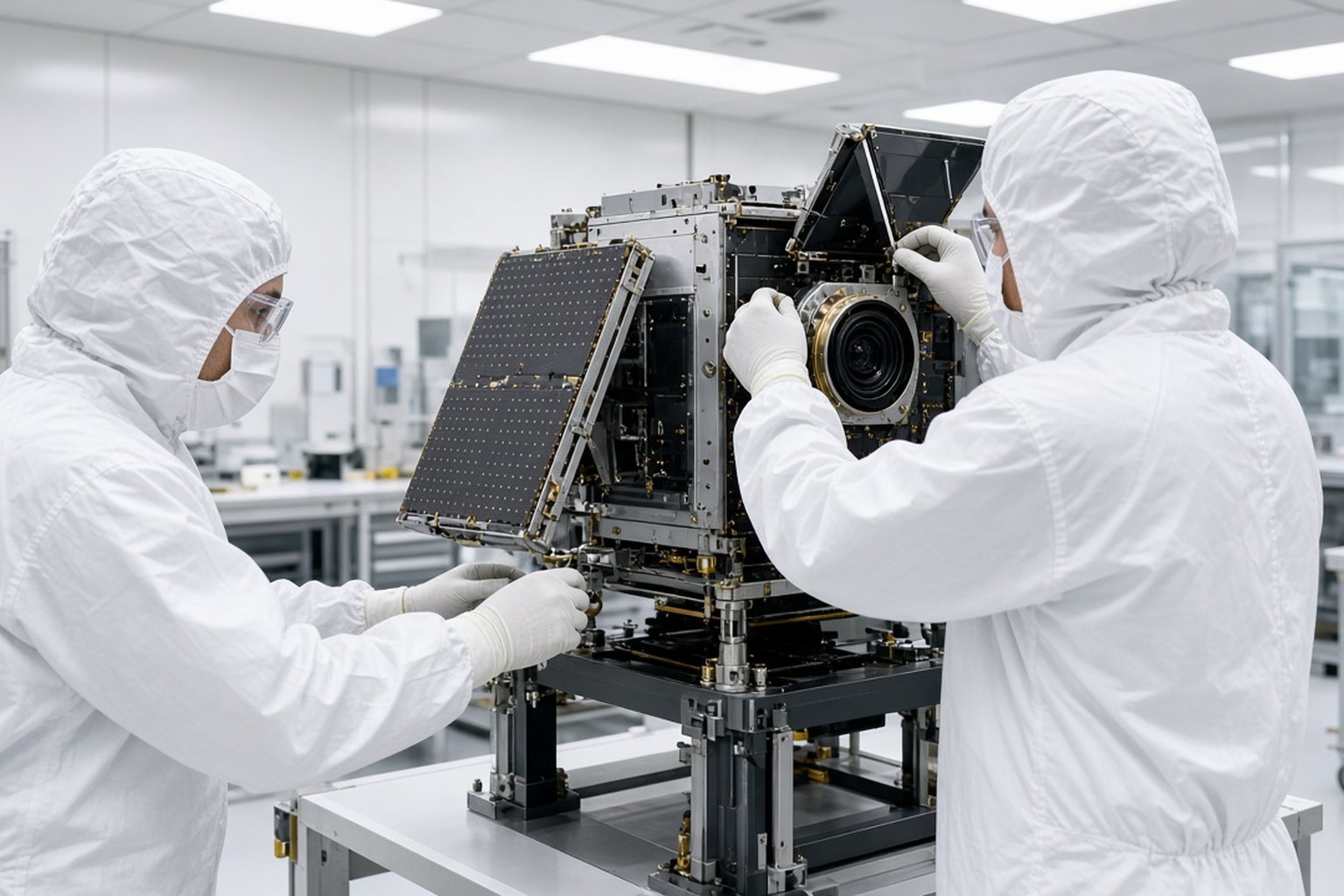
Monsoon clouds are a nuisance for anyone trying to photograph India from space. Bengaluru's GalaxEye wants to see through them, and the government has now put money behind the attempt.
The Technology Development Board (TDB), part of the Department of Science and Technology, has signed an agreement to provide Rs 63.84 crore to GalaxEye Space Solutions under the Research Development and Innovation (RDI) Fund, according to a government statement issued on Thursday afternoon. The support, extended through optionally convertible debentures, is part of a project with a total approved cost of Rs 247.69 crore.
Radar and optics in one satellite
GalaxEye's approach, which it calls OptoSAR, combines two very different sensors. Electro-optical (EO) cameras give highly detailed pictures, but they struggle with clouds and need daylight. Synthetic aperture radar (SAR) works day or night and sees through cloud, but its images are harder to interpret. Fusing the two is meant to give a richer and more continuous picture of the ground.
The satellite being developed is designed for imaging finer than 0.5 metres. The government statement lists wide-area and long-range surveillance, detection of people and vehicles, and target classification among the intended applications, which places the project firmly in the strategic and defence-adjacent end of the market as well as the commercial one.
The RDI money is meant to carry the technology from Technology Readiness Level 6, a prototype demonstrated in a relevant environment, to TRL-9, a system proven in actual operation. That covers the expensive late stages: further engineering, testing and validation.
What the two sides said
Rajesh Kumar Pathak, Secretary, TDB, said India's space ecosystem is entering a phase where the ability to develop and deploy sophisticated technology at home will matter more. He called the RDI Fund a mechanism for supporting technology-heavy efforts "through the critical stages between advanced development and deployment", and said the GalaxEye agreement reflects TDB's focus on indigenous capability in emerging space technologies.
GalaxEye's promoters said the support would help speed up development and validation of OptoSAR, and that combining SAR with optical sensing would deliver high-resolution information across more weather and lighting conditions. They described the deal as important for reaching TRL-9 and eventual deployment.
A busy week for the RDI Fund
The GalaxEye agreement came a day before TDB announced a separate Rs 200 crore RDI deal with Chennai's Agnikul Cosmos for a reusable launch vehicle. Together, the two show how the new fund is being used: large, late-stage bets on deep-tech startups, structured so that the government takes on risk that private investors often avoid.
The government statement does not say how the Rs 63.84 crore will be disbursed over time, or when GalaxEye expects to fly the OptoSAR satellite. How the rest of the Rs 247.69 crore project will be funded has not been published either.
GalaxEye, incubated at IIT Madras, has spent the past few years building towards a multi-sensor earth observation constellation. For Indian users of satellite data, from farm insurers to disaster agencies, an imaging source that is not blinded by the monsoon would fill a real gap. The next test will be getting the satellite built and into orbit.
Sources and reporting
Department of Science and Technology statement released through PIB on 24 September 2026 (Release ID 2314385) on the Technology Development Board's RDI Fund agreement with GalaxEye Space Solutions Private Limited, Bengaluru.
Related Stories

Devialet brings Phantom Ultimate Pulse Blue to India at Rs 2.4 lakh

Google Vids now lets anyone make free HD AI videos with Omni 1.1
Qualcomm renews global patent licence with Apple from April 2027

Akamai signs $11.6 billion cloud deal with Anthropic
Google to launch first TPU satellite test under Project Suncatcher