Hyundai Motor Group has committed USD 15.5 billion to India from 2026 through 2032, covering factories, R&D, suppliers and future mobility. The group announced the programme on 13 October after Executive Chair Euisun Chung met Prime Minister Narendra Modi in New Delhi.
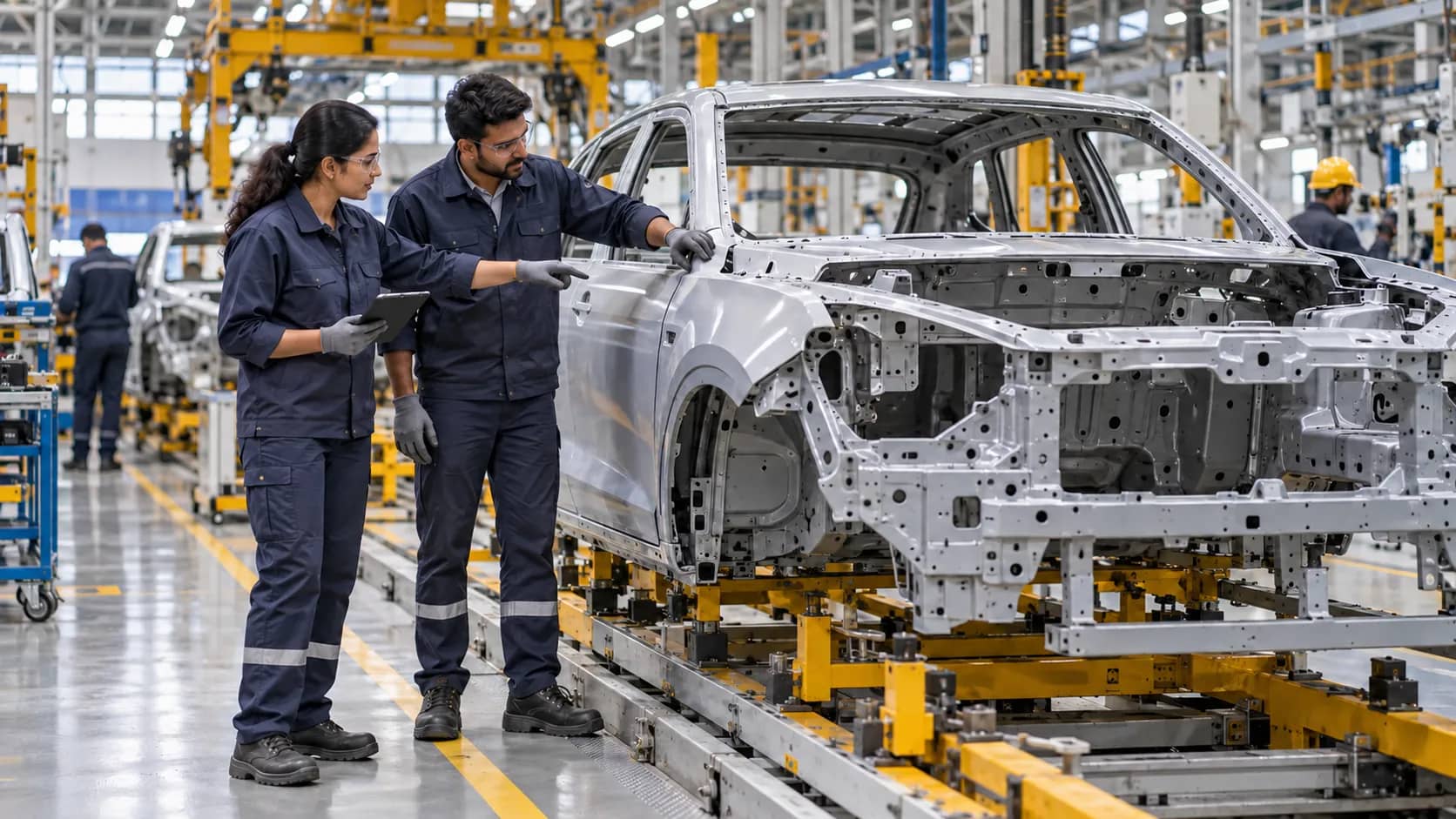
The official announcement includes about USD 700 million for its Indian R&D centre and vehicle testing track. A dedicated Indian investment entity will coordinate spending and partnerships. Manufacturing expansion covers Hyundai Motor India Limited, or HMIL, and Kia India.
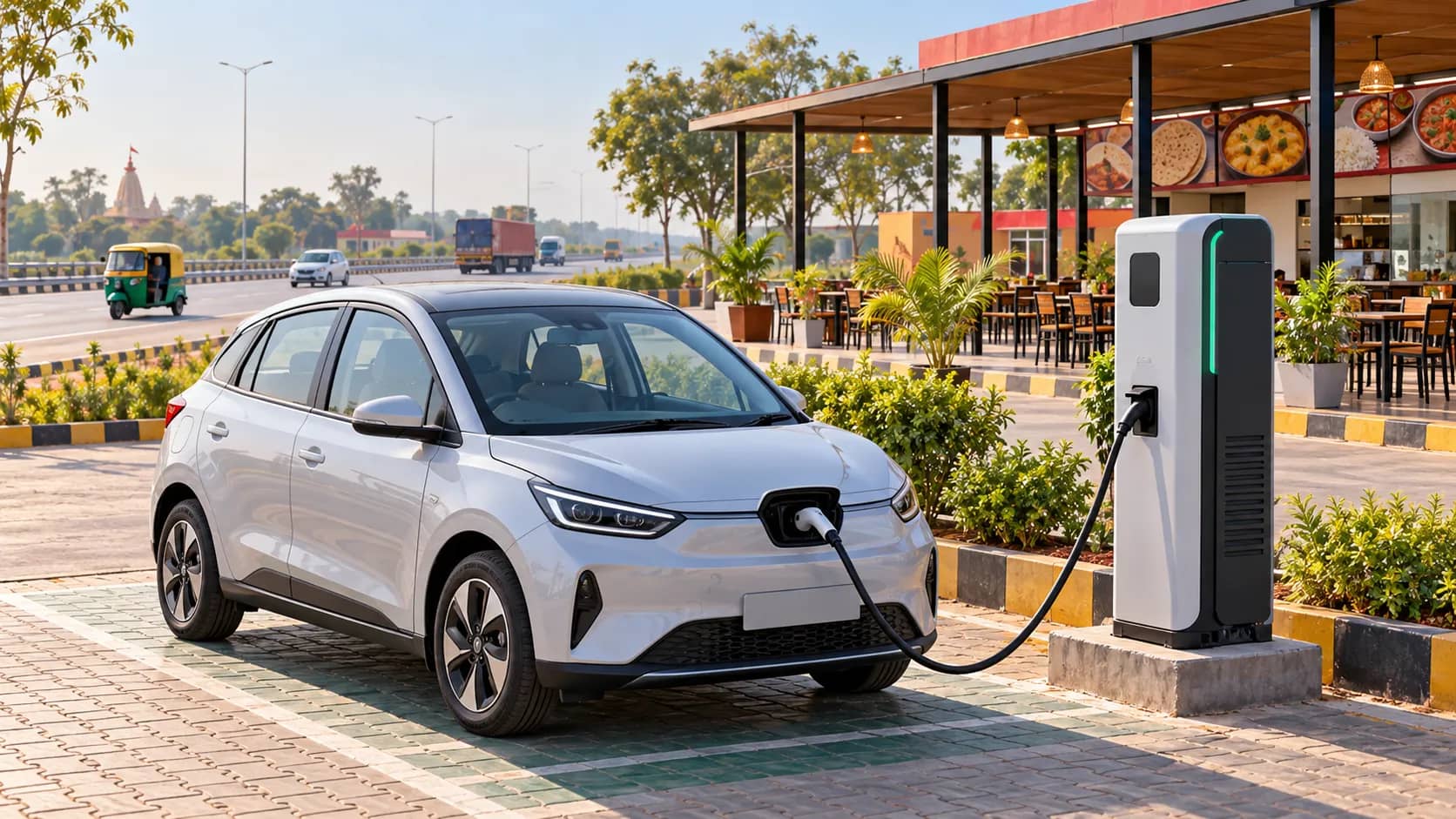
Electric-vehicle charging, vehicle recycling and specialised automotive financing are businesses the group will explore. Those possibilities are distinct from the overall investment commitment. The release gives no individual charging-project budget or opening schedule.
A programme across group companies
The group reports annual production capacity above 1.4 million vehicles: 824,000 in Chennai, 170,000 at HMIL’s Pune facility and 431,000 at Kia’s Anantapur plant. Pune is to expand in phases. These are factory-capacity figures, rather than vehicles already sold or promised to Indian buyers.
The investment follows a product and localisation strategy that Hyundai Motor Company had already set out at its 26 August investor day. That earlier roadmap included 26 vehicle launches or refreshes in India by 2030. The wording covers updates as well as new vehicles, so it should not be read as 26 additional nameplates.
Hyundai Motor Company also set a target of sourcing 90% of vehicle content locally by 2030, describing a network of more than 1,400 local suppliers and over 900 local engineers. It aimed to export around 30% of Indian production by 2030, serving markets including the Middle East, Africa, Asia and South America.
The August roadmap also included 320,000 units of additional Indian manufacturing capacity by 2030. It put India alongside North America, Korea and completely knocked-down assembly operations in the company’s global expansion programme. On products, the company had identified an India-focused electric SUV for the fourth quarter of 2026, with local design, a new infotainment system and Level 2 driver assistance. That was a forward product plan, not a price or booking announcement.
Charging access and repair support have separate targets
For EV users, HMIL’s 9 September infrastructure update provides a more concrete baseline. At that time, the company said it operated 185 DC fast-charging stations in 105 cities, with charger outputs ranging from 60 kW to 240 kW. Its stated target was 600 company-owned stations by 2030.
The same update described access to more than 38,000 charging points through the myHyundai app and its charge-point-operator partnerships. That app-access total is different from HMIL’s own station count. The company said the app supported charger discovery, navigation, advance booking and digital payments, and was open to EV users across vehicle brands.
An earlier agreement announced on 25 August shows how that shared access works. It integrated more than 7,000 Jio-bp pulse charging points across over 300 cities with myHyundai. In the reverse direction, HMIL-owned chargers were to become available gradually through the Jio-bp pulse charge pro app. Integration expands where a driver can find charging through an app; it does not mean Hyundai owns each listed charger.
Jio-bp’s chargers in that agreement were rated between 60 kW and 480 kW. Those ratings describe charger capability; they do not mean every vehicle can accept 480 kW. The announcement tied attainable speed to vehicle hardware.
Repair readiness is another part of the ownership picture. In September, HMIL reported more than 2,600 trained dealership service personnel and planned training for another 5,000 by the end of financial year 2026-27. Training covered high-voltage safety, diagnostics, battery handling and repair procedures. It also targeted 820 EV-ready sales touchpoints and 650 workshops by that financial year’s end.
HMIL said it had delivered roughly 16,000 person-days of EV service training and invested about Rs 2 crore in EV-ready training centres.
Dalimss News has separately reported HMIL’s September sales and Bayon bookings. Its coverage of the Tata PV and Stellantis vehicle-technology agreement examines another effort to use Indian engineering and manufacturing for overseas markets.