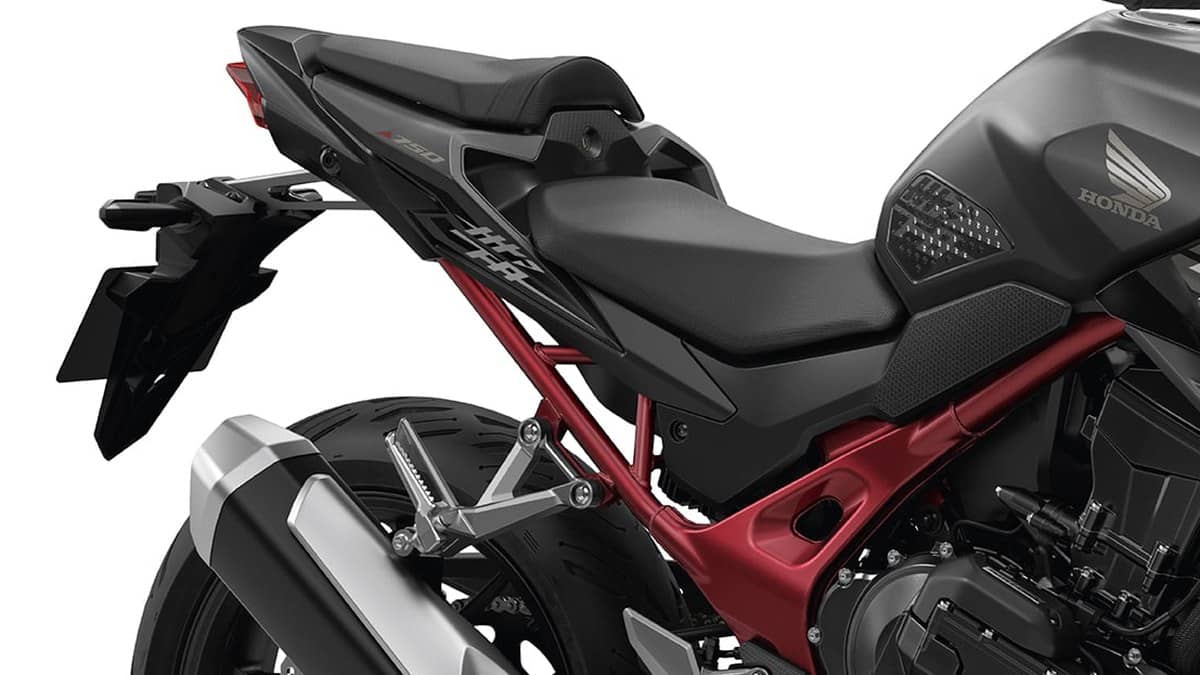
NEW DELHI: The Honda CB750 Hornet E-Clutch keeps a six-speed manual gearbox while electronically handling clutch operation. The rider still selects gears with the foot pedal. Honda's current India brochure pairs that system with a 755 cc parallel-twin engine, so understanding the controls is more useful than treating the E-Clutch badge as shorthand for automatic gear selection.
| Item | Official specification or operation |
|---|---|
| Engine | 755 cc parallel twin |
| Transmission | Six gears, rider-operated shift pedal |
| Power | 67.5 kW at 9,500 rpm |
| Torque | 75 Nm at 7,250 rpm |
| Seat height | 795 mm |
| Kerb weight | 196 kg in India brochure |
What happens to the clutch lever
Honda's technical explanation says E-Clutch can manage clutch engagement for pulling away, shifting and stopping. A conventional clutch lever remains available, and using it allows manual intervention. The system can also be switched off, returning clutch operation to the rider.
For someone using a large motorcycle in Indian traffic, that changes the division of work between hand and foot. The rider can hand repeated clutch engagement to the electronics, while continuing to choose the appropriate gear. It is a reduction in one recurring task, rather than removal of the decisions involved in riding a manual motorcycle.
The distinction also matters when describing the motorcycle to another rider. Saying that it changes gear automatically would create the wrong expectation. E-Clutch describes control of the clutch, whereas gear choice remains an action the rider performs. Honda makes that qualification explicit in its explanation of the technology.
How this differs from DCT and a quickshifter
Honda distinguishes E-Clutch from its Dual Clutch Transmission, or DCT, which can change gears automatically. With E-Clutch, a shift pedal remains central to operation. The company's engineering page also explains that the system can control partial clutch engagement, extending its role beyond the gear-change assistance associated with a quickshifter.
That gives the Hornet a particular place among premium roadsters. A rider who enjoys choosing gears can retain that involvement while reducing repeated lever use. Whether the result feels natural is something a demonstration can establish; the presence of electronics alone cannot establish how comfortable any individual rider will find the controls.
The engine still needs to be understood on its own terms
The Indian product page lists peak power and torque at different engine speeds. Those are separate points in the engine's output, not a promise that maximum performance is available at every throttle opening. The brochure identifies an eight-valve, liquid-cooled parallel twin and a steel diamond frame.
In practical terms, the electronic clutch does not make the Hornet's engine capacity, throttle response or physical size disappear. The machine still needs room to turn, suitable footing when stationary and deliberate gear selection. This is particularly relevant when moving from a smaller commuter motorcycle: a more convenient clutch arrangement addresses one part of the transition.
What the India brochure adds
Honda specifies a 15.2-litre fuel tank, Showa SFF-BP upside-down forks and a Pro-Link rear monoshock. The front brake arrangement uses twin 296 mm discs, with a 240 mm disc at the rear. These details describe the motorcycle around the clutch technology, which remains only one part of the complete package.
The brochure's weight and seat-height figures deserve to be read together. Seat height alone cannot establish whether a rider will be comfortable managing the bike in a sloping parking space. Equally, kerb weight alone says little about reach to the ground. Both are useful starting points for assessing the Hornet's physical fit.
The Indian page also describes a five-inch TFT with Honda RoadSync support for calls, music and navigation. The brochure identifies a four-way handlebar toggle for operating the display. That separates the connected cockpit from the drivetrain: phone functions and electronic clutch control are different systems with different purposes.
Which version the current page describes
The older Hornet 750 product address now redirects to Honda's CB750 Hornet E-Clutch page. This report therefore uses the current India brochure for the motorcycle's specifications. It makes no claim about a current retail price because the page's readable price field did not supply an amount during verification.
For related premium-bike coverage, read our Honda car prices: Amaze from Rs 6,97,700, City Rs 11,99,900, ZR-V Rs 49,99,900, Honda City price list: Rs 11,99,900 to Rs 20,99,900 and Honda New Elevate priced from Rs 11.80 lakh, CVT from Rs 13.79 lakh. Each concerns a specific model or system, so its details should not be transferred to the CB750 simply because the motorcycles share a premium showroom context.
For the Hornet specifically, keeping those categories separate makes the description clearer: the clutch system changes operation, the chassis determines physical fit, and the connected display provides information. None can stand in for assessing the others.
Official sources: Honda India product page and linked brochure, Honda E-Clutch engineering explanation and Honda's model-year technology announcement.