A penalty stroke in outdoor field hockey is a single attempt from a spot 6.4 metres in front of the goal, with the taker facing the defending player. The taker may push, flick or scoop the ball, but may play it only once and cannot chase a rebound. The defender must keep both feet on the goal line until the ball is played. A stroke is a different procedure from a penalty corner.
FIH’s official rules page says the 2026 outdoor rules remain in effect internationally until the 2027 edition takes effect on 1 November 2026. National associations can set their national implementation date. This guide, checked on 29 October 2026 at 9:52 pm IST, compares the central stroke provisions in both editions rather than treating the forthcoming edition as already in force.
| Question | Core rule |
|---|---|
| Where is it taken? | Penalty spot, 6.4 metres from the inner edge of the goal line |
| How many touches? | One touch by the taker |
| Allowed technique | Push, flick or scoop; no dragging action |
| Other players | Outside the 23 metre area, without influencing the stroke |
| Clock | Time and play stop when the stroke is awarded |
When is a penalty stroke awarded in hockey?
Rule 12.4 gives two grounds. The first is an offence by a defender inside the circle that prevents the probable scoring of a goal. The second is an intentional offence inside the circle against an opponent who has possession or an opportunity to play the ball. The award therefore depends on the circumstances of the infringement, rather than simply on contact occurring inside the circle.
For example, a defensive infringement that prevents a probable goal falls under the first ground even if intention is not the deciding element. The second ground specifically addresses an intentional offence against an opponent with possession or an opportunity to play the ball. These are explanations of the rule, not judgments on a particular match incident.
The governing text is available in the FIH 2026 outdoor rule book. Penalty corners have a separate award and execution procedure. Our penalty corner explainer covers that related situation.
How is a hockey penalty stroke taken?
Time and play stop on the award. Apart from the taker and the defender, players must remain outside the 23 metre area and must not influence the attempt. The ball is placed on the penalty spot. Before the starting whistle, the taker stands behind it and within playing distance.
The umpire whistles when both players are in position. The taker must wait for that whistle and neither participant may delay the stroke. Feinting at playing the ball is prohibited. The legal techniques are a push, flick or scoop, and the ball may be raised to any height. A dragging action is not permitted.
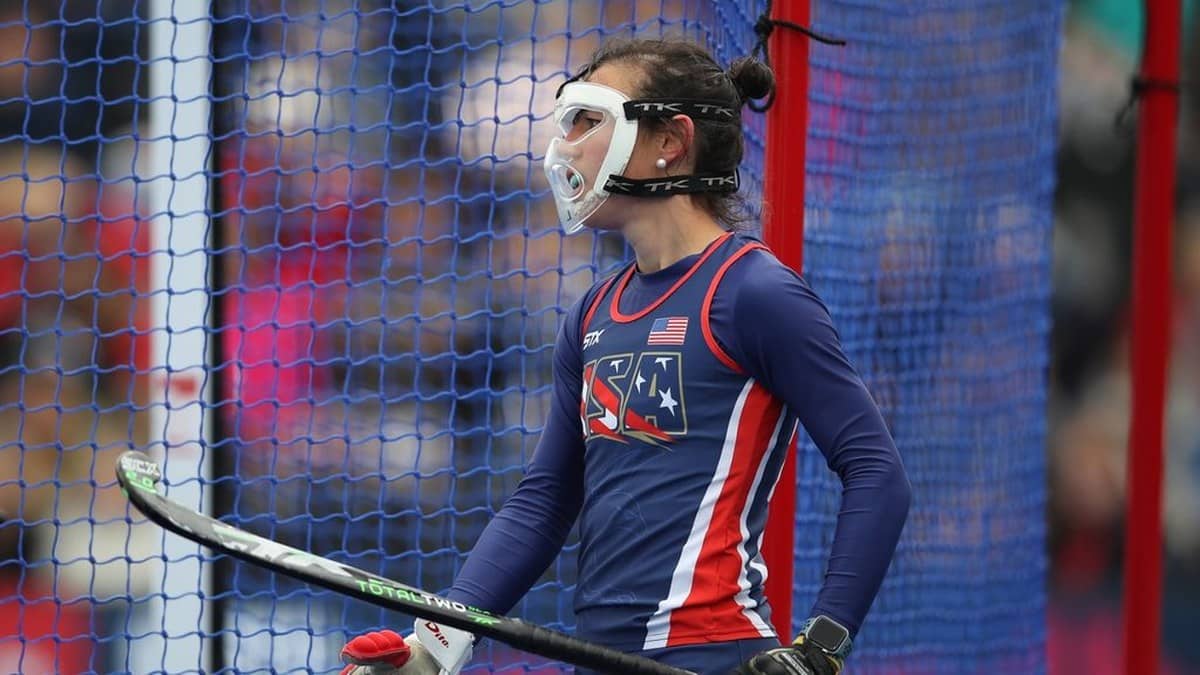
The defender begins with both feet on the goal line. After the whistle, neither foot may move and the defender may not leave the line until the ball has been played. If the team uses a field player instead of a goalkeeper to defend, that player may wear only a face mask as protective equipment and may save only with the stick.
Can the taker score from a rebound?
No second attempt is allowed. Rule 13.7 restricts the taker to one play of the ball and bars subsequently approaching either the ball or the defender. A rebound from the goalkeeper or goal frame does not authorise another shot.
This does not mean the umpire must end every attempt at the instant of a deflection. Rule 13.8 defines completion: a goal is scored, or the ball comes to rest inside the circle, lodges in the goalkeeper’s equipment, is caught by the goalkeeper or goes outside the circle. The distinction is between allowing the original attempt to reach its outcome and allowing the attacker another touch.
When is a penalty stroke retaken?
If the taker shoots before the whistle and scores, the stroke is retaken. If that early attempt does not score, the defence receives a free hit. Other offences by the taker also result in a defensive free hit under Rule 13.9.
An offence by the defending player, including moving a foot before the ball is played, ordinarily requires a retake. If the ball goes in despite the defender’s offence, the goal is awarded. The rule also provides a retake where another defending team player offends and no goal is scored, or where another attacking player offends and the ball enters the goal.
Read the applicable edition through FIH’s official rules index, which links the 2027 rule book. For other sporting decisions that depend on precise conditions, see our guides to football offside and cricket review limits and Umpire’s Call.