A penalty corner in outdoor hockey starts with an attacker playing the ball from the back line and up to five defenders, including the goalkeeper, waiting behind that line. The ball must travel outside the shooting circle before a goal can be scored. A first shot that is a hit faces a height restriction; a flick has different conditions. Those distinctions explain much of what happens during a penalty corner.
This guide follows the FIH Rules of Hockey 2026, checked on 27 October 2026 at 22:15 IST. FIH says its 2027 outdoor rules take effect internationally on 1 November 2026. National associations can choose their domestic implementation date, so players should also check the rules adopted for their competition.
| Question | Current outdoor rule |
|---|---|
| Where is the ball placed? | On the back line inside the circle, at least 10 metres from the goalpost |
| How many defenders start behind the line? | A maximum of five, including the goalkeeper |
| Must the ball leave the circle? | Yes, before a goal can be scored |
| First hit at goal | Must meet the 460 mm goal line height condition |
When is a penalty corner awarded in hockey?
Rule 12.3 covers several situations. They include a defensive offence inside the circle that does not prevent a probable goal, an intentional defensive offence outside the circle but within the defending 23 metres area, and a defender deliberately playing the ball over the back line. Goalkeepers have a specific exception allowing them to deflect the ball over that line.
A penalty corner is different from a penalty stroke. Under Rule 12.4, a defensive offence inside the circle that prevents a probable goal can lead to a stroke. The same applies to an intentional offence there against an opponent who has possession or an opportunity to play the ball. The location, intention and effect of an offence therefore matter.
How do attackers and defenders line up?
The attacking team chooses which side of the goal to use. The injector must keep at least one foot outside the field and push or hit the ball without deliberately lifting it. Everyone else must be at least five metres from the ball when it is played.
The remaining attackers start outside the circle, without sticks, hands or feet touching the ground inside it. The five permitted defenders wait behind the back line; the other defenders must be beyond the centre line. They cannot break those starting positions before the injection. The injector must wait for another player to play the ball before playing it again or approaching within playing distance.
Why can a drag flick go higher than a hit?
The ball must first leave the circle. For the first shot at goal, a hit must cross the goal line, or be travelling on a path that would cross it, no higher than 460 millimetres before any deflection. That is the height of the backboard. A later deflection cannot make an otherwise excessively high first hit legal.
The rule treats pushes, flicks and scoops differently. They can be raised above that height, as can second and subsequent hits, but they must not be dangerous. A high flick is therefore not automatically an offence, and describing every raised penalty corner shot as illegal misses the distinction in Rule 13.3.
What causes a penalty corner retake?
If a field defender leaves the back line too early, that player goes beyond the centre line and cannot be replaced for the retake. If the goalkeeper leaves early, the defence nominates another player to go beyond the centre line. Repeated early breaks during the same penalty corner can reduce the defence further.
Attackers can also be penalised. If an attacker enters the circle early, the injector must go beyond the centre line for the retake. If the injector feints at playing the ball, that player is sent beyond the centre line and another attacker takes the injection. These are specific restart rules, so a retake does not always restore the original line-up.
When does the penalty corner end?
Completion can occur when a goal is scored, a defensive free hit is awarded, the ball travels more than five metres from the circle, or a penalty stroke is awarded. Other listed situations include the ball going over the back line without another penalty corner being awarded. A quarter is extended to finish a penalty corner and any subsequent corner or stroke.
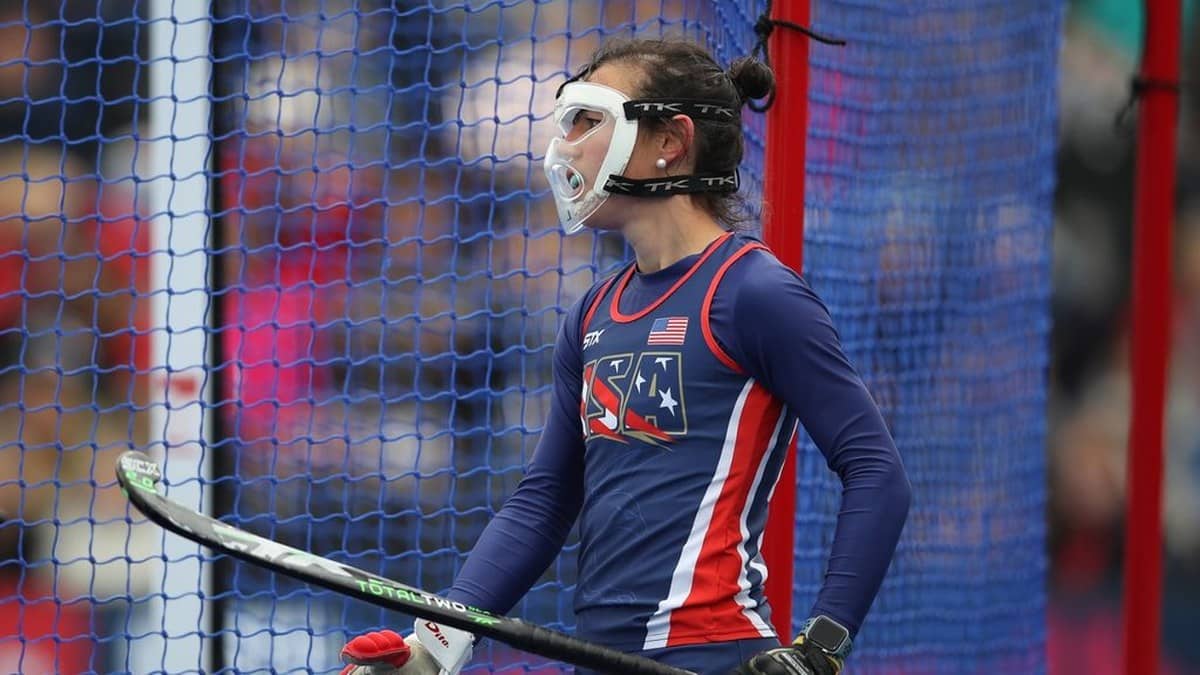
FIH's face mask notice makes protection mandatory for players defending penalty corners at FIH events. Field players must remove their corner equipment safely when able after completion, and before leaving the 23 metres area. The rulebook also permits an immediate defensive pass in specified restarts while equipment remains on, but not a self-pass.
For more explanations of decisions and calculations in sport, read our guides to DRS and Umpire's Call, the offside rule, and net run rate.