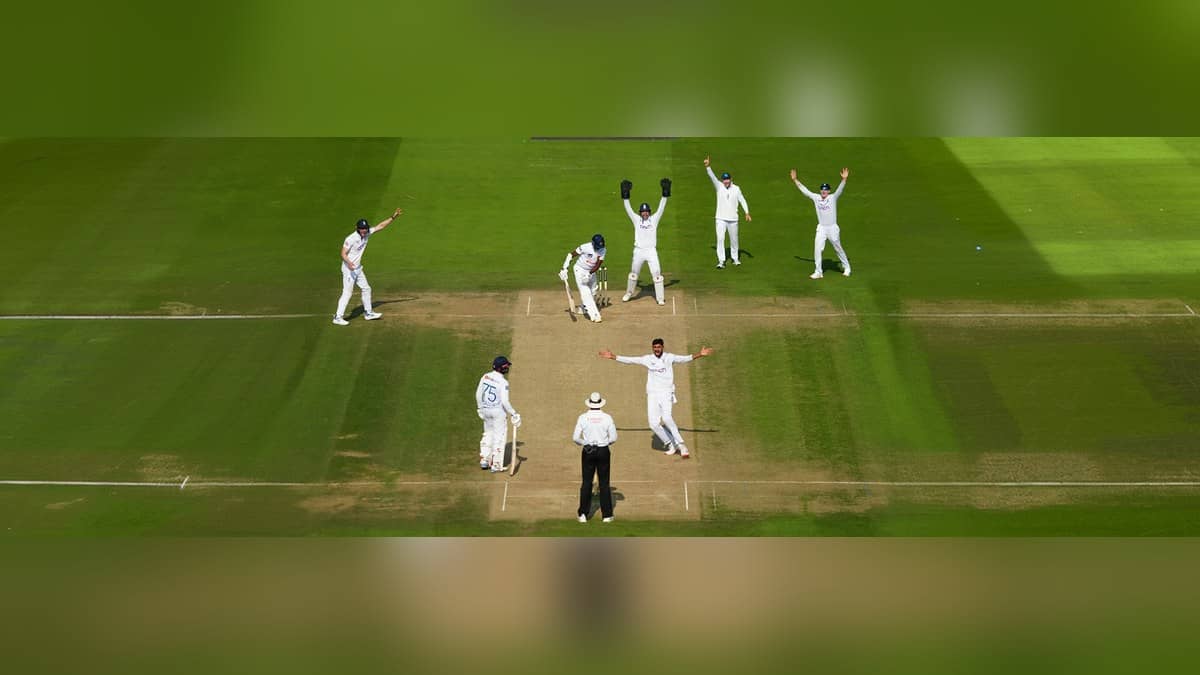
A batter is out LBW only when every condition in MCC Law 36 is satisfied. The delivery must be legal, the ball must meet the pitching and impact requirements, it must reach the batter's body before the bat, and its projected path must hit the wicket. A ball pitching outside leg stump cannot produce an LBW dismissal, even when the batter offers no shot.
The most useful way to read an appeal is to separate where the ball lands from where it hits the batter. Those are different tests. MCC's 2026 Laws of Cricket, Law 36 sets out both, including the exception for a batter making no genuine attempt to play the ball.
| Question | LBW requirement |
|---|---|
| Was it a no ball? | If yes, no LBW |
| Where did it first land? | In line with the wickets or outside off stump |
| Did bat come first? | Prior bat contact rules out LBW |
| Where was impact? | Normally in line; outside off can qualify if no genuine shot is attempted |
| Would it hit? | The ball must have been going on to hit the wicket |
Can you be LBW if the ball pitches outside leg?
No. If the ball lands before reaching the batter, its first landing must be between the lines of the wickets or on the off side. A delivery that first lands outside leg fails this condition immediately. Whether it later turns back sharply, hits the pad centrally or appears certain to strike middle stump does not repair that failure.
For example, imagine a spinner's ball landing outside leg and turning into a straightened front pad. Even if the batter deliberately leaves it alone, the pitching restriction still prevents LBW. The no shot exception changes the impact test on the off side. It does not change the rule about where the ball first lands.
A full toss needs a slightly different reading because it reaches the batter without landing. There is then no earlier pitching location to reject. The remaining requirements still apply, including no prior bat contact, a qualifying impact point and a path that would have hit the wicket. A full toss is therefore not automatically exempt from LBW.
What happens when impact is outside off stump?
When the batter makes a genuine attempt to play with the bat, impact must be between wicket and wicket. If impact is outside off stump, that delivery cannot dismiss the batter LBW under this test. This is why a replay can show a ball going on to hit the stumps while the original appeal still fails.
When no genuine attempt is made, impact outside off stump can qualify. The bowler still needs every other condition. Consider a ball pitching outside off, striking the batter outside off and heading towards the wicket: leaving it can expose the batter to LBW, whereas a genuine attempted stroke changes the impact requirement.
Impact outside leg does not receive an equivalent exception. Nor does the height of the pad contact settle the decision on its own. Law 36 expressly allows the impact point to be above the bails, but the projected path must still reach the wicket. A high strike and a ball passing over the stumps are different questions.
Does LBW have to hit the pad first?
The name can be misleading: interception by any part of the batter's person can satisfy the body-contact condition. The rule is not restricted to the leg pad. What matters is whether the ball previously touched the bat. If it did, the LBW requirement is not met, even if the next contact is with the pad directly in front of the wicket.
MCC also resolves an awkward edge case. If bat and body are contacted simultaneously, the law treats the bat as having been touched first. Only the first interception is used for the relevant assessment. Viewers should therefore establish the order of contact before drawing conclusions from the position of the pad.
Do LBW rules change for a left handed batter?
The same conditions apply. The off side is determined by the batter's position when the ball comes into play for that delivery. A viewer must identify off and leg relative to the batter rather than treating one fixed side of the television picture as off stump. That distinction matters when the striker changes.
Use a final checklist: legal ball, permissible first landing if there is one, no earlier bat contact, qualifying impact and a path into the wicket. A single failed condition means no LBW. For the separate review procedure, read our DRS and Umpire's Call guide. Our explanations of the follow on and net run rate cover two other cricket rules that often need a closer look.