NEW DELHI: Tata's Harrier.ev QWD specification sheet puts its DC charging estimate at about 25 minutes from 20% to 80% using a 120 kW charger. That figure applies to the 75 kWh dual-motor version and a defined battery window. Owners planning a journey should match the vehicle, charger and arrival charge before using it as a stop estimate.
| Harrier.ev QWD charging method | Battery window | Official estimate |
|---|---|---|
| 120 kW DC fast charger | 20% to 80% | About 25 minutes |
| 7.2 kW AC wall box | 10% to 100% | 10.7 hours |
| 15A plug point | 10% to 100% | 29 hours |
Read the battery window before the stopwatch
Tata qualifies these estimates as being under ambient test conditions. The table therefore describes particular charging sessions, rather than promising the same waiting time whenever the car is connected. An owner arriving with a different charge level has a different task to complete.
For a highway itinerary, write the arrival charge and intended departure charge beside the selected station. Keep time for reaching the charging bay, connecting and ending the session separate from the charging estimate. This makes the travel plan easier to revise if the stop changes.
Ask what power the selected connector can supply and whether it is working before making that stop central to the itinerary. A station name or map pin alone does not establish that the charging conditions in Tata's table will be available when the car arrives.
Home charging needs a separate calculation
The most useful distinction in this Harrier.ev sheet is between an installed wall box and the portable-socket option. A household deciding where the SUV will stand overnight should discuss the proposed installation with the authorised charging installer before treating a parking space as charging-ready.
Explain where the car parks, how the cable would reach it and whether another person needs to move the vehicle during the charging period. Ask the installer to assess the electrical arrangement. The product's charging time is not an assessment of the suitability of an existing household socket.
The EV battery rental explained: BaaS prices for Punch.ev, Syros EV, Creta, BE 6 is useful background for route planning. A charging location and a vehicle charging estimate answer different questions; read both before building a departure schedule around a stop.
Keep QWD and RWD information separate
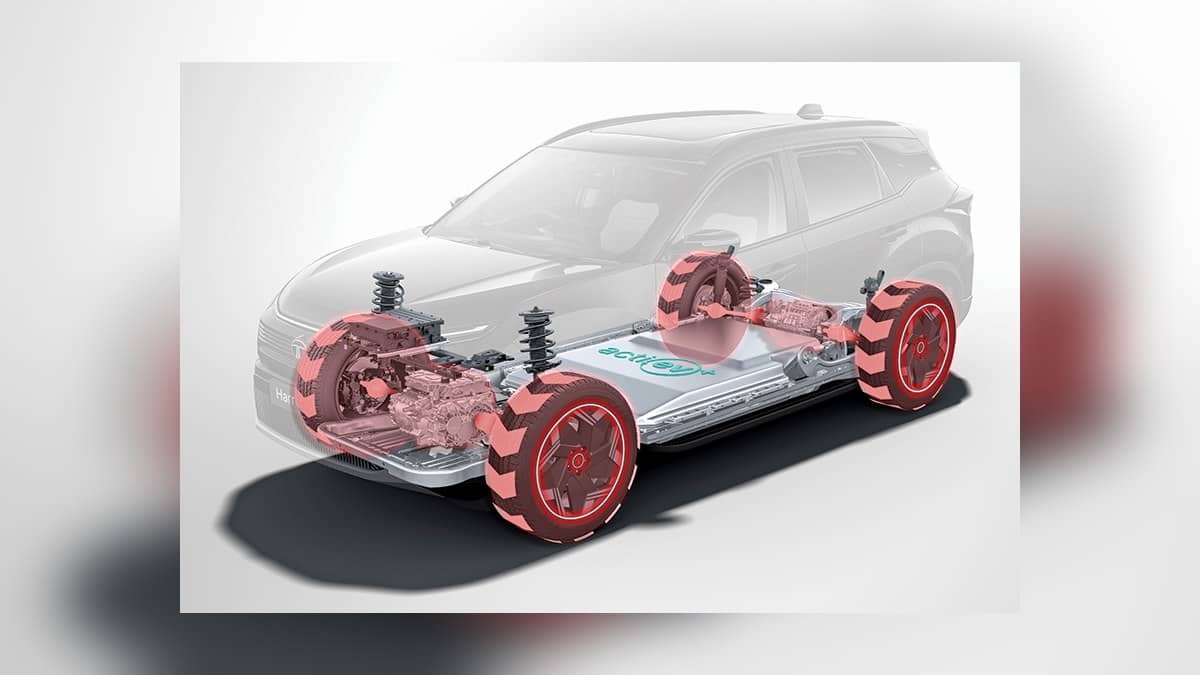
Tata's product note identifies rear-wheel-drive and Quad Wheel Drive configurations. QWD adds a front motor to the rear motor. It also lists Eco, City, Sport and Boost drive modes for QWD, while the RWD list contains Eco, City and Sport. Record the exact drivetrain when discussing the vehicle with a workshop or installer.
This is a particularly important distinction for the electric Harrier because the familiar model name can hide a different specification underneath. Keep a copy of the relevant technical sheet with the vehicle documents instead of relying on a general Harrier brochure or an image of an unrelated variant.
Charging comparisons also need matching conditions. Our Tata Aeris introductory prices span Rs 5.29 lakh to Rs 9.74 lakh shows another example of a quoted battery window. Compare the stated start and finish points before comparing the headline waiting times.
The product note also describes regenerative braking controlled through the steering paddles, with stronger settings for city traffic and an off setting for coasting. Treat those controls as a separate familiarisation task. Before a journey, ask for a demonstration of the settings in your own vehicle; do not assume that the selected drive mode tells you everything about the regeneration setting.
Separate the charging plan from the payment plan
Before a long drive, save the selected station details, identify an alternative and check the car's displayed charge before departure. These are planning suggestions, not additional manufacturer performance claims. They help keep an itinerary usable when the preferred stop cannot be used.
Finally, keep charging equipment, charging access and vehicle finance as separate lines in the ownership discussion. The Tata.ev prices: Tiago.ev from Rs 6.99 lakh, Nexon.ev offers up to Rs 1.41 lakh addresses the payment side. For this SUV's charging session, the controlling reference remains Tata's sheet for the actual QWD configuration.
Official sources: Harrier.ev QWD technical specifications and Tata's Harrier.ev product note.
Tata's QWD sheet identifies CCS2 as the charging standard and confirms that a portable charging cable is supplied. The battery uses liquid cooling, and the motor and battery pack carry an IP67 ingress-protection rating in the published technical specifications.
The sheet also lists bidirectional output of 5 kVA for vehicle-to-vehicle charging and 3.3 kVA for vehicle-to-load use, with a discharge limit of 30% state of charge. For this QWD configuration, Tata publishes a certified full-charge range of 622 km under the combined MIDC Part 1 and Part 2 cycle, with actual performance qualified by driving conditions.