MUMBAI: Tata Passenger Electric Mobility's electric car range now starts at Rs 6.99 lakh for the Tiago.ev and tops out at Rs 21.79 lakh for the Harrier.ev, according to the official Tata.ev website. The Nexon.ev page also lists offers of up to Rs 1,41,000, though only on 2024 manufacturing-year stock. All prices are ex-showroom starting prices, price as of 9 October 2026, 7:05 AM IST.
Tata's electric line-up now runs to seven models, from a city hatchback to a large SUV, according to its website. With Diwali on 8 November, here is the full starting-price ladder, the battery and range claims Tata makes for its most popular models, and what to check before you book.
Tata.ev starting prices, October 2026
The Tata.ev homepage lists these starting prices, all ex-showroom: Tiago.ev from Rs 6.99 lakh, Punch.ev from Rs 9.79 lakh, Nexon.ev from Rs 12.49 lakh, Tigor.ev from Rs 12.49 lakh, Curvv.ev from Rs 17.19 lakh, Sierra.ev from Rs 18.79 lakh and Harrier.ev from Rs 21.79 lakh.
The site also shows the darker #DARK editions separately, with the Nexon.ev #DARK from Rs 17.69 lakh and the Curvv.ev #DARK from Rs 19.49 lakh. Tata's disclaimer says prices are subject to change without notice and asks buyers to contact a dealer for exact prices.
Tiago.ev and Punch.ev: the entry points
The Tiago.ev's Rs 6.99 lakh price applies to the Smart variant with a 19 kWh battery, according to the model page. The Pure variant starts at Rs 8.64 lakh and the Creative at Rs 10.09 lakh. For the larger 24 kWh pack, Tata quotes an ARAI-certified range of 285 km and a real-world range of about 205 to 215 km under its C75 test, and it offers a lifetime warranty on the high-voltage battery for that pack, subject to conditions.
The Punch.ev starts at Rs 9.79 lakh for the Smart variant, with the Adventure at Rs 11.94 lakh and the Empowered at Rs 12.69 lakh. Tata lists a 40 kWh LFP battery option with an ARAI-certified range of 468 km and a real-world C75 range of about 355 km. It says the battery charges from 20 to 80 percent in 26 minutes on a suitable fast charger. A lifetime high-voltage battery warranty also features on the Punch.ev page.
Buyers who want a lower upfront payment can look at battery subscription plans. Our explainer on Battery as a Service prices, including the Punch EV sets out how they work.
Nexon.ev offer and range
The Nexon.ev page lists a starting price of Rs 12,49,000 across nine variants. It also shows offers of up to Rs 1,41,000, with a note that the offer may vary from state to state and applies to manufacturing year 2024 stock. That means the biggest benefit is on cars built last year, so buyers should ask for the build month in writing before comparing quotes.
For the 45 kWh version, Tata lists a certified full-charge range of 489 km under the MIDC Part 1 plus Part 2 cycle. Real-world range will be lower, as with every electric car.
Sierra.ev, Curvv.ev and Harrier.ev
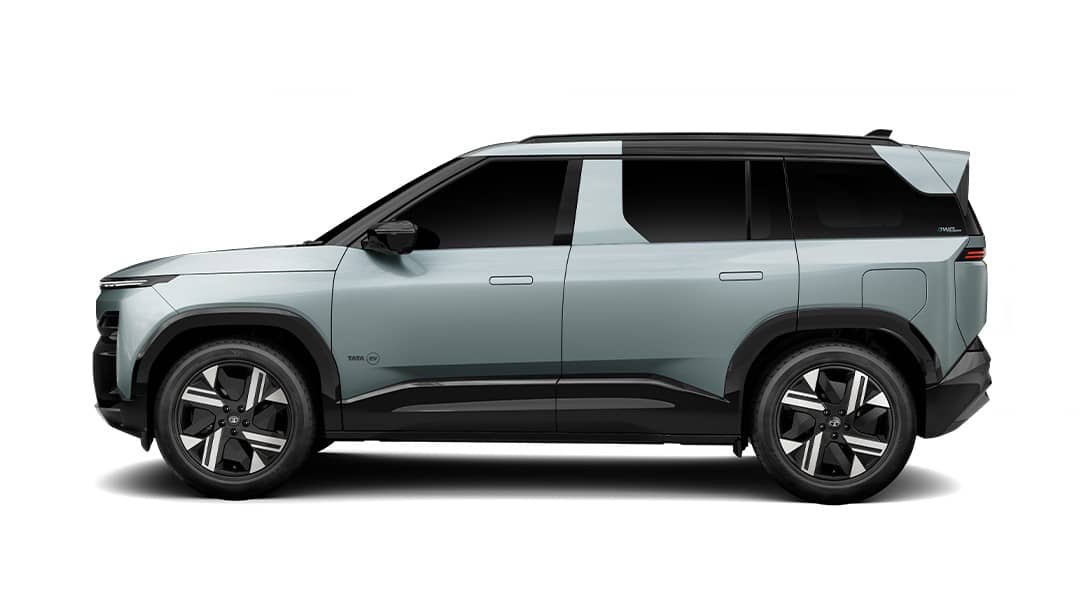
The Sierra.ev starts at Rs 18.79 lakh for the Pure variant, with the Adventure at Rs 20.99 lakh and the Empowered at Rs 22.79 lakh. Tata says its 75 kWh battery delivers up to 665 km of range and that fast charging can add up to 263 km in 15 minutes. The Empowered variant gets a dual-motor setup that Tata calls QWD.
The Curvv.ev coupe SUV starts at Rs 17.19 lakh, and the Harrier.ev, which Tata also offers with a dual-motor QWD setup, starts at Rs 21.79 lakh. The Tata Aeris, covered in our report on the Tata Aeris introductory prices, starts lower still.
What to check before booking
Ask for an itemised on-road quote that lists the ex-showroom price, registration, insurance and the cost of a home charger and its installation. Many states give road tax or registration benefits on electric cars, so the on-road gap between an EV and a petrol car can be smaller than the ex-showroom gap.
Check the battery size your quote covers, the build month of the car, and the written terms of any lifetime battery warranty, which Tata ties to conditions. Tata also lets buyers try its electric cars on extended test drives, which is worth doing before committing. The figures here are from Tata.ev's official pages as seen on 9 October 2026.