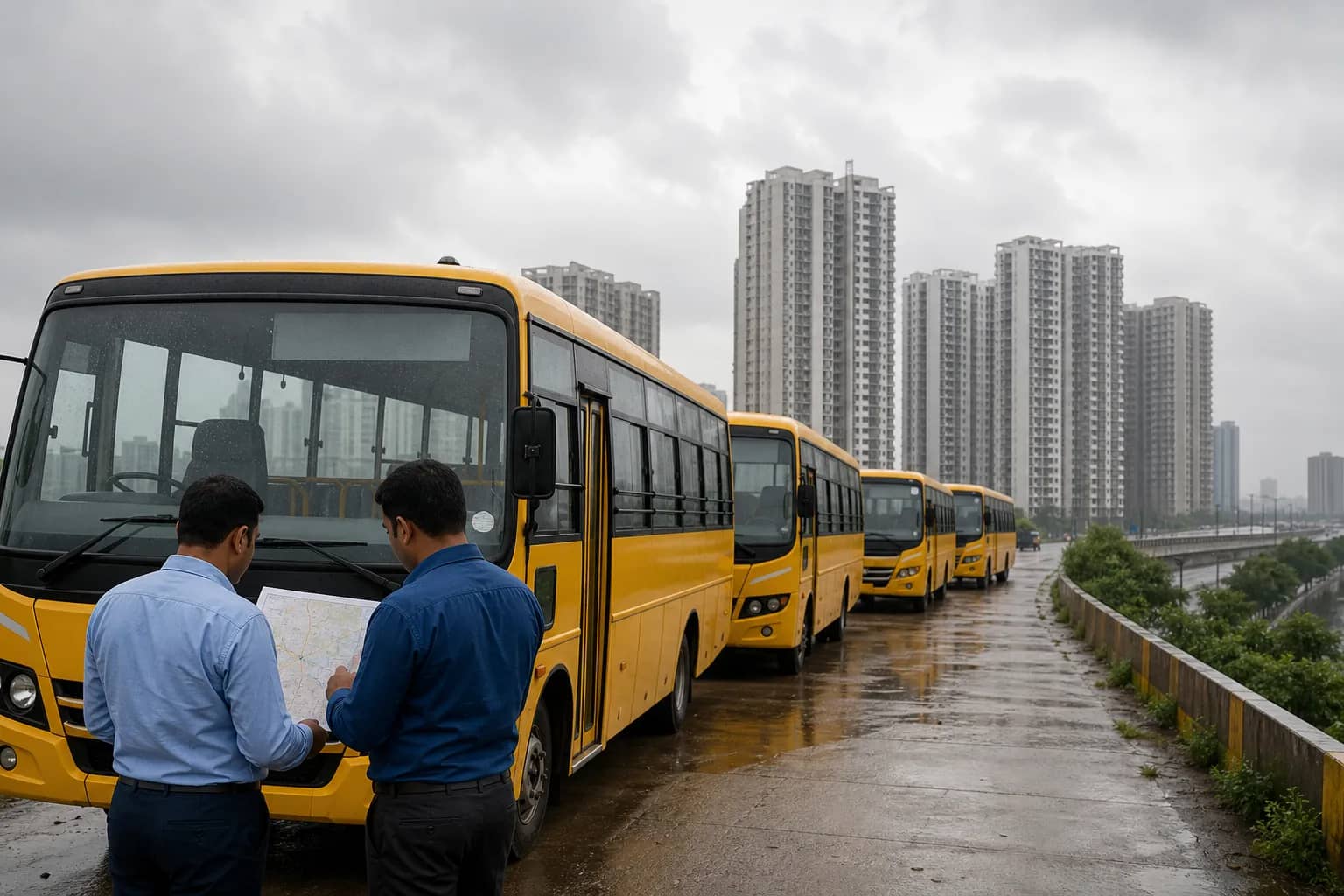
GURUGRAM: The district administration has introduced a monsoon safety protocol for school transport after at least 14 private school buses carrying children were stranded for five to six hours in severe waterlogging on Monday.
The new arrangement calls for route-status reports on bad-weather days, real-time information about flooded stretches, a staff escort on buses and adequate drinking water for children. Schools will also receive orange and red weather alerts so they can decide earlier whether buses should depart, wait or use an alternative route.
Deputy Commissioner Uttam Singh announced the measures after an inter-departmental meeting involving the District Disaster Management Authority, traffic police, the education department and schools. The intention is to replace scattered calls and forwarded messages with a coordinated chain of verified information.
The trigger was a difficult afternoon for students and families. Buses carrying children from nursery to Class 12 became trapped across the city as roads flooded. Around a dozen vehicles were seen near Subhash Chowk in Sector 47, and local accounts put the number of stranded students above 300. Some parents eventually reached the area and carried younger children through knee-deep water.
Route information must arrive before dispersal
A useful protocol begins before a school gate opens. If waterlogging is already reported on a bus corridor, the operator should not send a vehicle into the queue merely because classes have ended. Schools need a named decision-maker, a verified route map and permission to hold children safely on campus until a clear route is available.
Real-time updates should identify the blocked road, the time of verification and a usable alternative. A generic message saying that Gurugram is waterlogged is not enough for a driver deciding whether to approach Subhash Chowk, Golf Course Extension Road or an underpass.
The staff escort requirement can improve communication and child care during a delay. The escort should carry an updated contact list, drinking water, basic first-aid supplies and a charged phone. Drivers and attendants also need clear instructions not to attempt a flooded underpass or move a barricade under pressure to reach home faster.
Parents need one reliable channel
Monday's delay became more frightening because families did not always know where a bus was or when it could move. Schools should send location and status updates at fixed intervals through one official channel instead of allowing conflicting messages to spread across several groups.
The protocol should also define escalation. If a bus remains stationary beyond a set period, the school control room should inform traffic police and the district emergency network with the vehicle's location, number of children and any medical concern. Young children, students with disabilities and those requiring medicines need priority planning.
Heavy rain will still disrupt travel, and no protocol can keep every route open. The standard of success is whether adults make the decision early, keep children in the safest available place and maintain contact until every student is handed to an authorised guardian.
The administration's measures are a necessary response to Monday's failure. They will become meaningful only if schools rehearse them, transport contractors follow them and the promised route information arrives before buses enter the water, not after they are already stranded.