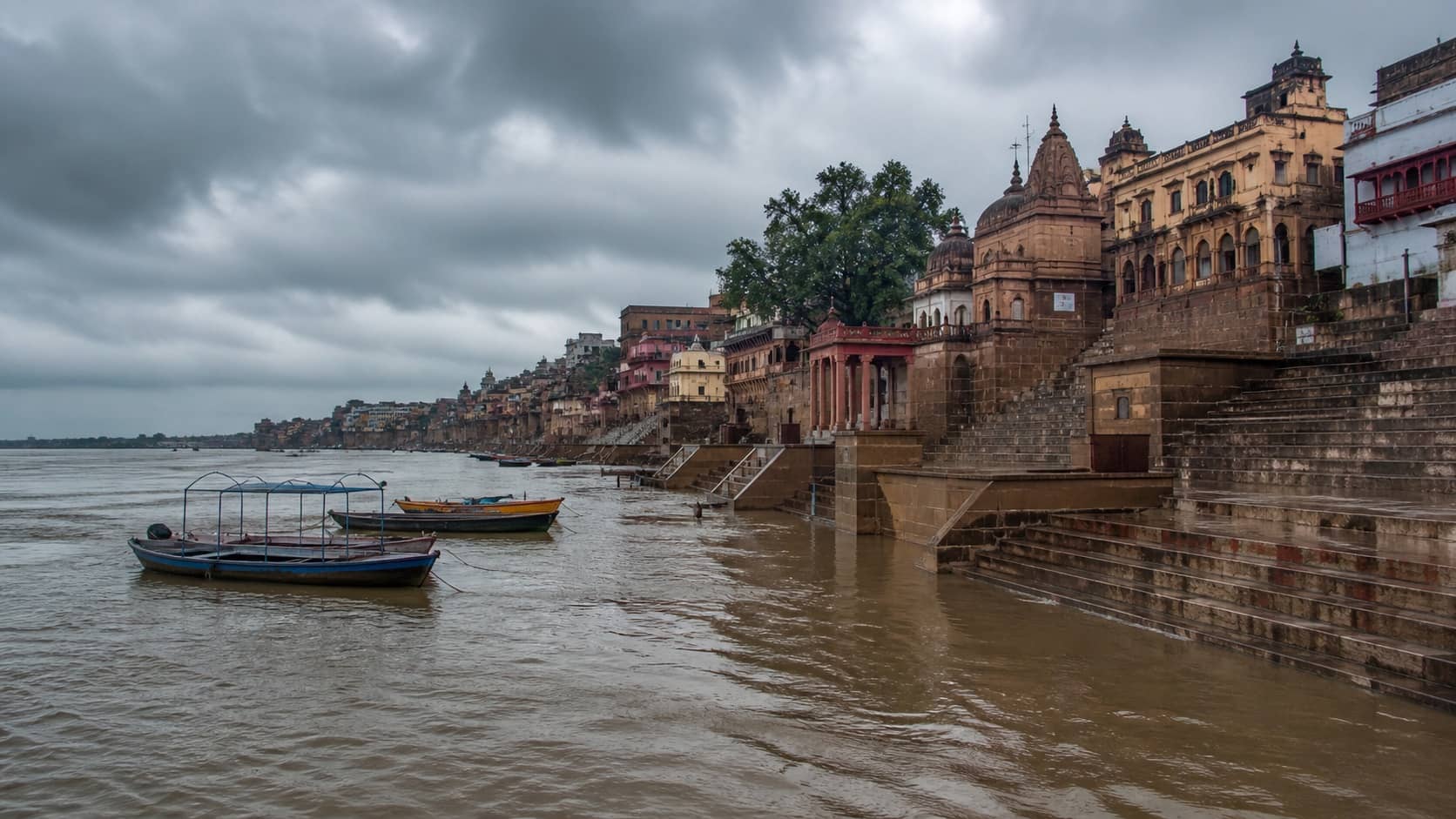
The Ganga has begun rising again at Varanasi after falling for six consecutive days, according to observations reported from the Central Water Commission. The renewed increase is described as slow, but it has returned attention to low-lying ghat links and riverside neighbourhoods after a brief period of relief.
Heavy rain across the wider river system can alter the trend in Varanasi even when rainfall within the city is limited. Water arriving from upstream catchments moves on a delay, which is why a clear local sky does not necessarily mean the river will continue to fall. Officials and boat operators watch the gauge rather than the day’s weather alone.
For the ghats, small changes can have immediate consequences. The first areas affected are lower steps, platforms and the paths that connect one ghat to another. Priests, vendors, pilgrims and sanitation teams may need to shift activity upward before residential areas face any direct threat. Boats also require secure mooring as the current and bank level change.
Riverside residents are cautious because repeated rise-and-fall cycles can prolong disruption. A household that has just begun moving belongings back may hesitate when the gauge turns upward again. Saturated walls and lanes remain vulnerable even if the water previously receded, and drains can back up in areas where river level affects outflow.
A rising trend is not the same as an immediate flood warning. The rate, duration and distance from official warning and danger marks are crucial. Exaggerated social-media claims can create unnecessary panic, while complacency can leave people unprepared. The safest practice is to follow dated readings and notices from authorised agencies.
Boat passengers and visitors should respect temporary barriers on submerged ghat stretches. A step hidden under muddy water can be slippery or broken, and the current near the bank may be stronger than it appears. Children should not be allowed onto flooded platforms simply because the water looks calm.
The Commission’s continued monitoring will show whether the new rise is a short fluctuation or the start of a longer spell. For now, Varanasi has time to respond without alarm: secure equipment, keep low routes clear and track the gauge closely. After six days of decline, the reversal is a reminder that the monsoon river does not move in one direction for long.
Residents can keep a simple household threshold for action: which items move first, where medicines and documents are stored and whom to contact if the lane floods. Planning before an evacuation warning makes every later decision calmer.