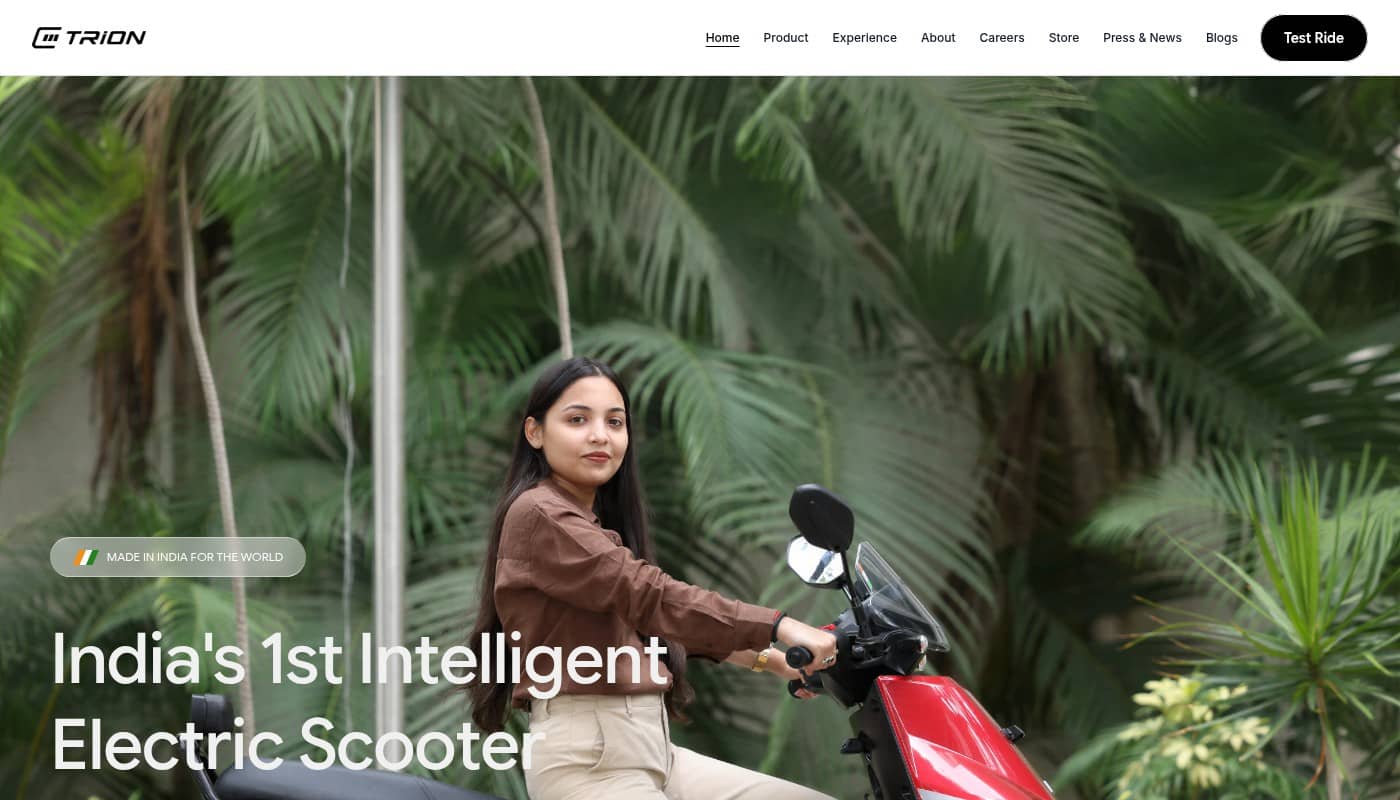
BENGALURU: E3 Electric.AI, an electric mobility startup based in Bengaluru, says it has started production of its E3 TRION scooter at a facility in Hyderabad, with customer deliveries beginning in batches from 7 October 2026. The date also marks the company's second anniversary. The first batch is meant for the company's first 100 customers.
The scooter is sold on the idea of intelligence rather than only range. Here is what the company's website and production announcement say about it, and which claims are the company's own.
Production and deliveries
In its announcement, the company said production of the E3 TRION had begun at its Hyderabad manufacturing facility after what it called an encouraging response since launch. Founder and chief executive Sanjeev P. said the focus on validation, especially durability across challenging conditions, had been central to getting the scooter ready for customers.
Deliveries start in batches, which suggests a gradual ramp rather than a mass rollout. The website says delivery timelines depend on the city and variant chosen at reservation, and that the team shares an estimated window once a booking is confirmed. A reservation uses a token amount that the site says is fully refundable if cancelled before delivery.
Variants, range and battery
The site shows three ways to ride the TRION. The company lists an IDC range of 108 km on a 2.3 kWh battery, 128 km on a 3.0 kWh battery and 165 km on a 3.0 kWh battery, which it describes as the highest range option. All three come with a removable battery and an eight year battery warranty, with an asterisk on both the range and warranty figures. IDC refers to the standard test cycle, and real-world range is usually lower, so buyers should treat these as best-case numbers.
The company's booking form lists three model names, C1, C1x and C2, though the site does not map them to the ranges in the text reviewed. The homepage also cites a battery warranty of 1 lakh km. Prices were not shown on the pages reviewed, so readers should check with the company before booking.
What "intelligent" means here
E3 calls the TRION India's first intelligent electric scooter. The company says it uses machine learning to understand how a rider rides and to anticipate what they need, and lists more than 100 connected features. Named features include an AI Health Scan that gives a real-time read on the scooter's condition, roadside assistance, smart charging control with live battery insights over Bluetooth, real-time diagnostics and a TripSense feature that turns a smartphone into a riding companion.
On hardware, the company lists dual projector LED headlamps, a modular high-strength frame, 14-inch lightweight wheels and a permanent magnet synchronous hub motor with a patented weld-free rotor design that it says reduces vibration and eases servicing. It also says it has been granted 13 essential technology patents and over 40 intellectual property rights, and that it was recognised in the NASSCOM Deeptech Emerge 50 awards for 2025 in the mobility and logistics category.
The running cost claim
E3's site includes a savings calculator. As of 9 October 2026, 1 PM IST, it compares a petrol scooter at 47 km per litre and ₹104 a litre with the TRION drawing 28 Wh per km at ₹9 a unit, over 25 days of use a month. At the setting shown on the page, it works out to about ₹2,766 a month in petrol against ₹315 in electricity, a monthly saving of ₹2,451 and an annual saving of ₹29,411.
These are the company's own assumptions. Home electricity tariffs, daily distance and public charging prices vary, and the figures leave out the price difference between an electric and a petrol scooter. A buyer should redo the sum with local numbers.
Where it fits in a crowded segment
India's electric scooter market is crowded with established makers and many newcomers, and a startup selling its first 100 units has a long road to scale. The company's own materials point to an experience centre in Bangalore as the main place to see the scooter, with test rides that the site says are free and need a valid government ID and driving licence.
The company also advertises zero per cent interest EMI options. Buyers should read the financing terms closely before signing. For other Indian startups building hardware, see our reports on Manastu Space's green propulsion and Niqo Robotics' farm robots, where the same question applies: can a young company move from prototype to steady production?
The details above come from E3 Electric.AI's website and its production announcement, viewed on 9 October 2026. Performance and savings numbers are the company's claims and have not been independently tested by Dalimss News.