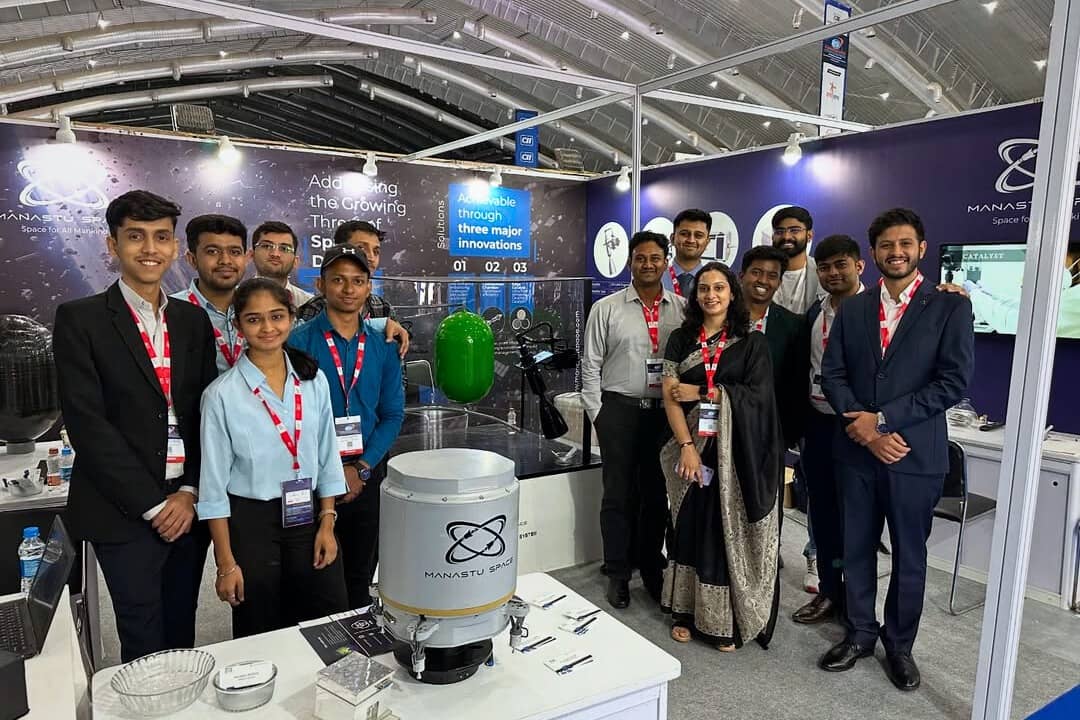
NAVI MUMBAI: Most satellites that need to change orbit, dodge debris or lower themselves at the end of their life still carry hydrazine, a fuel that does the job well but is highly toxic and needs special handling on the ground. Manastu Space, a startup based in Navi Mumbai, has spent close to a decade trying to replace it. Its thrusters run on a hydrogen peroxide based propellant it calls MS289, and one of them has already flown and fired in orbit.
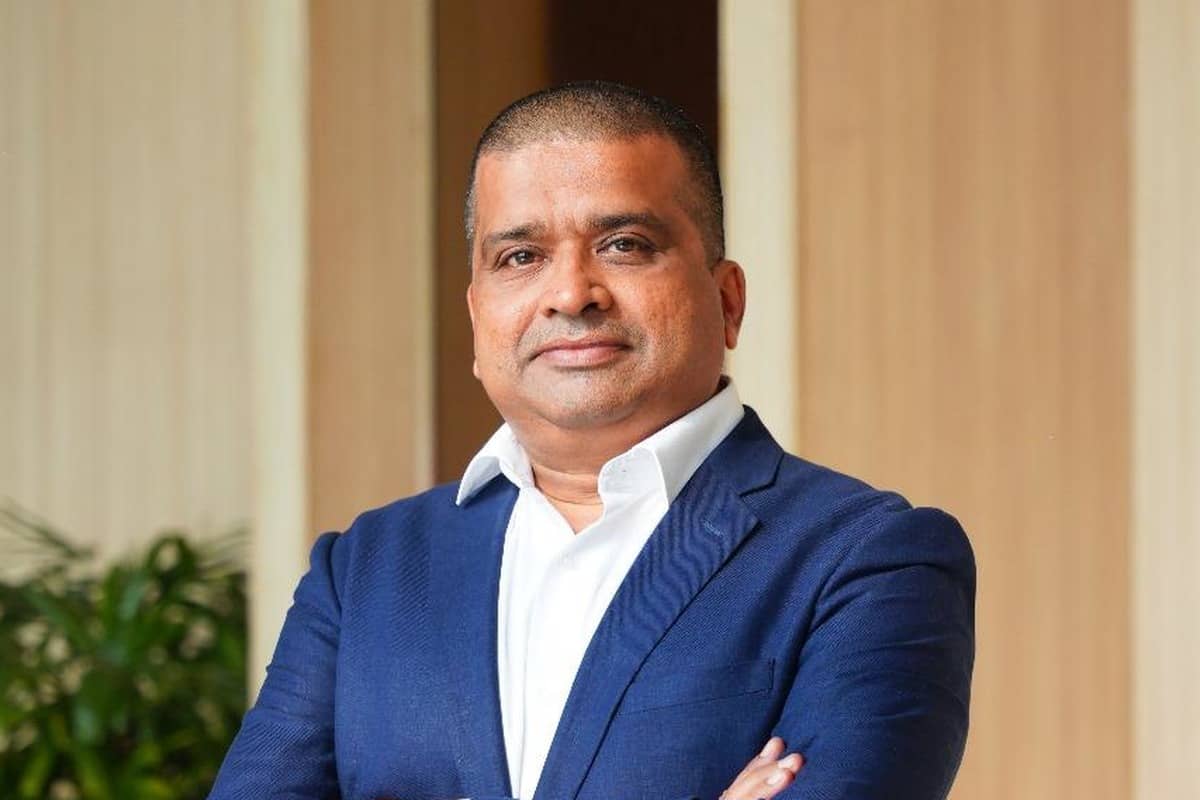
Manastu Space Technologies Private Limited lists its address in the TTC Industrial Area at Pawne in Navi Mumbai. Its timeline says research began in 2016 and the company was formally founded in 2017 by CEO Tushar Jadhav and CTO Ashtesh Kumar. This explainer covers what it makes, what it has tested in space, and where the company says it is heading.
What green propulsion means here
Satellites carry small thrusters for station keeping, collision avoidance and de-orbiting. The propellant has to store safely for years and fire reliably when commanded. Hydrazine meets those needs, which is why it has been used for decades, but fuelling a satellite with it requires protective suits and strict procedures because of its toxicity.
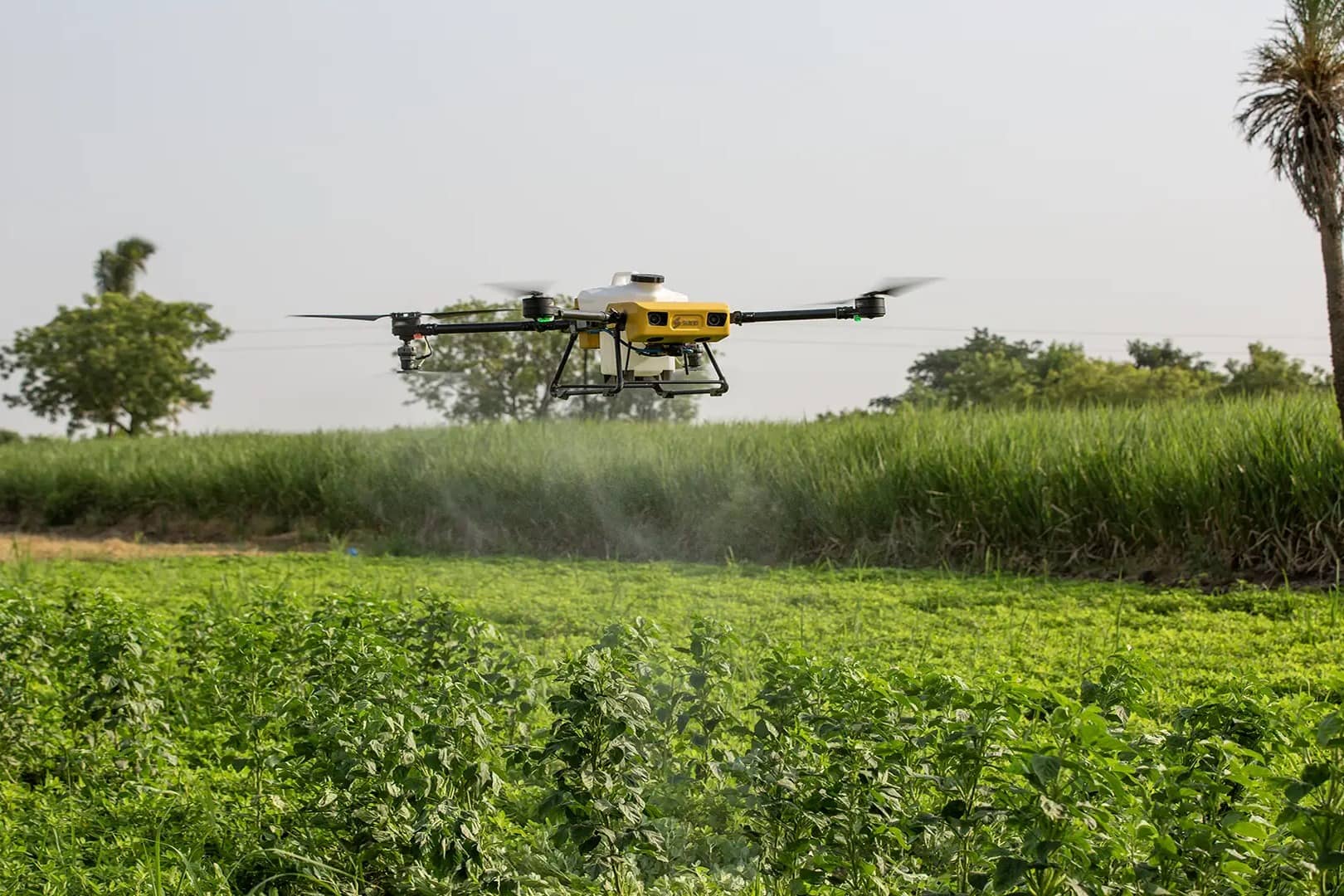
Manastu's alternative is MS289, which the company describes as a proprietary hydrogen peroxide and alcohol based propellant with performance-enhancing additives. The company's website says a ceramic catalyst running at about 1,400 degrees Celsius decomposes the hydrogen peroxide and ignites the alcohol, and the exhaust is mostly steam and carbon dioxide. Manastu goes as far as calling MS289 "safer than common salt", which is a company claim rather than an independent safety rating.
The product line
Manastu lists four propulsion systems, each at a different stage of readiness.
Vyom 2U is the most mature. It is a plug-and-play module for 6U to 24U-plus class small satellites, up to roughly 100 kg. The datasheet gives 1.1 N of thrust, a specific impulse of about 250 seconds and a total impulse of 1,600 N·s. It weighs 1.98 kg dry and 2.75 kg fuelled, and the company rates it at Technology Readiness Level 8.
I-Booster is aimed at larger satellites in the 100 to 500 kg range, with four 1 N thrusters and a total impulse between 14,000 and 20,000 N·s. Sharanga is a micro-propulsion unit for CubeSats up to about 50 kg, producing 1 to 10 millinewtons using high-test peroxide as a monopropellant. Both are listed at TRL 7. GP-LAM is the big one: a 300 N thruster for the upper stages of launch vehicles, orbital transfer vehicles and small geostationary spacecraft, still at TRL 5.
The company also lists services such as de-orbiting and re-fuelling, along with mission design and system integration work for customers.
What has actually flown
Manastu's strongest proof point is Vyom 2U's flight on ISRO's PSLV-C60 mission at the end of December 2024, the launch that carried the SpaDeX docking experiment. Vyom 2U rode on POEM-4, the reused fourth stage of the PSLV that ISRO turns into a platform for in-orbit experiments. The company calls this its Adyanta mission.
According to the company's product page, the thruster was first fired on 31 December and tilted the 1,408 kg POEM-4 platform by 24 degrees using about 1 N of thrust. Over a little more than two months in orbit, it logged over 700 seconds of cumulative firing, including a 360 second continuous burn and more than 20 restarts. Restarts matter because a satellite thruster has to fire many times over a mission, not once.
The timeline also says Manastu delivered an I-Booster system to the Defence Research and Development Organisation in December 2024, building on a DRDO contract under the Technology Development Fund that it received in 2020. In 2025, Sharanga completed qualification testing at the IN-SPACe facility in Ahmedabad under the iDEX defence innovation programme.
Money and customers
Manastu's timeline lists a US$3 million pre-Series A round in 2023 led by Capital 2B, BIG Capital and E2MC, and a further US$3 million bridge round in 2025 led by Capital-A, with Capital 2B, Indian Angel Network, E2MC and angel investors taking part. Earlier support included a Rs 25 lakh grant in 2018 from the India Innovation Growth Programme, which was backed by the Department of Science and Technology, Lockheed Martin and Tata Trusts.
Its first commercial contract, according to the company, came in 2022 from the French aerospace firm Latitude, for the GP-LAM thruster. Testimonials on its site come from TakeMe2Space, which describes a long-term partnership on attitude and orbit control systems, and Akashalabdhi, which says Manastu thrusters are part of its re-entry mission. In 2026, the company says it was selected as a propulsion partner under IN-SPACe's Satellite Bus as a Service programme for non-government entities.
The company also notes that CEO Tushar Jadhav met Prime Minister Narendra Modi and Japan's Prime Minister Sanae Takaichi at the India-Japan Business Forum this year, a sign of how Indian space startups are now being showcased in diplomatic settings.
Why it matters for India's space sector
India's private space sector has grown quickly since the government opened it to private companies, and much of the attention goes to rockets and satellites. Propulsion is quieter but just as important: a small satellite without a thruster cannot avoid debris or de-orbit itself responsibly, and launch vehicles need reliable upper-stage engines. Dalimss News has previously looked at Bellatrix Aerospace's green propulsion work and at Skyroot's Vikram launch vehicles, both part of the same push.
Manastu's pitch rests on safety and cost. A propellant that does not need hazmat procedures can make satellite fuelling simpler and cheaper, which matters for small operators launching many spacecraft. The company claims its systems are faster, more efficient and more affordable than conventional options, but it does not publish independent comparisons, so buyers will judge on flight data.
The key things to watch are when I-Booster and Sharanga get their own flight demonstrations, and whether GP-LAM, at TRL 5, moves towards a hot-fire campaign with a launch vehicle partner. A second flight with a paying customer satellite would be the clearest sign that Manastu's green propellant is moving from experiment to standard equipment.