
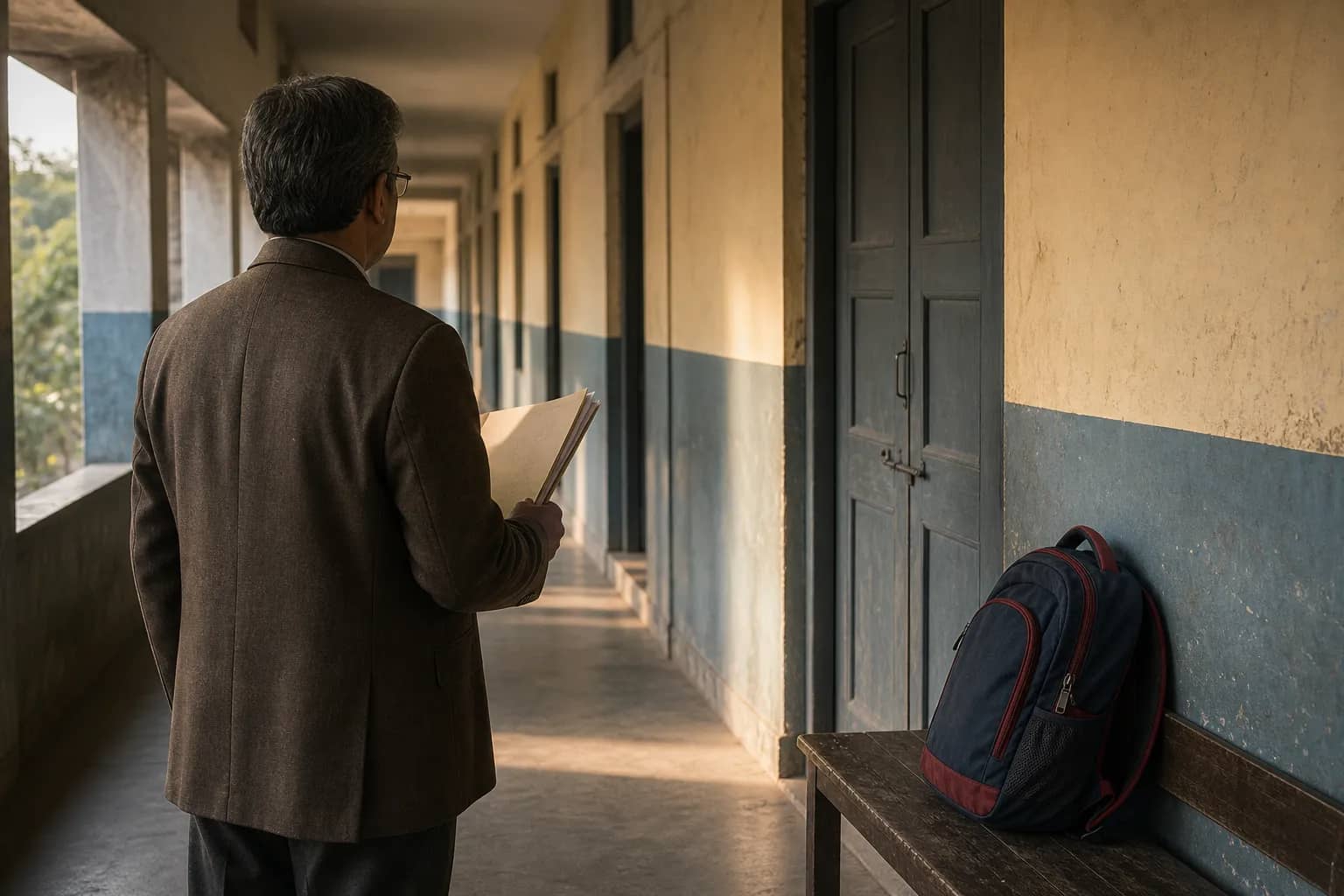
The Delhi government has transferred a teacher with immediate effect pending an inquiry into the death of a girl who studied at a government school in East Vinod Nagar. The transfer is an interim administrative step and is not a finding that the teacher caused the child's death.
Education Minister Ashish Sood said the teacher was being moved so that the investigation could proceed fairly and without interference. The student's family has alleged that she was punished at school after not bringing a book. Police and the education department are examining the circumstances.
Published accounts contain important differences. PTI reports describe a 10-year-old student and an alleged incident at Sarvodaya Kanya Vidyalaya on 27 August. Another police-source account carried by The Times of India describes a 12-year-old Class 7 student, says the school episode was alleged to have occurred on 22 July, and notes a history of epilepsy. Those inconsistencies are a reason to avoid presenting any one account as established fact.
What is confirmed, and what is not
It is confirmed that a student died, that her family raised allegations concerning a teacher, that authorities began an inquiry and that the Delhi government transferred the teacher pending its completion. Reports also say the family held a protest demanding action.
It is not yet established publicly that the alleged punishment caused the child's death. No conclusive medical finding has been released in the reports reviewed for this article. The fact of a transfer should not be read as a disciplinary conviction, and the family's allegation should not be erased merely because the inquiry is incomplete.
This distinction is especially important in reporting on a child. A rushed account can harm the family, prejudice a teacher's right to a fair process and create a false medical narrative that later evidence does not support.
Questions the inquiry should answer
The inquiry needs a clear timeline: the child's attendance, the date and duration of the alleged punishment, when she became unwell, whom the school contacted and what medical care followed. Statements from classmates and staff should be recorded separately, and any available CCTV, attendance or infirmary records should be preserved.
Authorities should also establish which school safety rules govern punishment, heat exposure and medical emergencies. Making a child stand in direct sun would be a serious safety concern regardless of the eventual medical finding. Delhi schools need a written escalation procedure for dizziness, collapse, seizure or unusual distress, with parents contacted promptly and emergency care not delayed.
The student's treatment record must be read by qualified medical investigators. A prior health condition can be relevant without automatically explaining a death. Equally, temporal proximity to an alleged school incident does not by itself prove causation. The inquiry has to connect the evidence rather than choose a convenient story.
A wider school-safety duty
Corporal punishment and humiliating penalties have no place in a classroom. Discipline should address behaviour without exposing a child to pain, heat, fear or public degradation. Schools should make that rule explicit during staff induction and provide alternatives for ordinary lapses such as forgetting a book.
Parents also need a reliable way to report concerns without worrying that a child will face retaliation. A complaint channel works only if it records the submission, protects the student and gives the family a time-bound response.
The education department should publish the inquiry's scope and, when legally possible, a summary of its findings. It should also state whether the transfer remains in force, whether any disciplinary proceeding follows and what safety changes will be made across schools. Privacy protections must prevent the child's medical and personal details from becoming public spectacle.
For now, the responsible position is neither to dismiss the family's account nor to treat it as a proven cause of death. A child has died, a serious allegation has been made, and the government has acted to separate the teacher from the school while evidence is gathered. The credibility of the response will depend on a prompt, independent and transparent inquiry that keeps the child's dignity at its centre.