
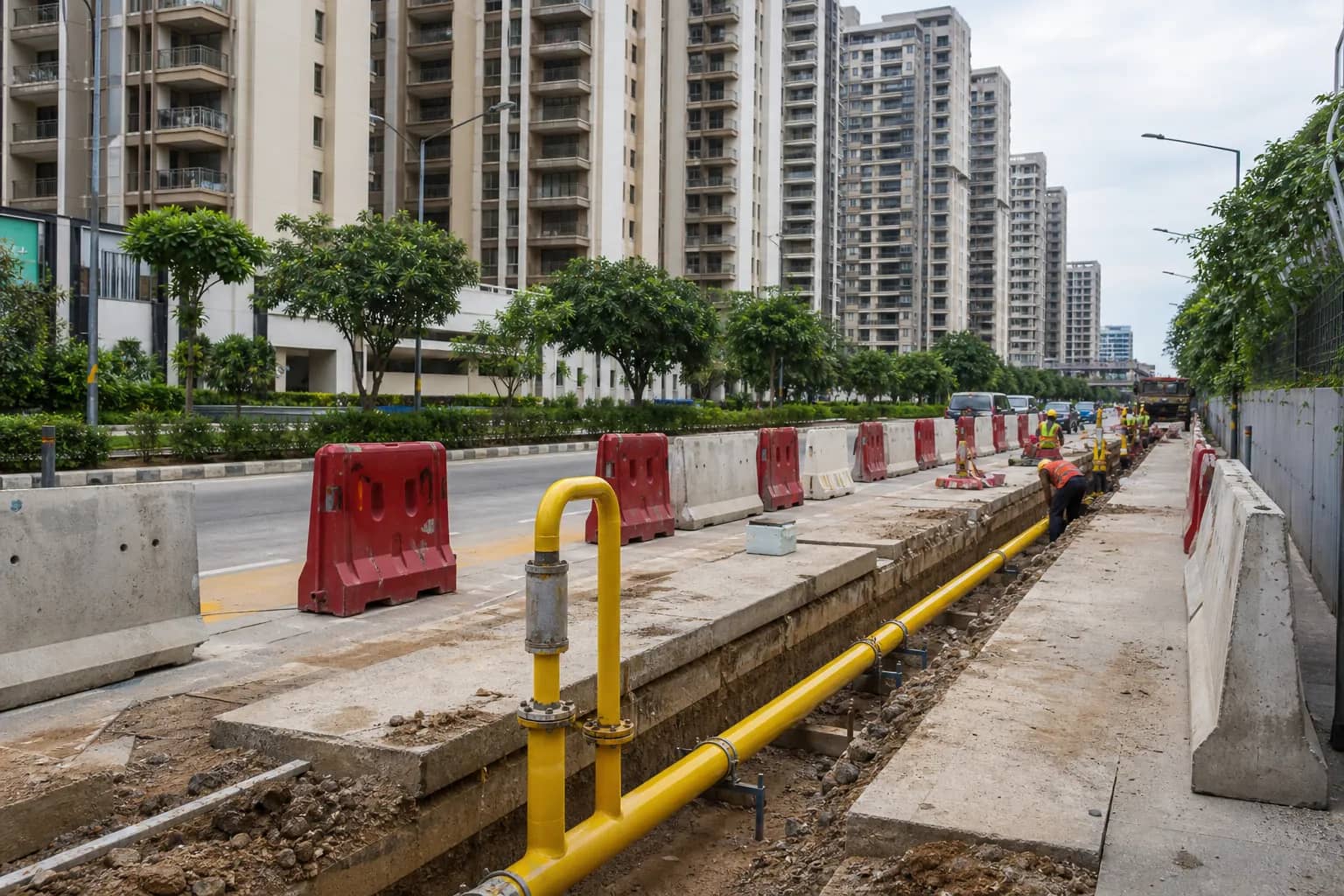
GURUGRAM: For residents of several new sectors, the promise of piped natural gas has arrived in fragments: a meter inside the flat, a trench outside the gate and no clear date for fuel to begin flowing. Housing societies between sectors 101 and 115, along with residents of Sector 17B, have raised concerns over incomplete pipeline work, delayed activation and poor communication.
The experience varies from one complex to another. At a Sector 104 society, residents say internal pipelines and meters were installed nearly a year ago but connections remain inactive. In Sector 106, another condominium says work has yet to begin. A Sector 102 society has seen installation activity for more than a month, residents said, but has not received a completion timeline.
Part-built networks leave residents in limbo
A gas connection depends on several linked pieces: the distribution main in the road, a service line to the property, internal pipes, tested meters and final commissioning. Finishing one stage does not make the system usable. If records of an older underground line are unclear, or permission for road cutting is delayed, equipment already fitted inside homes can remain idle for months.
Residents in Sector 17B have added a safety complaint. They say work began and later stalled, leaving excavated stretches, open pits and construction material around the neighbourhood during the monsoon. The immediate issue there is not only when PNG will start. Any unfinished trench must be rigidly barricaded, lit at night and restored quickly enough that pedestrians are not pushed into traffic.
The city gas distributor has said work is under way in several societies and connections are being provided gradually, while installation in other locations is planned after the monsoon. That response confirms a phased rollout but does not resolve the society-by-society information gap.
A public tracker would reduce uncertainty
Each affected complex needs a short, written status: whether the external main exists, which permission is pending, whether pressure testing is complete and the expected commissioning window. Where work is deferred until after the rains, the operator should say so directly rather than allowing residents to chase different field teams for informal dates.
Road-owning agencies also have a role. Pipeline installation often crosses municipal streets, sector roads and developer-controlled land. Permissions should include restoration standards, deadlines and a contact responsible for unsafe excavation. A utility cannot be allowed to leave the public realm in worse condition while waiting for its own next stage.
PNG can reduce dependence on cylinder deliveries and simplify household fuel supply, particularly in high-rise communities. Those benefits explain why residents signed up and allowed internal work. They also make prolonged silence more frustrating: households may have paid, rearranged kitchens or accepted drilling without receiving the service.
The dispute does not require a sweeping city-wide promise. It requires granular accountability. A building with meters but no live main has a different problem from a sector where excavation has not started. Publishing those distinctions and closing trenches promptly would give residents something more useful than another assurance that connections will arrive gradually.