A legal badminton serve must travel upwards over the net towards the receiver's diagonally opposite service court. Under the standard BWF service law, the whole shuttle must be below 1.15 metres when the racket strikes it, while part of both feet of the server and receiver must remain stationary on the court during the service action. The correct serving side depends on the serving player's or pair's score.
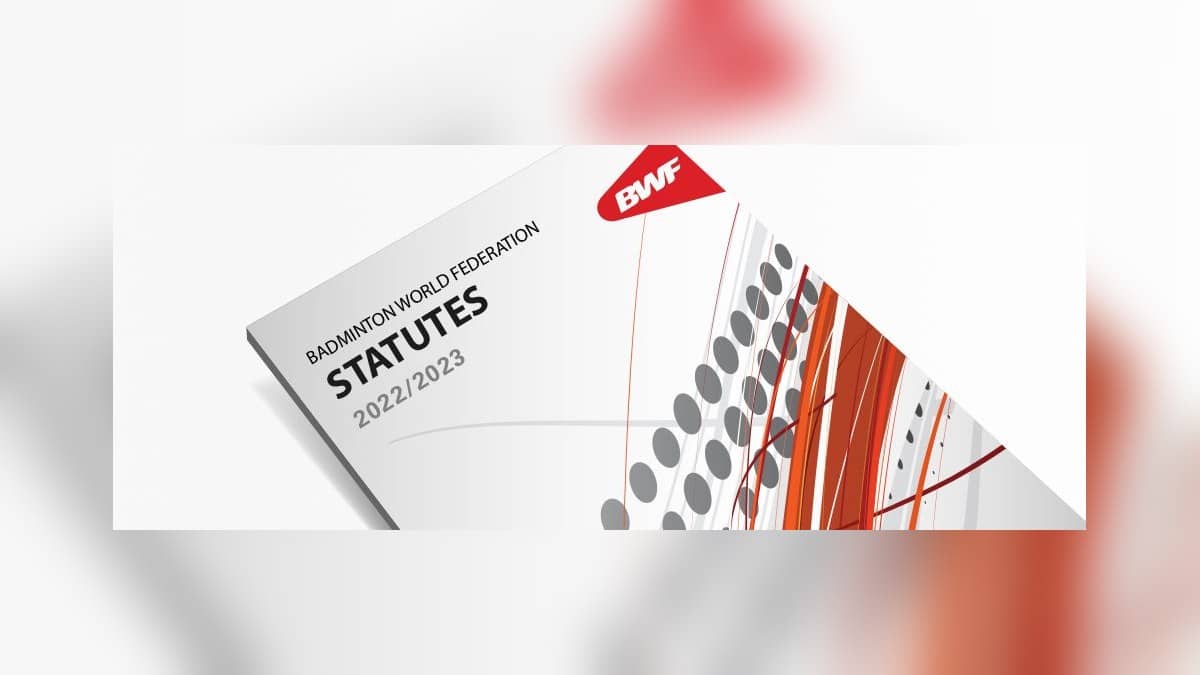
This guide uses the Laws of Badminton dated 26 April 2025, linked from the BWF's official statutes directory when checked on 1 November 2026. That directory separately lists a new edition effective 4 January 2027. The explanation here concerns standard singles and doubles service, rather than the specific exceptions for Para badminton.
| Service question | Rule to check |
|---|---|
| Height at impact | The whole shuttle is below 1.15 metres |
| Feet during service | Part of both feet stays stationary in contact with the court |
| Where to stand | Inside diagonally opposite service courts, without touching their boundary lines |
| Serving score zero or even | Serve from the right service court |
| Serving score odd | Serve from the left service court |
What is the badminton service height rule?
Law 9.1.6 sets a fixed height: the whole shuttle must be below 1.15 metres from the court surface at the instant it is hit. Measuring only the racket head or the server's hand would answer a different question. The point to watch is the shuttle's position at contact.
The server must release the shuttle without adding spin, and the racket must initially strike its base. The racket's movement must continue forwards once the service has started. Missing the shuttle while attempting to serve does not provide a free opportunity to start again; the laws expressly prohibit that miss in a correct service.
Once both players are ready, the first forward movement of the server's racket head starts the service. It is delivered when the racket strikes the shuttle or the server misses it in an attempt. That definition matters when judging foot movement: the stationary feet requirement covers the period from the start until delivery.
Can your feet touch the service lines?
The server and receiver must stand inside their diagonally opposite service courts without touching the boundary lines. This position rule differs from the landing rule: a served shuttle may land on the boundary of the correct receiving service court. Standing on a line and landing a shuttle on that line therefore need separate decisions.
Part of both feet must remain in contact with the surface and stationary during service. A player should not confuse that requirement with having to plant every part of each sole flat on the floor. The law specifies some part of both feet, while still requiring those points of contact to remain stationary.
The shuttle's flight must be upwards from the racket, pass over the net and, if not intercepted, land within the receiver's service court, including its boundary. The relevant service court must be identified before judging whether a serve is long or wide. The BWF court diagram accompanies the laws for that purpose.
Who serves from the right or left in singles and doubles?
In singles, a server with zero or an even number of points serves from the right. With an odd score, the server uses the left. If the server wins the rally, they score a point and serve again from the alternate service court. If the receiver wins, the receiver scores and becomes the new server.
In doubles, use the serving pair's score for the right or left decision. The player diagonally opposite the server receives. The receiving partner cannot take that return instead: a serve hit by the receiver's partner is a fault under Law 13.
When a serving pair wins a rally, the same server serves again from the alternate court. Players change their service courts after winning a point while their own side is serving. They do not switch their positions merely because they gained a point while receiving. Keeping those two events separate makes the serving order easier to follow.
What if the receiver is not ready or someone serves out of turn?
The server must wait until the receiver is ready. An attempted return means the receiver is considered ready. Neither side may cause undue delay once ready, and a delay after the server completes the backward racket movement is specifically treated as undue. The base service law does not state a universal countdown in seconds for every serve.
If a service court error is discovered, including serving or receiving out of turn, it is corrected when the shuttle is not in play and the existing score stands. A let is different: play since the previous service does not count and the same player serves again. Serving before the receiver is ready is one listed reason for a let.
For more rules reading, our cricket DRS guide explains how players can challenge an umpiring decision. Our hockey penalty corner guide and football offside explainer cover how positioning changes a decision in other sports.