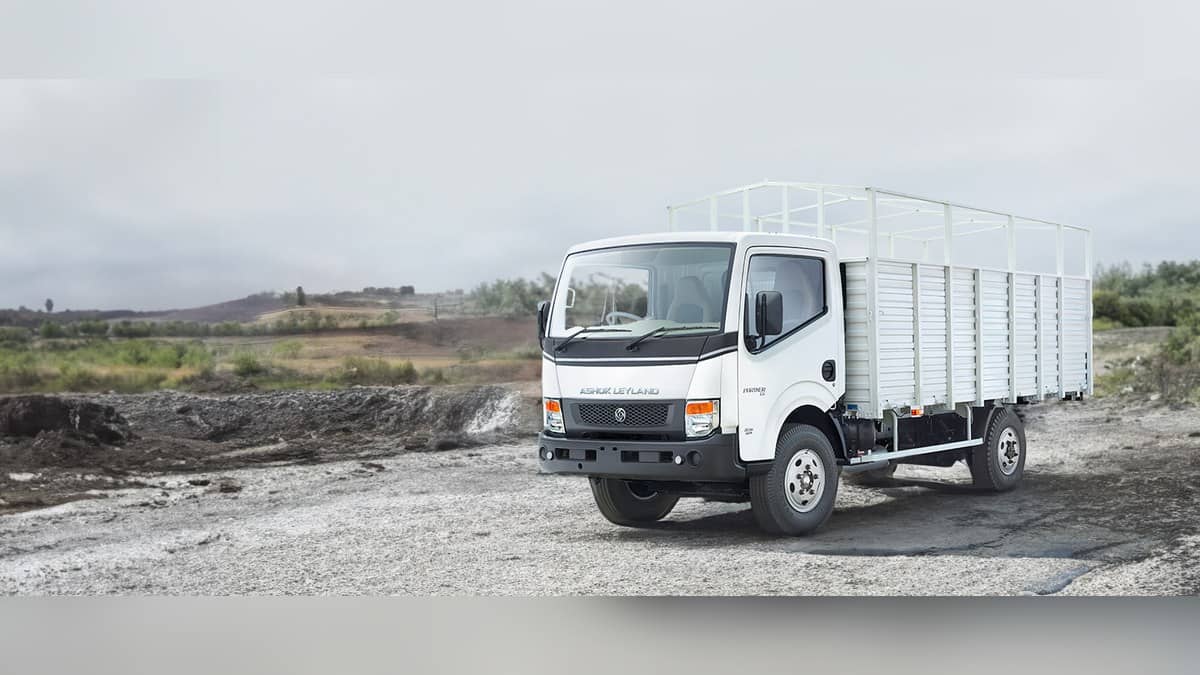
NEW DELHI: Ashok Leyland lists the Partner 4 Tyre from Rs 15,95,000 and Partner 6 Tyre from Rs 16,18,000. The 4 Tyre entry starts Rs 23,000 lower, calculated from those official catalogue figures. Both specification pages list a 140 hp diesel engine, so this comparison needs to look beyond engine output to the weight and body configurations.
| Official listing | Partner 4 Tyre | Partner 6 Tyre |
|---|---|---|
| Starting price | Rs 15,95,000 onwards | Rs 16,18,000 onwards |
| Engine family | ZD30 diesel with DDTi | ZD30 diesel with DDTi |
| Maximum power | 103 kW, 140 hp at 2750 rpm | 103 kW, 140 hp at 2750 rpm |
| Maximum torque | 360 Nm at 1350 to 2750 rpm | 360 Nm at 1350 to 2750 rpm |
| Listed gross vehicle weights | 6250 / 7200 kg | 7490 kg |
| Payload wording | FSD: 3760 / 4565 kg | Up to 4885 kg |
| Body variants named | CBC, FSD, HSD | CBC, FSD, HSD |
The price difference is between starting entries
Price as of 28 October 2026, 23:29 IST. These figures come from the manufacturer's light-vehicle catalogue, which labels them onwards prices. It does not map either starting amount to a complete body, wheelbase and equipment specification in the readable listing. The calculated difference is therefore not the premium between two fully matched trucks.
That is a material distinction for a business preparing a transport budget. A comparison of quoted vehicles should use the same intended body function and identify any additional fittings. A catalogue entry cannot establish what a particular covered body, loading arrangement or equipment package costs unless the manufacturer expressly includes it.
Similar engine output, different weight listings
The published engine descriptions are closely aligned: both identify the ZD30 with common-rail direct injection and turbo intercooling. Both also list power steering. The matching engine figures mean there is no basis here for describing the six-tyre entry as an engine-power upgrade. Its suitability has to be assessed against the exact vehicle configuration.
The weight rows provide a more useful distinction. The four-tyre specification gives alternative gross weights and corresponding FSD payload figures, while the six-tyre page gives a higher gross weight and an up-to payload. Gross weight includes the vehicle itself; payload concerns what it can carry. They must remain separate entries on any comparison sheet.
For the four-tyre truck, this article preserves the paired figures as published rather than assigning either one to the starting price. For the six-tyre truck, the up-to qualification is equally important. It would be misleading to promise that maximum allowance for every body type merely because they share the Partner name.
Body choice changes the job
The six-tyre specification lists a cargo-body size of up to 5261 x 2200 x 1845 mm and wheelbase up to 3955 mm. These are maximum entries on that page, not dimensions established for the catalogue's cheapest configuration. A body can suit the consignment on paper and still need a careful check against the places where loading happens.
For example, a distributor supplying stock from a warehouse to several smaller premises should examine the loading bay, approach road and unloading method as a single working arrangement. A larger body may help consolidate goods, while the delivery location can impose its own practical limits. Neither the tyre-count label nor the engine rating resolves that question.
Who each configuration is for
The four-tyre sheet is relevant to operators whose completed-body load fits one of its stated ratings. The six-tyre sheet becomes relevant when the required load or body calls for its higher listed limits. These are descriptions of use cases, rather than a recommendation based solely on the small gap between the two starting amounts.
An operator moving bulky lightweight goods should examine body space; one moving compact heavy supplies should examine permitted weights. A mixed load needs both checks. The distinction is especially important here because the headline comparison looks financially close while the specification pages describe several possible working configurations.
Keep related comparisons in their own weight category
Our Car price guide and Ashok Leyland Bada Dost price list: Rs 8,85,000 to Rs 10,99,000 in starting figures concern smaller goods vehicles. Their figures should not be used to fill missing Partner variant details. Operators considering borrowing can separately read our Ashok Leyland Saathi price: Rs 6,45,000 starting figure explained.
Official sources: price catalogue, Partner 4 Tyre specifications and Partner 6 Tyre specifications.