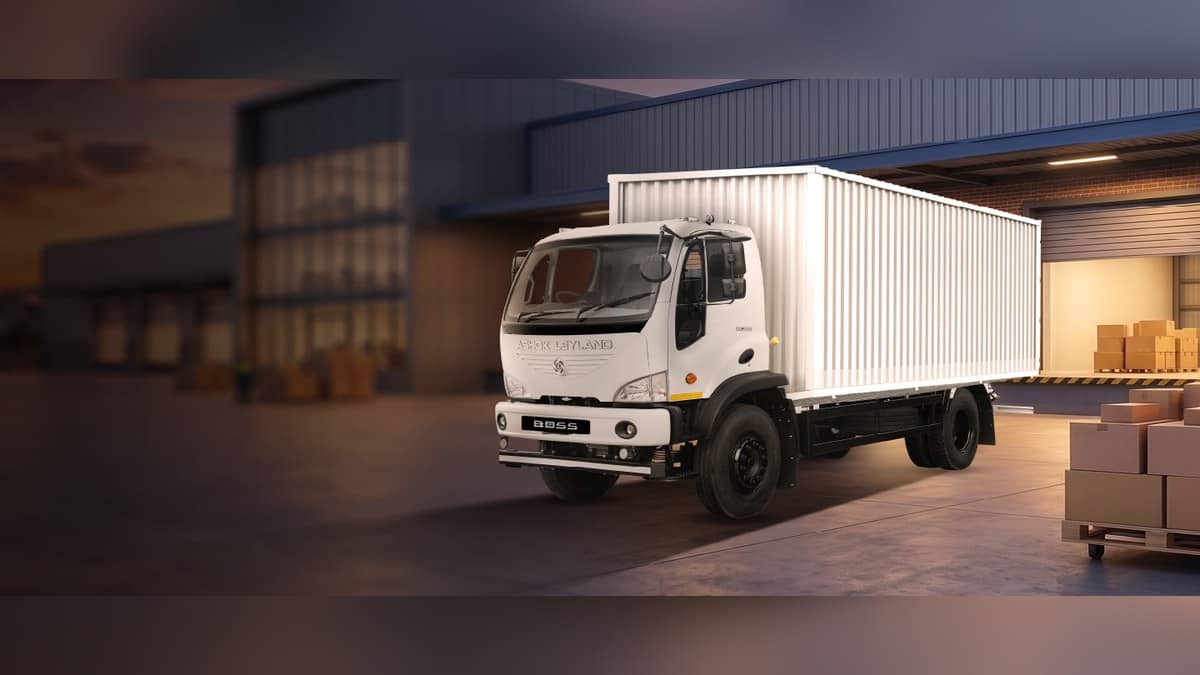
NEW DELHI: Ashok Leyland lists loading spans from 4.3 m to 9.75 m across the BOSS truck family. That range needs careful reading: the specification view that opens by default lists an 11,440 kg gross vehicle weight and four loading spans ending at 6.7 m. The family maximum should therefore not be attached automatically to that displayed configuration.
| Official listing | Figure or description |
|---|---|
| BOSS family loading span | 4.3 m to 9.75 m |
| Family GVW range | 11.4 to 18.49 tonnes |
| Displayed specification GVW | 11,440 kg |
| Displayed loading spans | 4.3 m, 5.2 m, 6.1 m and 6.7 m |
| Displayed engine | 3.8-litre H4 series, four cylinders, 110 kW |
| Displayed transmission | S636, six-speed overdrive |
| Displayed cabin | BOSS Day |
Read the family headline alongside the configuration
The BOSS overview combines a wide weight range, two cabin options and a broad loading-span range. It describes a family rather than a single truck with one body length. The detailed page includes a variant selector, making the configuration behind a specification essential to understanding what is actually being described.
This matters when a transport contract specifies a particular body length. A reference to BOSS on its own leaves too much unresolved. The useful description joins the exact chassis configuration, permitted weight, cabin and intended body. A quotation that simply repeats the longest span from the overview would not establish that the quoted truck can provide it.
What the open specification view actually shows
In the view accessible during this check, Ashok Leyland pairs the four metric spans with 14 ft, 17 ft, 20 ft and 22 ft respectively. These are the manufacturer's paired descriptions. Operators comparing a body-builder drawing with a vehicle quotation should retain the original units on each document rather than assuming rounded feet and metric labels describe a precisely identical measurement.
The displayed configuration also specifies a compression-ignition engine with turbocharging and intercooling, a single dry-plate clutch with a 330 mm diameter, and the BOSS Day cabin. These details help identify the specification being read. They do not establish the equipment on every truck covered by the larger BOSS family overview.
The distinction between a family range and a selected configuration also appears in smaller commercial vehicles. Our Car price guide provides related reading on keeping the version name attached to the figure. The same discipline is useful when comparing a truck quotation with a web specification.
Loading length and carrying weight answer different questions
The BOSS overview is a useful starting point for a fleet shortlist, but the detailed configuration is the document that narrows that shortlist to an actual truck. Loading span describes length. Gross vehicle weight describes the permitted total weight of the vehicle in its loaded condition. Neither figure, by itself, tells an operator how many parcels, crates or finished components can go into a completed body. Body dimensions and the weight of the finished installation also have to be established.
A parcel operator working with bulky cartons needs usable internal space and a practical loading arrangement. A business moving compact, heavy components needs particular care over weight. Those are different operating problems even if both firms initially ask for a BOSS. A longer platform cannot, on its own, settle whether either firm's proposed load is suitable.
Ashok Leyland's own BOSS application imagery includes parcel and e-commerce work, LPG cylinders, auto parts, and fruit and vegetables. That spread explains why the family offers more than one loading span. It does not mean that an application photograph confirms the dimensions, body equipment or permissible cargo of a particular truck offered for sale.
Keep body, cabin and service documents together
For a body proposal, the useful next document is a drawing linked to the precise chassis. It should make clear which length is being quoted and how the finished usable space relates to it. Door openings, partitions and cargo restraints can affect the practical loading arrangement, so the outside length alone does not complete a loading plan.
The cabin description deserves the same attention. The overview's two-option statement does not identify which option is included in an individual quotation. The accessible detailed view says BOSS Day. Anyone recording the truck's specification for a fleet file should carry that exact description forward and resolve any different cabin wording before treating the documents as consistent.
Related reading includes our Manual and power steering on the 70 hp Dost XL and Ashok Leyland Bada Dost price list: Rs 8,85,000 to Rs 10,99,000 in starting figures. Specification labels and ownership terms both become more useful when they remain attached to the vehicle configuration they describe.
Official sources: BOSS overview and application images; BOSS specifications. Pages checked on 4 November 2026.