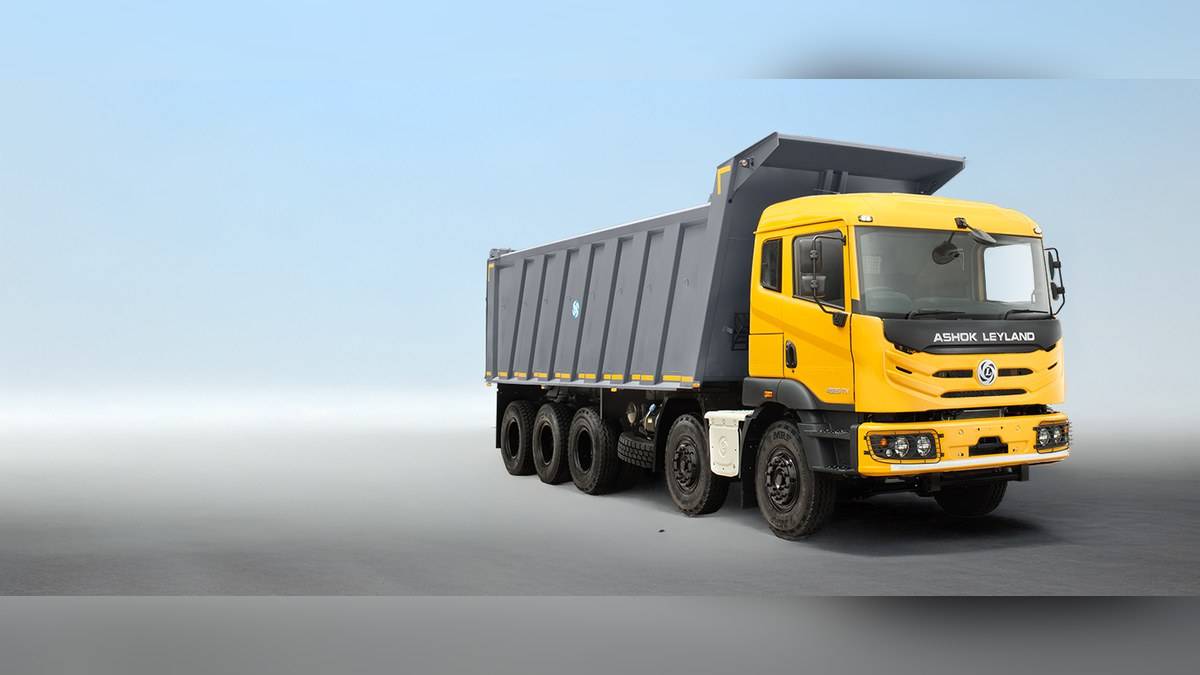
NEW DELHI: Ashok Leyland's 10X4 Tipper specification lists 18, 23 and 29 CBM box bodies, while its overview gives a gross vehicle weight of 48 tonnes. These describe different things: box volume and the complete vehicle's rated gross weight. The body choices should not be read as three different payload ratings.
| 10X4 Tipper item | Official specification |
|---|---|
| Box-body volumes | 18, 23 or 29 CBM |
| Overview GVW | 48 T |
| Displayed engine specification | 6.0 L H-series 6-cylinder; 184 kW |
| Gearbox | ZF9S1110; 9-speed direct drive |
| Clutch | 430 mm; single-plate dry type |
| Rear-axle ratios listed | 5.83:1 or 6.5:1 |
| Cabin description | Crash-test certified Premium N cabin |
The manufacturer also lists the 10X4 Tipper from Rs 59,00,000 onwards. Price as of 9 November 2026, 23:51 IST. No separate public price is given for each box volume or axle-ratio selection, so the starting figure does not establish a price for every configuration.
Volume does not specify the load's weight
CBM is the cubic-metre measure used for the tipper box. It tells a reader about volume, rather than the mass of the contents. An operator carrying different materials cannot assume that filling the same box produces the same loaded weight on every job.
This matters particularly when a body catalogue offers visibly different box sizes under one model heading. A larger body can accommodate a greater volume, but the completed vehicle still has its own weight and loading requirements. Neither a tall sidewall nor an available box option is permission to ignore those requirements.
For the Ashok Leyland entry, the overview's GVW is the relevant published gross-weight figure. It includes the vehicle itself, so it should not be copied into a dispatch instruction as the weight of material that may be carried. Establishing a usable payload needs the completed vehicle's actual unladen specification and applicable documentation.
Specify the working body, not just the badge
A meaningful body description should identify the chosen box, its construction and the associated tipping equipment. The public table does not state that all equipment combinations are interchangeable. A body drawing and a complete build specification would be needed to settle the dimensions and installation of a particular truck.
At a loading point, the distinction becomes practical. The dispatcher needs to know which truck and body have arrived, rather than work from a generic fleet nickname. Material weight, the loading method and the destination's unloading arrangement belong in that job description. The website's volume range cannot settle them on its own.
Consider a fleet that moves between dense aggregate and a lighter bulk material. The work changes even if the badge on the cab does not. Keeping a separate record for the selected body helps prevent the volume quoted for one build being transferred to another truck's loading instruction.
The driveline also has configuration choices
The detailed page names the gearbox and lists alternative rear-axle ratios. It also lists non-reactive and bogie rear-suspension descriptions. Those entries deserve attention in a build record because a model-level headline cannot explain which combination belongs to the vehicle being discussed.
The overview advertises more than one engine option, while the readable detailed page presents a particular engine specification. This report therefore identifies the displayed specification instead of claiming it is the only powertrain offered. A selected variant should be checked against its own documentation before its figures are reused elsewhere.
Axle-ratio alternatives are not a published fuel-consumption comparison. The page does not provide a matched duty-cycle test for each ratio, and it does not support a promise about diesel savings or completed trips. Reading a larger ratio number as a direct productivity guarantee would add a claim that the manufacturer has not quantified here.
What to carry into the vehicle record
The distinctive paperwork for this tipper is the combination of box volume, completed weight specification, driveline and tipping equipment. Keeping those details together is more useful than copying a single gross-weight number into every fleet document. It also leaves a clear reference when workshop or body repairs are discussed later.
The Premium N cabin description is a manufacturer statement about the listed cabin. It should not be expanded into an unnamed independent crash-rating score. No such score is supplied by the pages used here. Similarly, photographs illustrate the product; they do not identify every component supplied at the starting price.
Related reading includes dalimss.news reports on Car price guide, Ashok Leyland BOSS loading spans: 4.3 m to 9.75 m explained and Ashok Leyland Bada Dost price list: Rs 8,85,000 to Rs 10,99,000 in starting figures. These cover separate applications and do not replace the selected tipper's build sheet.
Official sources: 10X4 Tipper overview, technical specification and manufacturer price listing.