GURUGRAM: Days before a Supreme Court-appointed committee is due to file its Aravali report, environmental groups and rural community representatives have told the panel it never set foot in several mining-hit belts of Gurugram, Faridabad and Nuh.
The high-powered committee, which toured nine districts in Delhi, Haryana and Rajasthan between 6 and 11 August, is expected to submit its report to the court by 31 August. It held public hearings in Gurugram, Alwar, Ajmer and Udaipur. What it did not do, according to representations sent in recent days, is walk the stone-crusher belts, dump sites and waste-burning pockets that sit on the Haryana side of the range.
Aravali Virasat Jan Abhiyaan members said the committee skipped affected areas in Gurugram, Faridabad and Nuh, and also missed mining and stone-crushing tracts in Bhiwani, Charkhi Dadri and Mahendragarh. Similar complaints have come from Sikar and Kotputli in Rajasthan, and from Gujarat, where no Aravali district was visited. The groups have asked the panel to seek more time and to widen both the field work and the consultation.
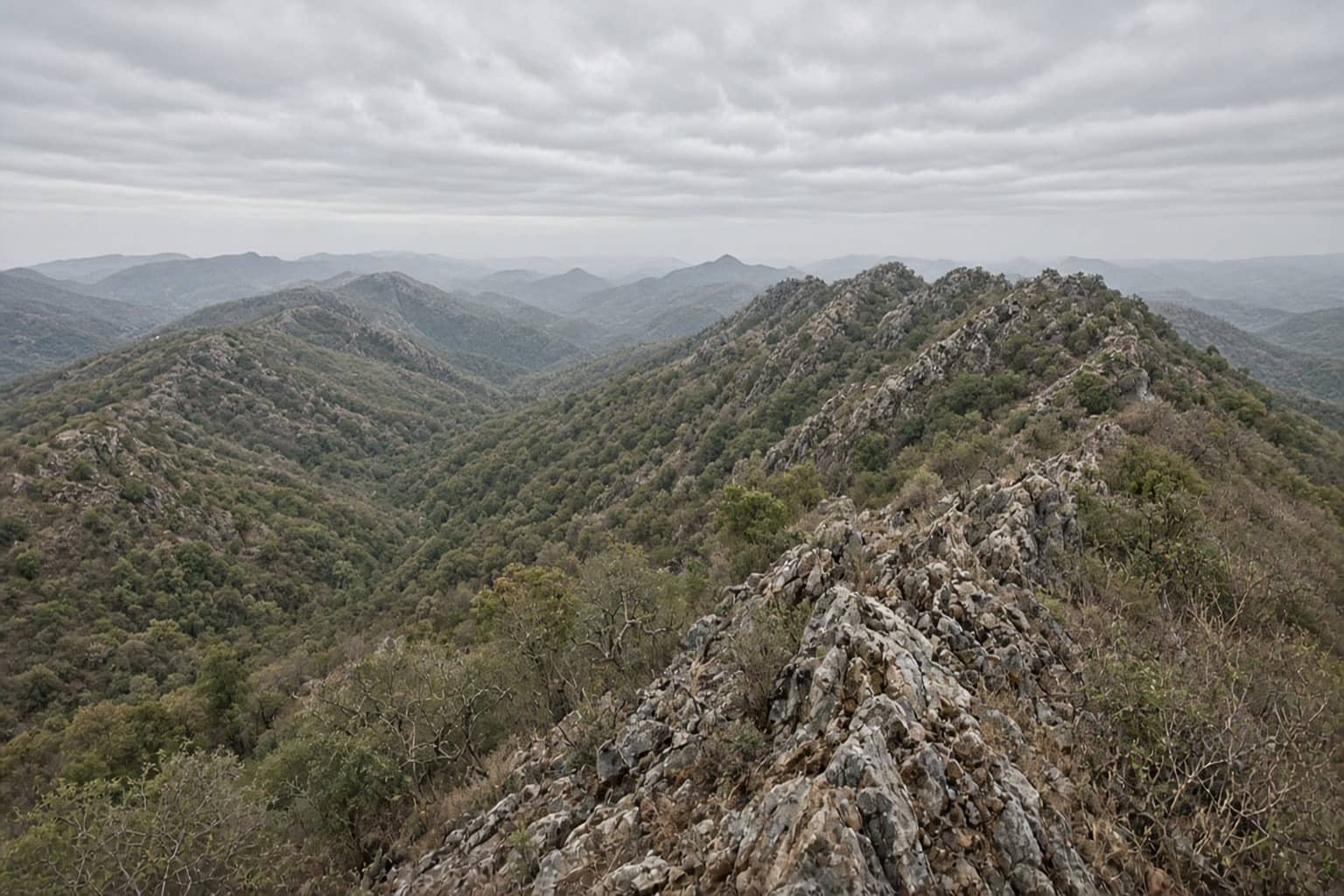
The legal backdrop is the court's 25 May order, which said a fair, impartial expert opinion should be taken after associating the required stakeholders, to clear ambiguities on how the range is identified and protected. A 100-metre elevation threshold has been at the centre of that fight. Conservation groups warn that slopes and buffers falling outside a height-based definition could lose protection even if they recharge groundwater and hold wildlife.
Environmental expert Ravi Chopra, who has chaired two earlier Supreme Court high-powered committees, said those earlier investigations needed term extensions and urged this panel not to rush. Earth scientist C.P. Rajendran said a 100-metre cut-off "could leave fragile slopes and buffer areas vulnerable to mining and real estate development." Ecological restoration practitioner Pradip Krishen called for a cumulative environmental and social impact study of the whole range, done by independent institutions in ecology, geology, public health and wildlife, to set carrying capacity before mining and construction decisions.
Inderjit Singh, vice-president of the All India Kisan Sabha, said communities along the roughly 700-km range had lived by farming and cattle. Excessive mining, he said, had hit water, crusher dust had settled on fields, and grazing land had been lost to dumps.
For Gurugram the gap is specific. The committee did sit at the PWD Rest House here for a stakeholder consultation chaired by Kanchan Devi, with the forest department coordinating, and it did visit some Gurugram and Faridabad sites on 6 August. Citizens at that hearing opposed the 100-metre approach and asked that most of the Aravalis be kept off limits to mining. The latest representations say that hearing is not a substitute for walking the mining-impacted villages that were left off the itinerary.
The report is still due on 31 August unless the panel itself asks the court for more time. Southern Haryana's Aravali belt — Gurugram, Faridabad, Nuh, and the crusher districts further west — is what the groups say the file still does not contain.