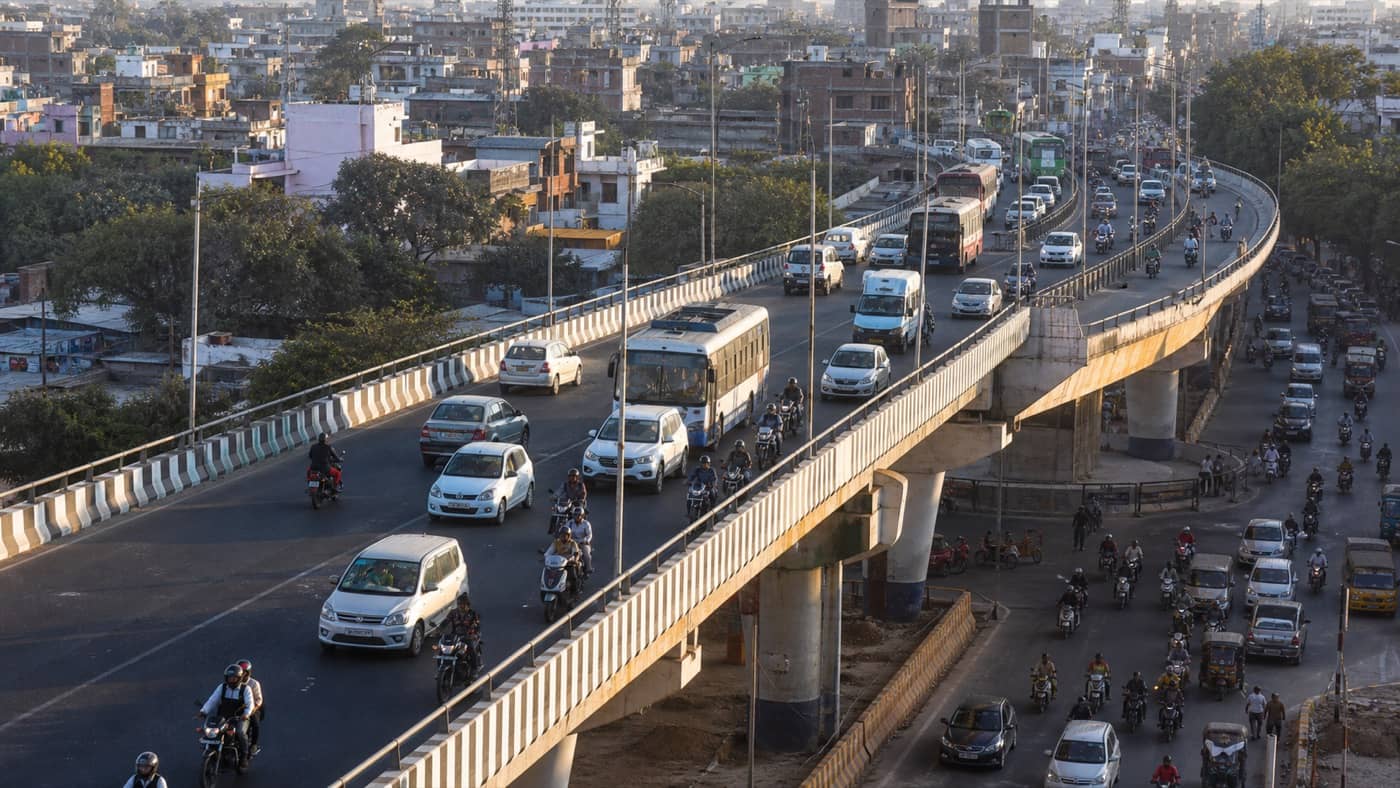
VARANASI: Five of the city’s major overbridges carry about 44,000 vehicles every 24 hours, but the effort to save a few minutes is producing a persistent road-safety problem. Traffic monitoring cited in a local report found roughly 200 instances of rule-breaking a day, especially wrong-side driving on structures where there is little space to correct a mistake.
The more striking number concerns repeat behaviour. The traffic department has reportedly moved against 1,026 vehicles whose owners accumulated between 35 and 40 violations. Their registrations have been suspended on the basis of the enforcement record. Officials say lists of habitual offenders are being prepared so that cases are not treated as a series of unrelated challans.
Each bridge has its own pattern. About 8,000 vehicles use the Kazzakpura railway overbridge daily, where motorcycles are often seen entering the opposite lane, particularly when enforcement thins out late at night. On the Cantt–Lahartara bridge, drivers trying to bypass congestion towards Chowkaghat can make the jam worse by taking the wrong side and blocking legitimate traffic.
The Cantt–Chowkaghat structure faces a different mix of risks. Riders travel there for views of the station and ropeway works, sometimes stopping to shoot photographs or short videos before returning against traffic. Speeding and stunts have also been reported after dark. An overbridge magnifies the danger because sight lines are limited, barriers restrict escape and oncoming traffic has less time to react.
ADCP Traffic Anshuman Mishra said repeat violators are being identified, night monitoring will be increased and tyre killers are expected to be installed again at relevant points. Any physical deterrent will need conspicuous signs, lighting and maintenance; an unmarked or damaged device can create a fresh hazard for lawful road users.
Enforcement alone will not solve the underlying design problem. Clear lane arrows, reflective bollards, cameras positioned at entry points and visible personnel during the hours of highest misuse can make the correct route obvious. The city also needs to understand why drivers choose the wrong side—whether because of a distant turn, an unclear approach, congestion or simple disregard for safety.
The daily traffic figure shows these bridges are essential, not optional shortcuts. A collision or blockage on one structure quickly spills into neighbourhood roads and delays ambulances, buses and commuters. Treating wrong-side driving as a predictable, preventable risk is therefore more useful than waiting for a serious crash to trigger temporary attention.
A useful enforcement dashboard would separate first-time errors from deliberate repeat conduct and show action by bridge and hour. That would allow the public to judge whether cameras and barriers change behaviour instead of merely generating challans. It would also help engineers identify entrances where signs or lane geometry unintentionally encourage a dangerous turn. Road safety improves fastest when design evidence and proportionate enforcement work together.