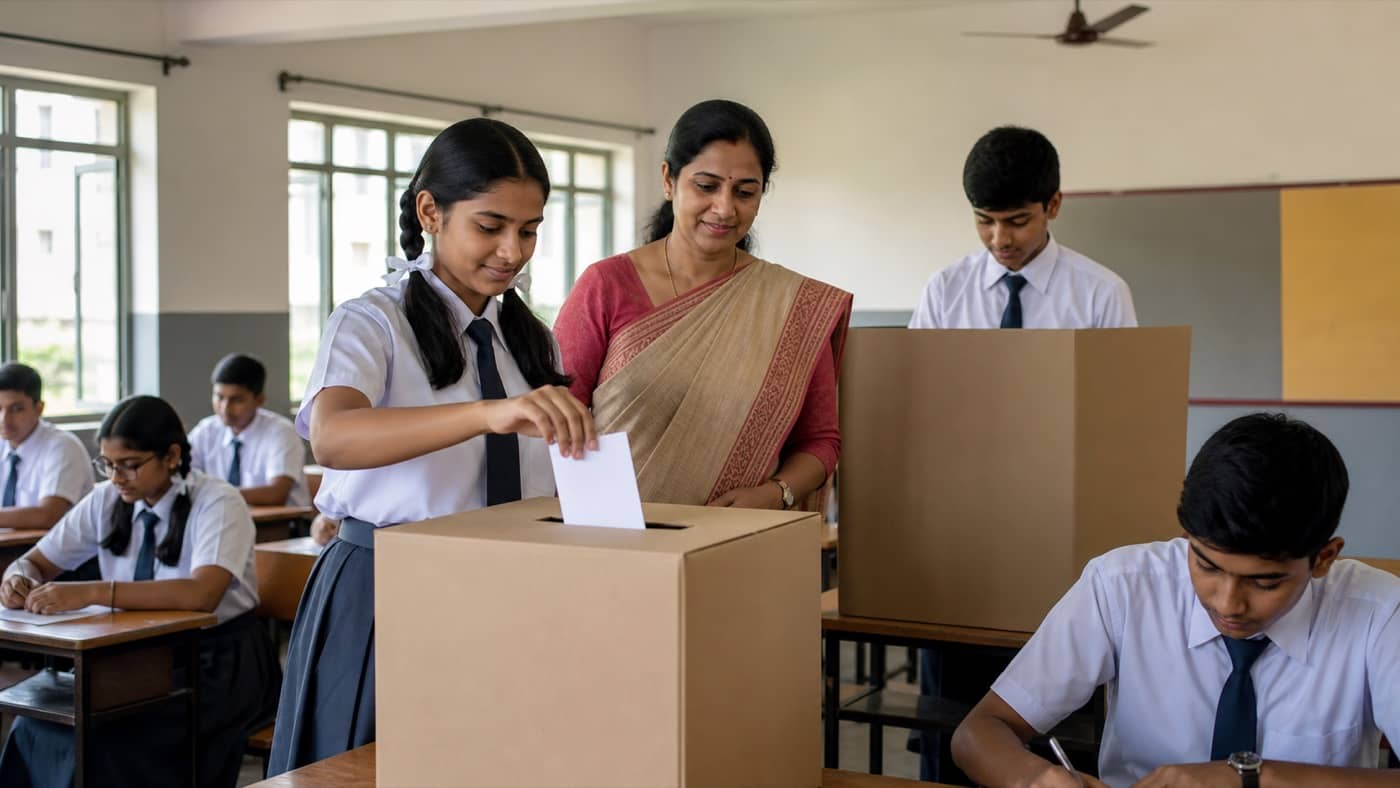
VARANASI: More than 4,000 students across six schools have taken part in a mock-style election to choose their favourite teachers, turning a felicitation programme into a practical lesson on how voting works. The children queued, cast secret ballots and had ink placed on their fingers, many of them experiencing the visible rituals of an election for the first time.
The exercise was organised as part of Amar Ujala’s Teacher Samman programme. Voting took place at RS Convent Sainik School, Glenhill School, Silver Grove School, Samrat Ashok Hindu School, Upper Primary School Thatra and DRS Public School Khewali. The participating students were not choosing a public representative; they were expressing appreciation for teachers through a controlled school activity.
That distinction is useful. Civic education can become abstract when it is reduced to textbook definitions of constituencies, ballots and majorities. A supervised simulation lets students see why a queue matters, why a vote is private, how a ballot is handled and why every eligible participant gets one turn. The inked finger, which excited many children, also opens a conversation about preventing duplicate voting.
School principals quoted in the report said the activity helped students understand both the process and the idea of rights. It can also introduce responsibilities that receive less attention: listening to different views, making an independent choice, accepting the result and treating the people who voted differently with respect.
Using teachers as the subject made the event accessible, though such polls should be handled sensitively. Schools need to ensure that the exercise celebrates the teaching community rather than reducing professional relationships to a popularity contest. Clear criteria, age-appropriate explanation and recognition for the wider staff can keep the focus on gratitude and democratic learning.
The event also offers a route into media literacy. Students can be asked how campaigns influence choices, what information they would need before voting and why rumours should not decide an outcome. Older classes can compare secret ballots with a show of hands, examine invalid votes or learn how election officials maintain a neutral process.
Varanasi’s young participants will wait years before they can vote in a public election, but democratic habits are formed much earlier. Standing patiently in line, marking a choice without pressure and respecting the final count are small actions. Practised well, they make the larger system less mysterious—and remind students that a ballot is both a right and a responsibility.
The lesson can continue after the ballots are counted. Teachers could ask students to audit the process: Was the queue accessible? Was secrecy protected? Did everyone understand the instructions? Letting children identify weaknesses turns a festive activity into genuine institutional learning and shows that democracy includes improving the system, not simply participating in it once.