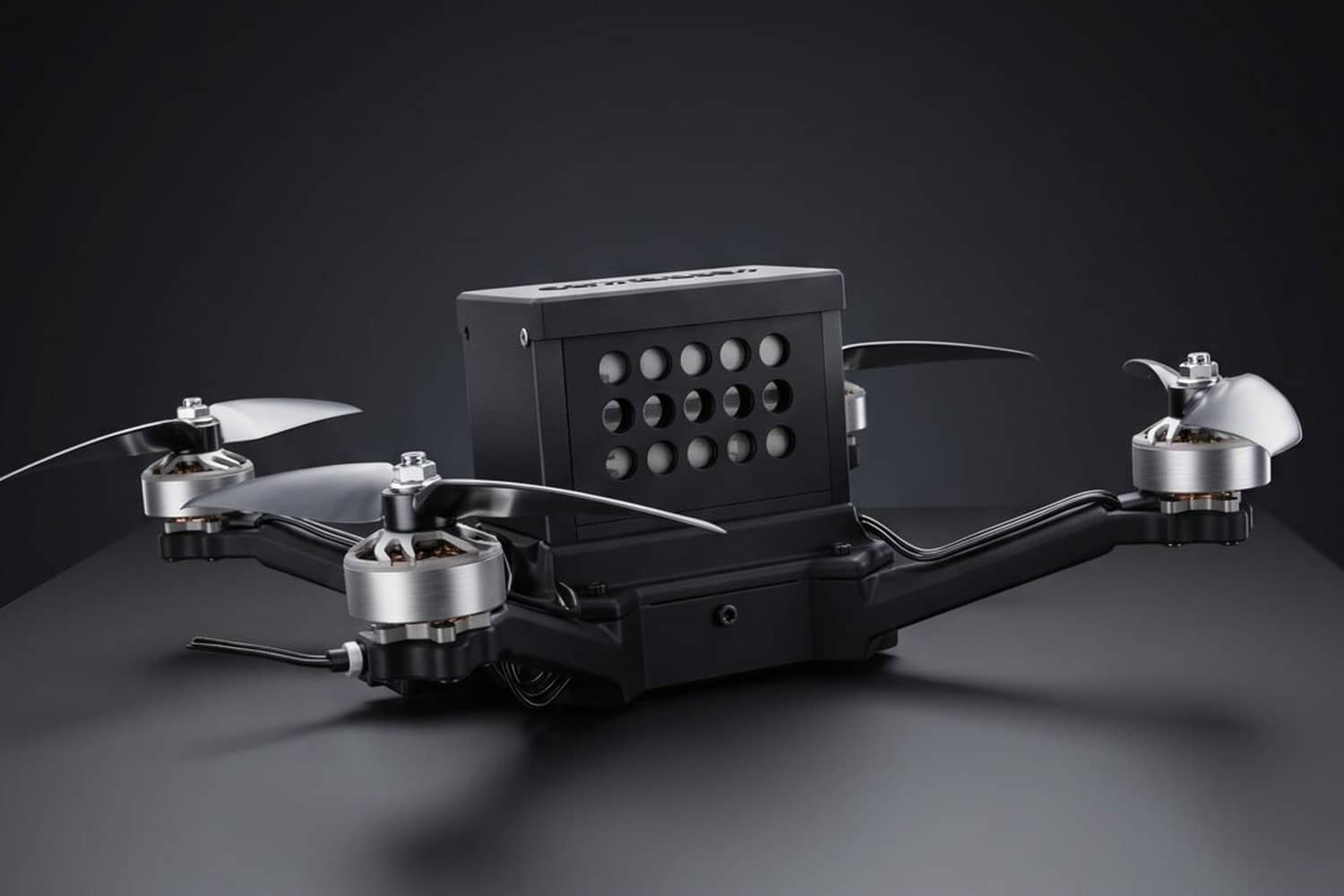
AHMEDABAD: Verniq UAVs Private Limited published a product launch post on 2 October 2026 for Recon TR-01, an FPV-class training quadcopter sold with a structured flight simulator, according to the company's official launch blog.
The post frames the kit for pilot training, operational familiarisation and tactical skill work rather than as a finished combat airframe. Verniq is based in Nikol, Ahmedabad, and lists verniquavs@gmail.com as a public contact on the same site.
Aircraft numbers Verniq publishes
The brochure figures repeated on the launch page include about 900 g maximum takeoff weight, roughly 23 minutes of endurance, 14 m/s maximum speed and 10 m/s wind tolerance. The aircraft is described with GPS-assisted manual and autonomous flight and an Emergency Return-to-Launch failsafe.
Verniq also highlights a tool-free swappable battery, barrel-jack charging and an 80 percent indigenous bill of materials claim. Communication range is written as 200 m to 10 km subject to configuration; the company tells buyers to confirm link settings for each training programme.
What the training simulator adds
The companion simulator, shown in Verniq's launch film, lists physics-based rotor, wind and battery modelling, plus Loiter, AltHold, Stabilize and Acro modes. A 22-level curriculum moves from arming and stick control to autonomous missions, with scoring, coach notes, flight replay and stick-input timelines after lessons.
STRATAGEM, Verniq's ground-control software, is demonstrated for waypoint planning and failsafe missions. Custom 3D environments and keyboard, gamepad or USB RC-transmitter input are also listed. Those features are company product claims, not third-party flight-school certifications.
Verniq's broader product menu still lists ISR multirotors, tactical FPV airframes, mapping platforms, agricultural sprayers and Edu-Stack research kits. Recon TR-01 is specifically the training entry, so procurement teams should not mix brochure pages when writing tender specifications.
The launch film and field-flight clips hosted by Verniq show takeoff, transit and landing rather than weapons carriage. The company separates training hardware from restricted defence variants that it says require NDA review and export-control checks.
Ahmedabad's drone supplier base has grown around iDEX and state aerospace parks, but Verniq's public differentiator here is the bundled simulator curriculum. A 22-level path with replay tools is closer to a flight school product than a bare airframe sale.
Price is not printed on the 2 October launch post. Universities and academies are asked to send training requirements through the contact form. That means published comparisons against imported FPV trainers will need a quotation, not a scrape of the blog.
Operators should also confirm DGCA remote-pilot licensing rules for the intended use case. A training aircraft under 900 g still sits inside India's evolving drone rules; Verniq's DGCA-aligned marketing line is not a substitute for the operator's own authorisations.
Training schools evaluating Recon TR-01 should ask Verniq for the exact radio link kit, battery cycle life and spare-parts lead times. Brochure endurance of about 23 minutes will drop in wind, aggressive Acro flying or cold-weather packs, which is normal for FPV-class trainers.
The simulator's custom environment option is relevant for defence academies that want to rehearse a specific campus or range layout before putting students on live aircraft. That work is contract engineering, not a downloadable default map.
Verniq's timeline on the about page cites SUAS and Aerothon competition wins and a Norway ISR delivery for Bjerkvik Defence. Those references support the firm's claim that it already ships abroad, even though Recon TR-01 itself is a domestic training launch dated 2 October 2026.
Indian readers comparing UAV startups this month will notice many pages push ISR strike airframes. Verniq's decision to lead with a trainer-plus-simulator bundle is a different commercial angle and is why it clears the explainer bar for this batch without a funding headline.
As always with dual-use drone firms, export and end-use declarations sit with the buyer. Verniq's public SCOMET caution is a reminder, not a completed licence.
Readers following Indian UAV and deeptech desks can cross-check our earlier pieces on Hathor Rockets and ARC X1 handheld gaming pre-orders for neighbouring hardware beats. Defence and export configurations remain subject to Verniq's own SCOMET notes on the site.
For universities, Verniq points to a separate Edu-Stack research platform. Training packages, aircraft quantities and simulator demos are routed through the company's contact form rather than a public price list on the launch post.