
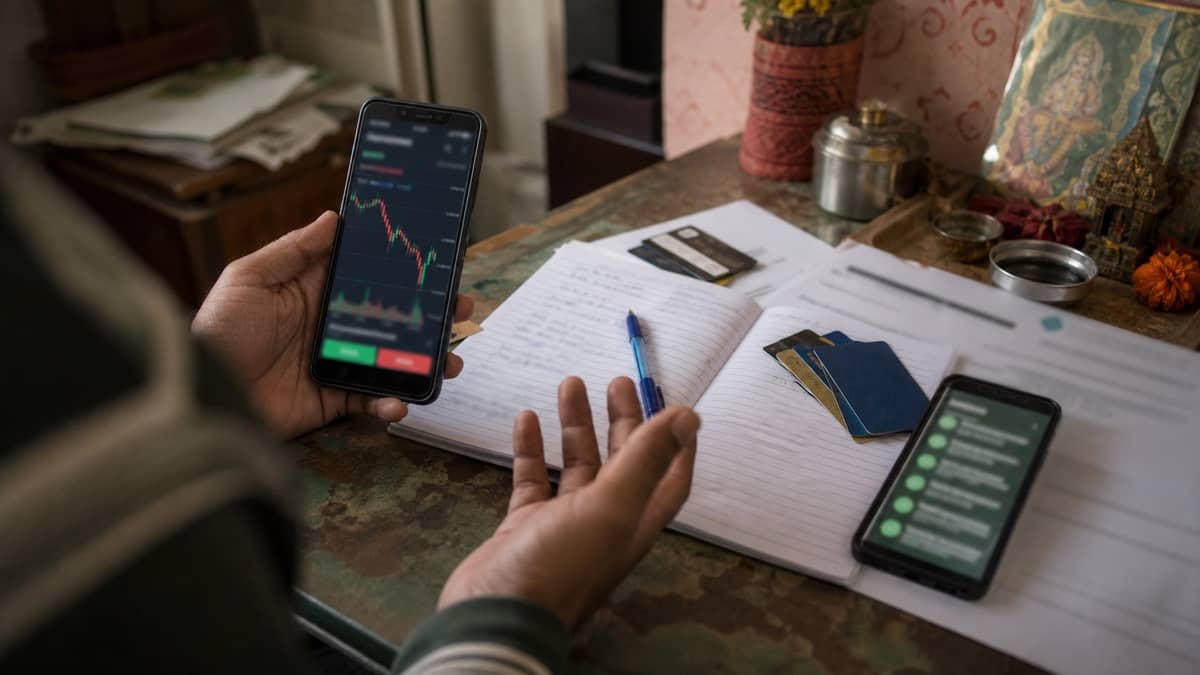
VARANASI: A resident of Shivnagar Colony in the Shivpur area has reported losing ₹5.10 lakh after following a social-media link that promised returns from online trading.
The complainant, Ashish Pal, told cyber police that he encountered the link at about 12.30 pm on August 8. The people operating the account presented themselves as a trading company and initially asked him to deposit ₹750. A small apparent profit and messages showing growing returns were then used to build confidence, according to his complaint.
Between August 8 and August 12, Pal made a series of payments through Google Pay, PhonePe, BharatPe and QR codes. The amounts accumulated to ₹5.10 lakh. When the promised withdrawal did not arrive and more money was demanded, he realised the platform might be fraudulent and reported the transactions.
The cybercrime portal process enabled ₹73,475 to be placed on hold, the initial report said. A hold does not automatically mean the money has been recovered; it prevents movement while banks and investigators verify the beneficiary account and lawful claim. The cyber police have registered a case and are tracing the accounts used to receive the remaining funds.
The pattern is common because it combines patience with urgency. A scammer may allow a victim to see a successful first trade or even withdraw a small amount. The screen balance is not proof of an investment; it can be a number controlled entirely by the operator. As deposits grow, the victim is told to pay tax, a security fee or another “unlock” amount before withdrawal.
No legitimate adviser needs remote access to a phone or payment by an unrelated personal QR code. Before investing, users should verify whether the intermediary is registered with the appropriate market regulator, type the official web address independently and check where money is being sent. A social-media group, celebrity photograph or polished app is not verification.
Speed matters after a transfer. Victims should call the national cyber helpline 1930, submit details at cybercrime.gov.in and notify their bank immediately. Transaction IDs, screenshots, phone numbers, chat exports and the original link should be preserved. Deleting the app before documenting it can remove useful evidence, although a compromised device should be disconnected from networks and checked safely.
Pal’s complaint will now be tested against bank and platform records. The named payment services are channels and should not be presumed involved in the fraud. The larger warning for Varanasi is direct: if an online trading opportunity makes profit look guaranteed and withdrawal conditional on one more payment, the safest trade is not to enter it.