VARANASI: Property-tax arrears owed to the Varanasi Municipal Corporation have reached ₹301 crore across 99,389 properties, with government departments themselves accounting for more than ₹17 crore of the pending amount.
Municipal records cited in the report place the Public Works Department and BSNL at the top of the government list. PWD owes approximately ₹2.35 crore in principal and BSNL about ₹2.19 crore. Together, their principal dues exceed ₹4.5 crore. The report also lists roughly ₹61.76 lakh against the Indian Institute of Handloom Technology at Chowkaghat, ₹16.66 lakh against DIET Sarnath, ₹10.04 lakh against the registration office, ₹9.28 lakh against the Basic Shiksha Adhikari’s office, ₹5.89 lakh against the government food-training centre and ₹3.10 lakh against the excise department.
Several departments have remained in arrears for five to ten years, municipal sources said. Some make part-payments, while others have not deposited any amount for long periods. The corporation has prepared a separate list to pursue these accounts.
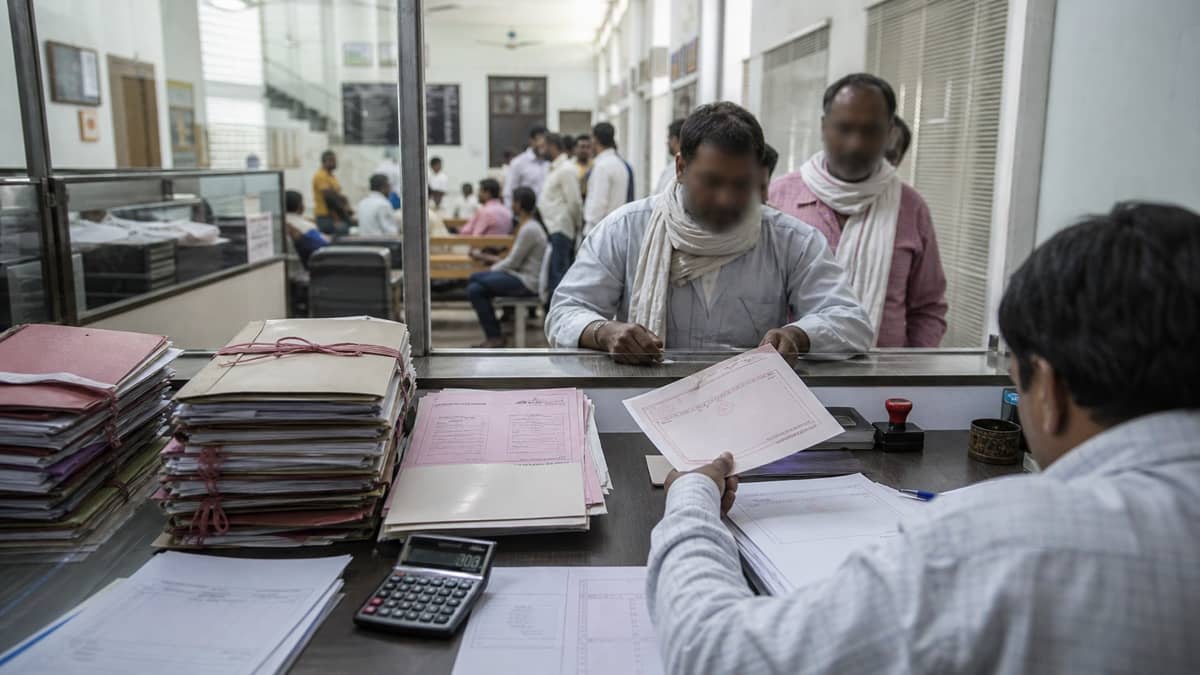
The state’s one-time settlement scheme offers eligible property owners relief on interest through December 2026. Special counters have opened at the municipal headquarters, zonal offices and selected water-tank premises. Applicants must submit a form containing their name, address, property ID, ward, locality and zone, along with the tax bill, a payment receipt or property-tax notice and the amount outstanding as of April 1, 2026.
About one lakh property owners may be eligible for interest relief, according to the estimate. Relief on interest does not erase verified principal dues, and an application should not be signed without checking the assessment. Owners who dispute the area, category, ownership period or earlier payments should attach evidence and obtain a written acknowledgment.
A major complication is the integration of water and sewer-tax records. The report says more than 45,000 owners who paid such charges on time found entries not properly reflected in older registers. Those assertions need case-by-case reconciliation. The corporation should not treat a data-entry failure as taxpayer default.
Government arrears carry a particular credibility cost. A civic body asking households to comply should be able to recover dues from public offices through budget adjustment and inter-departmental coordination. Publishing department-wise amounts, payments and resolved disputes would make the drive more transparent.
Property tax funds routine services whose absence residents notice immediately: waste collection, roads, drains and street lighting. The OTS window gives owners a chance to close old accounts, but the corporation must pair collection with accurate ledgers and accessible correction. A ₹301-crore demand is meaningful only when each underlying bill is defensible—and when public departments follow the same rules as the citizen at the counter.