
Six Held as Cyber Fraud Account-Kit Network Busted in Varanasi
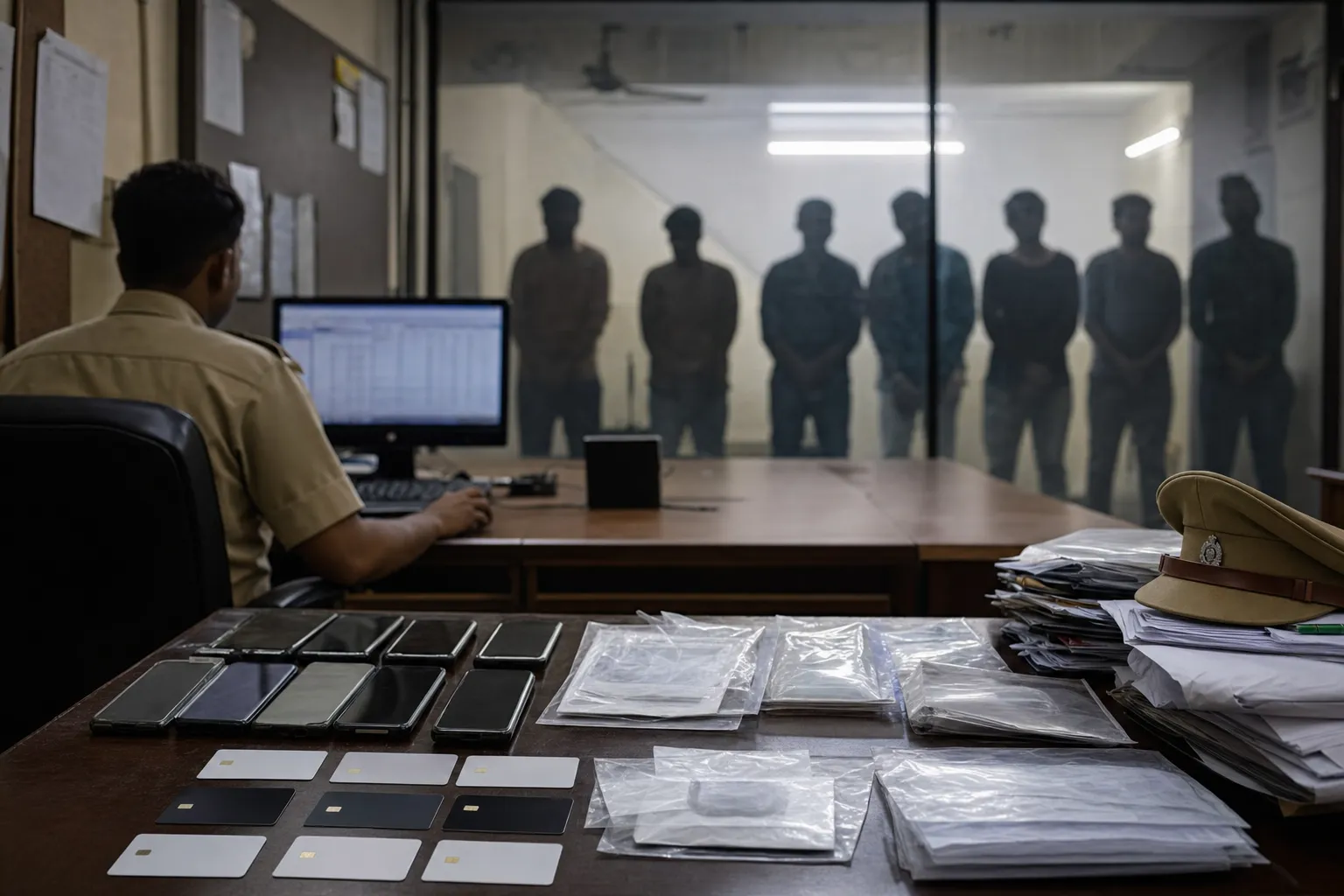
Varanasi, July 26, 2026: Sigra Police and the Cyber Crime Cell arrested six people, including a woman alleged to have led a network supplying bank-account kits to cyber fraud operators. The action was taken under the Cy-Vajra enforcement drive.
Police said the accused allegedly used Aadhaar cards carrying false addresses to open bank accounts. Kits containing passbooks, cheque books, debit cards and SIM cards were then allegedly sold to other cyber fraudsters.
The accounts have been linked to approximately ₹76.44 lakh across 21 cybercrime complaints registered in several states. Bank documents and mobile phones were recovered during the operation in the Mahmoorganj-Bhelupur area.
All six remain accused, and their individual roles will be determined through investigation and court proceedings.
An account kit generally refers to the combination of banking documents and access tools that can allow another person to operate an account. Depending on the case, this may include a passbook, cheque book, debit card, registered mobile number or credentials used for online banking. Investigators examine whether accounts were opened, collected or handed over with knowledge that they could be used to receive suspected proceeds. The existence of an account or transaction alone does not establish criminal intent, and each person’s role must be proved through evidence.
Police inquiries in such cases commonly focus on transaction trails, mobile-phone records, account-opening documents and communication between suspected participants. Officers may also compare complaints reported in different places to determine whether the same accounts or devices appeared repeatedly. Any electronic material collected will have to be preserved and documented so it can be tested during the legal process. The arrested people are entitled to due process, and the allegations will ultimately be assessed by the court.
The case underlines why so-called mule accounts are important to cyber-fraud investigations. Fraudsters often try to separate themselves from victims by moving money through accounts controlled by other people. A person who lends, rents or sells access to a bank account can expose both the account holder and victims to serious financial and legal consequences. People should never share debit cards, PINs, one-time passwords, banking passwords or SIM cards with anyone offering a commission for account access.
Residents who notice an unfamiliar credit, unexpected beneficiary, unexplained debit or request to transfer money should contact their bank promptly and preserve messages, call details and payment references. Screenshots can help, but original messages and transaction records should not be deleted. Quick reporting may help banks and investigators trace the movement of funds, though recovery cannot be guaranteed.
Police are expected to continue examining whether more accounts, intermediaries or beneficiaries are connected with the suspected network. Further findings should be reported only after verification because a financial trail may involve innocent account holders, victims and service providers as well as suspects. For now, the confirmed development is the arrest of six people and the continuing investigation into the alleged supply of account kits for cyber fraud.
Related Stories

Ramnagar Constable’s WhatsApp Resignation Withdrawn After ACP Counselling

Municipal Commissioner Inspects Jangambadi Ward 89 Sewer Overflow and Damaged Lanes

Civic Body Invites Tenders for ₹13 Crore Drainage Works in Newly Extended Areas

Mirzamurad Police Arrest Mother After Probe Finds Role in Stepdaughter Assault Case

Sigra Police Arrest Man Over Alleged ₹6 Lakh Fake BHU Assistant Professor Letter
