₹880 Crore Power Upgrade Brings Underground Cables Back To Varanasi’s Agenda
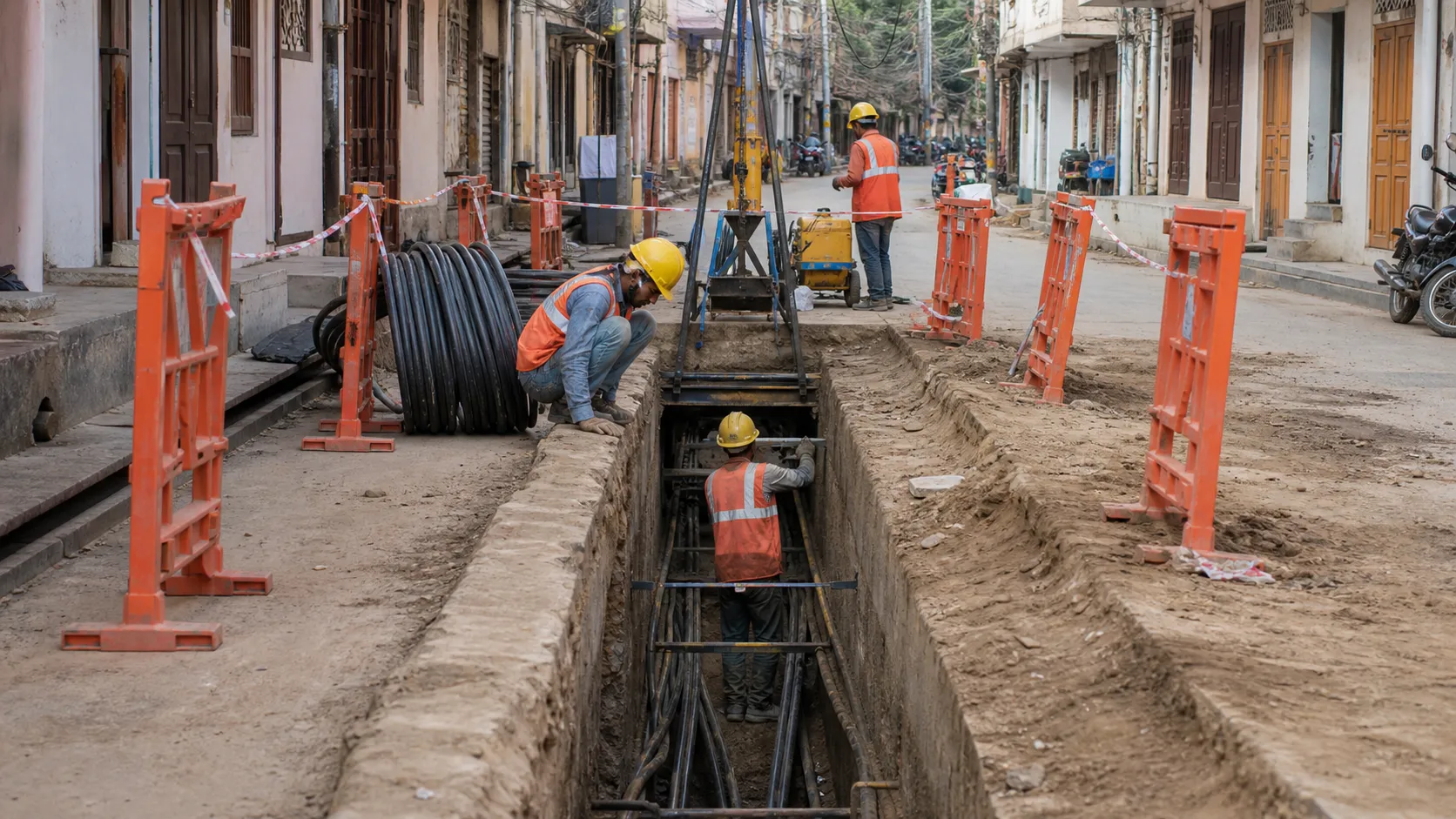
VARANASI: The city’s next major utility project will largely disappear from view once it is finished. Works worth more than ₹880 crore under a Smart Distribution Project and the undergrounding of electrical infrastructure are set to receive their formal start during the Prime Minister’s Varanasi programme on Sunday.
Moving power lines underground is usually sold through cleaner skylines and fewer dangling cables. In Varanasi, the sharper public question is reliability. Dense lanes, tree cover, road-cutting, monsoon moisture and a patchwork of old and new connections make electricity maintenance unusually complicated. An underground system can reduce exposure to wind, branches and roadside collisions, but it also demands careful mapping and quick fault detection.
The official announcement gives the combined value of the works, not a neighbourhood-wise construction calendar. That missing detail will matter to residents and traders. Cable-laying requires excavation, utility coordination and restoration of the road surface. A project meant to improve electricity can cause weeks of local inconvenience if trenches are left uneven or if water, sewer and telecom lines are not mapped before digging begins.
Old Varanasi presents an additional engineering challenge. Many lanes are narrow enough that even a small work zone affects deliveries, emergency access and pedestrian movement. In newer colonies, the issue is different: repeated road cuts by separate agencies often damage recently resurfaced streets. The smart part of the project will be tested by whether departments share plans before the first machine arrives.
Underground cables are not maintenance-free. Faults can be harder to locate than on overhead lines, and repairs need trained crews, testing equipment and access points that remain usable after roadwork. Residents will also want to know how transformers, feeder pillars and junction boxes are being placed, especially near schools, markets and waterlogged stretches.
For businesses, steadier supply can reduce dependence on inverters and generators. Small workshops, silk units, clinics and food outlets feel even short interruptions because machines, refrigeration and digital payments stop together. A reliable network can therefore have an economic value beyond the electricity bill.
The project also creates a chance to tidy the visual clutter of poles where power, cable television and telecom wires are bundled without clear ownership. That will require rules for private operators as well as public investment; burying one set of cables while leaving unsafe loops above ground would solve only part of the problem.
Sunday’s launch places a large figure against Varanasi’s power network. The next useful disclosure will be a feeder-wise plan, with timelines, road-restoration standards and a contact point for complaints. Residents have heard the promise of smart infrastructure before. This time, they will judge it every time the lights stay on during a storm—and every time a dug-up lane is properly put back.
Sources and reporting
Based on the Prime Minister’s Office project note for the 2 August 2026 Varanasi development programme, reviewed on 1 August 2026.
Related Stories
Railways Orders Weekly Puja Special 09465 via Varanasi Through November
Hindi Diwas Marked Across BHU, Sanskrit University and Kashi Vidyapith

Lohta Police Register FIR After Bhitari Villager Alleges Hostage Beating
Baragaon Police Book Named Youths After Kazisaray Tea-Stall Assault and ₹1,900 Loot

Mayor Announces Stricter MCG Drive Against Stray Cattle