Varanasi Plans 15 Smart Bus Shelters with EV Charging and Free Wi-Fi
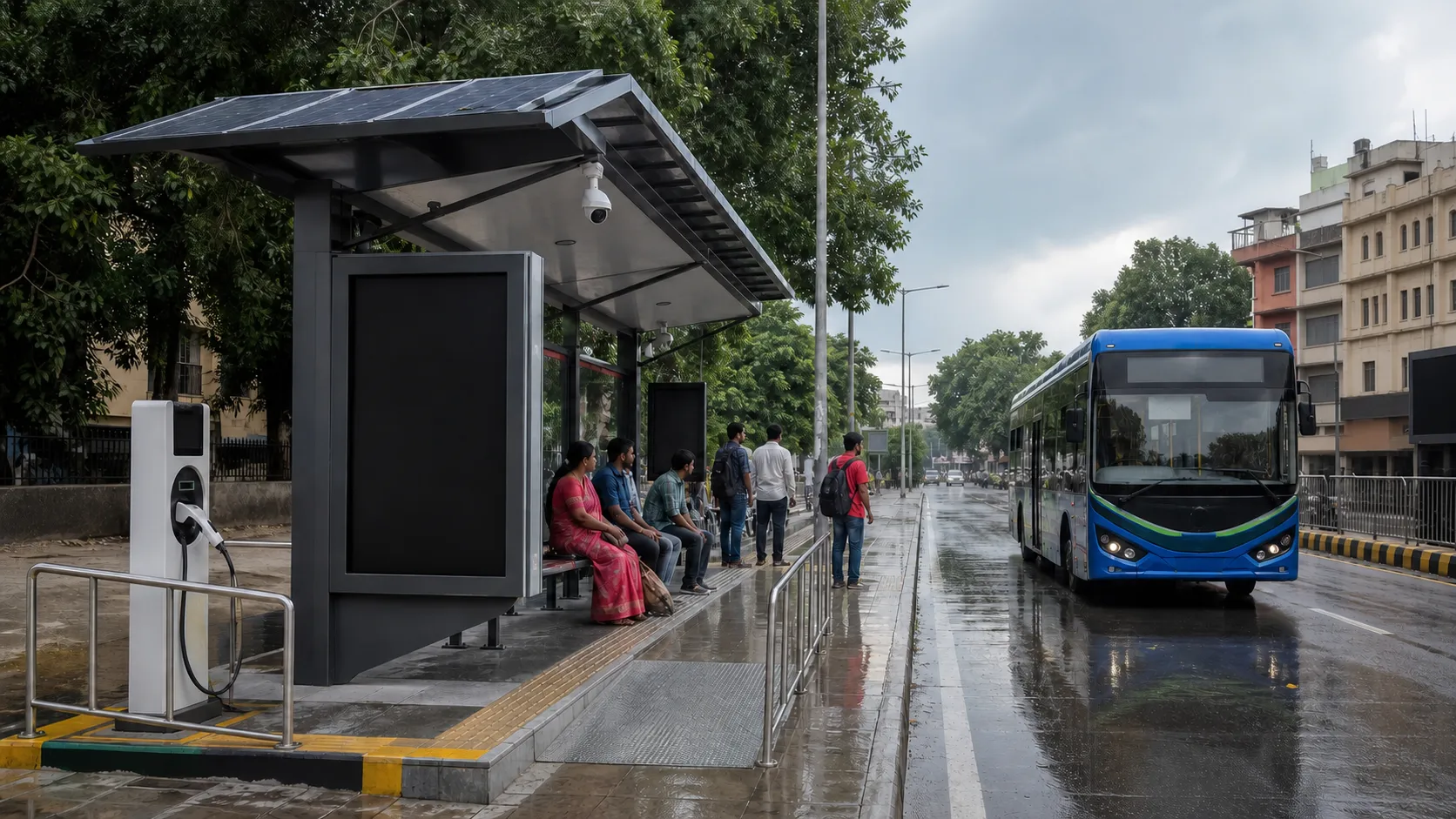
Varanasi is set to get 15 modern bus shelters designed as compact public-service hubs rather than simple roadside sheds. The proposed facilities will combine live bus information, free Wi-Fi, mobile and electric-vehicle charging, CCTV surveillance, solar power and wheelchair-friendly access at some of the city’s busiest movement points.
The plan covers Englishia Line near Kashi Vidyapith Gate No. 2, Kachahari Crossing, the space below the Lahartara–Chowkaghat flyover, Ravindrapuri near Acharya Ramchandra Shukla Crossing, Maidagin near Town Hall and Bhelupur near the Jal Kal office. Shelters are also proposed at Havelia Crossing, Sarnath Crossing, Domri Road in Ramnagar, Banaras Station Road, Namo Ghat Road, Bada Lalpur, Fatman Road, Rath Yatra–Kamachha Road and Sigra near the Smart City office.
Municipal Commissioner Himanshu Nagpal has said the shelters will include smart LED displays, seating, mobile-charging points, EV-charging stations and free internet access. CCTV cameras and adequate lighting are part of the safety design, while solar energy is expected to support the facilities’ electricity requirements.
For passengers, the most useful feature may be the least flashy one: reliable arrival and departure information. A display is only smart if the data behind it is accurate. Real-time timings can reduce uncertainty at stops, particularly for students, office workers, senior citizens and visitors who do not know the route network well. City maps and emergency-information systems are also planned.
The shelters are expected to provide protection from summer heat, monsoon rain and winter cold. Drinking-water points and public toilets on a user-fee basis have been included in the proposal. Varanasi Smart City officials have also highlighted accessible entry for wheelchair users and older passengers, an area where traditional roadside stops frequently fail.
The locations show that the project is trying to serve different versions of Banaras at once: railway passengers near Englishia Line and Banaras station, commuters in Sigra and Bhelupur, old-city traffic around Maidagin, and visitor routes towards Sarnath, Ramnagar and Namo Ghat. That spread makes consistent maintenance more difficult, but also more important.
A revenue model is planned through advertising panels, digital displays, EV-charging points, retail kiosks and other public utilities. The idea is sensible only if commercial activity does not swallow the passenger space. Seating, accessible movement and a clear view of arriving buses should remain the first priority, while advertising and kiosks support upkeep from the side.
No verified construction cost or final completion date has been announced in the available project details. Residents should therefore wait for the tender, work schedule and location-wise rollout before assuming when a particular shelter will open.
The long-term test will not be the inauguration photographs. It will be whether screens keep working, toilets stay usable, Wi-Fi survives peak crowds, solar panels are maintained and buses actually stop where passengers are waiting. If the city gets those basics right, the 15 shelters could make public transport feel noticeably more predictable and dignified without pretending that technology alone can solve every mobility problem.
Related Stories
Railways Orders Weekly Puja Special 09465 via Varanasi Through November

Hindi Diwas Marked Across BHU, Sanskrit University and Kashi Vidyapith

Lohta Police Register FIR After Bhitari Villager Alleges Hostage Beating

Baragaon Police Book Named Youths After Kazisaray Tea-Stall Assault and ₹1,900 Loot
Mayor Announces Stricter MCG Drive Against Stray Cattle