
A United Nations assessment launched on October 29 documents about 252 million hectares under ecosystem restoration across 149 countries, while warning that progress remains uneven and insufficient for global goals. The report, Nature's Comeback, was presented during the UN biodiversity conference in Yerevan, Armenia, by UNEP, FAO and the Convention on Biological Diversity secretariat.
The launch brought together a global stocktake and recognition for five restoration initiatives in China, Colombia, Ethiopia, Italy and the United States. Its findings concern work already under way, rather than a newly adopted law. They also distinguish restoration activity from completed ecological recovery, which can require sustained care over many years.
Water ecosystems trail restoration on land
FAO's accompanying analysis says about 232 million hectares of the documented total are terrestrial ecosystems. Freshwater accounts for 11 million hectares, and marine and coastal ecosystems for 5.7 million. Another 3.2 million hectares could not be assigned to a particular ecosystem category. The figures describe the recorded reach of restoration, not a count of habitats already returned to health.
Against the estimated area needed for the global restoration target, documented implementation stands at 49 percent for terrestrial ecosystems, 4.5 percent for freshwater and 23 percent for marine and coastal ecosystems. FAO also says 46 countries supplied no quantitative restoration-progress data through any of the assessed reporting frameworks. Differences in definitions and monitoring methods leave gaps in the picture.
The regional totals require similar caution. UNEP reports 192.2 million hectares in Asia and 36.3 million in Africa, with smaller documented areas in other regions. These figures are not a league table of successful restoration. UNEP says they reflect the extent of activity, regional land area and countries' ability to monitor and report their work.
Financing must last beyond individual projects
The report calls for annual restoration investment to rise to an estimated $296 billion by 2030. FAO identifies the comparison figure, roughly $64 billion, as traceable restoration finance in 2022. The higher amount is an estimated requirement, not money already raised or a funding programme newly available to applicants.
UNEP's explanation identifies a basic financing difficulty: project costs arrive early, while benefits such as cleaner water, flood protection, carbon storage and healthier ecosystems can take years to develop. It argues for arrangements that sustain ecological recovery over the long term, rather than financing isolated projects and assuming their benefits will maintain themselves.
It also stresses that restoration involves more than planting trees or rehabilitating a single site. Planning across landscapes and seascapes can connect habitats, while meaningful local participation and secure land rights help support lasting results. Measuring returning biodiversity and ecosystem functions is therefore important alongside counting the hectares where work has begun.
City projects show what implementation looks like
Among the newly recognised initiatives, the Green Seattle Partnership brings city agencies, community groups, volunteers and practitioners together to care for urban forests. Its UN Decade profile records 830 hectares under restoration and 1.5 million native plants planted through partnerships and collaborations over two decades. Job training is another part of the programme, alongside residents' involvement in managing their surroundings.
The profile lists 851 hectares to be restored by 2030 and 878 green jobs to be created by that year. Those are forward-looking figures, separate from its account of existing restoration activity. Seattle's example illustrates how forest management within a city can combine ecological work with community participation, without making every proposed outcome an accomplished result.
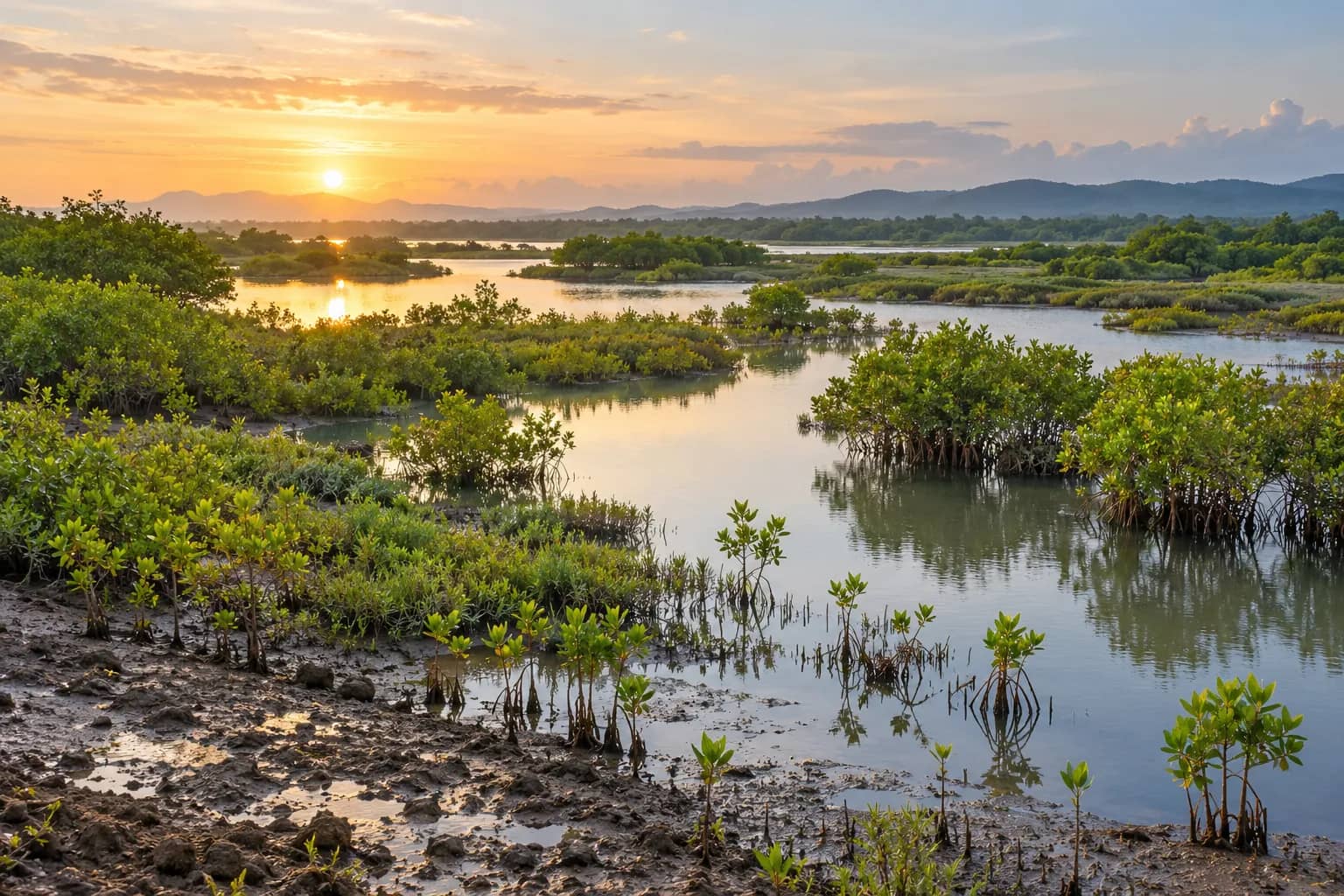
In Colombia, Urban Nature Reborn focuses on Barranquilla's Ciénaga de Mallorquín coastal wetland, where waste, sedimentation and fragmented habitats have caused damage. The initiative restores mangroves and other habitats while creating public spaces. Its UN Decade profile records 650 hectares under restoration, with 740 hectares listed for restoration by 2030.
The Colombian project also involves local fishers in mangrove nurseries and residents in nature guiding and wetland-linked businesses. Alongside the global assessment, these examples show why implementation needs to be assessed both environmentally and socially. UNEP says efforts must continue beyond 2030, with that year treated as a milestone rather than the end of ecosystem recovery.
Related coverage: WMO reports record greenhouse gas concentrations and Europe's proposed climate-resilience plans.