NASA's twin TRACERS satellites have produced their first evidence about how the solar wind transfers energy into Earth's magnetic environment. In an October 29 update, NASA said the early findings favour differences across locations over changes with time as the main source of the observed variation in magnetic reconnection.
The result concerns a physical process behind space weather, rather than a warning of an approaching storm. NASA says understanding reconnection can help scientists improve their understanding of geomagnetic storms, which can affect astronauts near Earth, communications and electricity networks. The mission is led by the University of Iowa, with support from Southwest Research Institute.
What the first observations show
The research paper, published in the Journal of Geophysical Research: Space Physics on October 29, examined 207 paired encounters with the southern polar cusp between November 2025 and February 2026. The authors separated the encounters into those indicating spatial variation, those indicating changes over time and those that could not be classified clearly. These are observations from an earlier period, analysed in a newly published study.
Spatial variation was more common across the solar-wind conditions examined. But the authors describe the findings as preliminary. Almost every encounter dominated by spatial variation also contained changes with time within the larger structures. The distinction is about which pattern leads, not a claim that one kind of change excludes the other.
There are limits to the comparison. Classifying some encounters involves researcher judgement, and accurate spacecraft orientation data were not always available. Electric-field measurements could provide the additional check on movement for only about half the encounters. The researchers say more paired observations are needed to establish the pattern on a firmer statistical basis.
Why two satellites matter
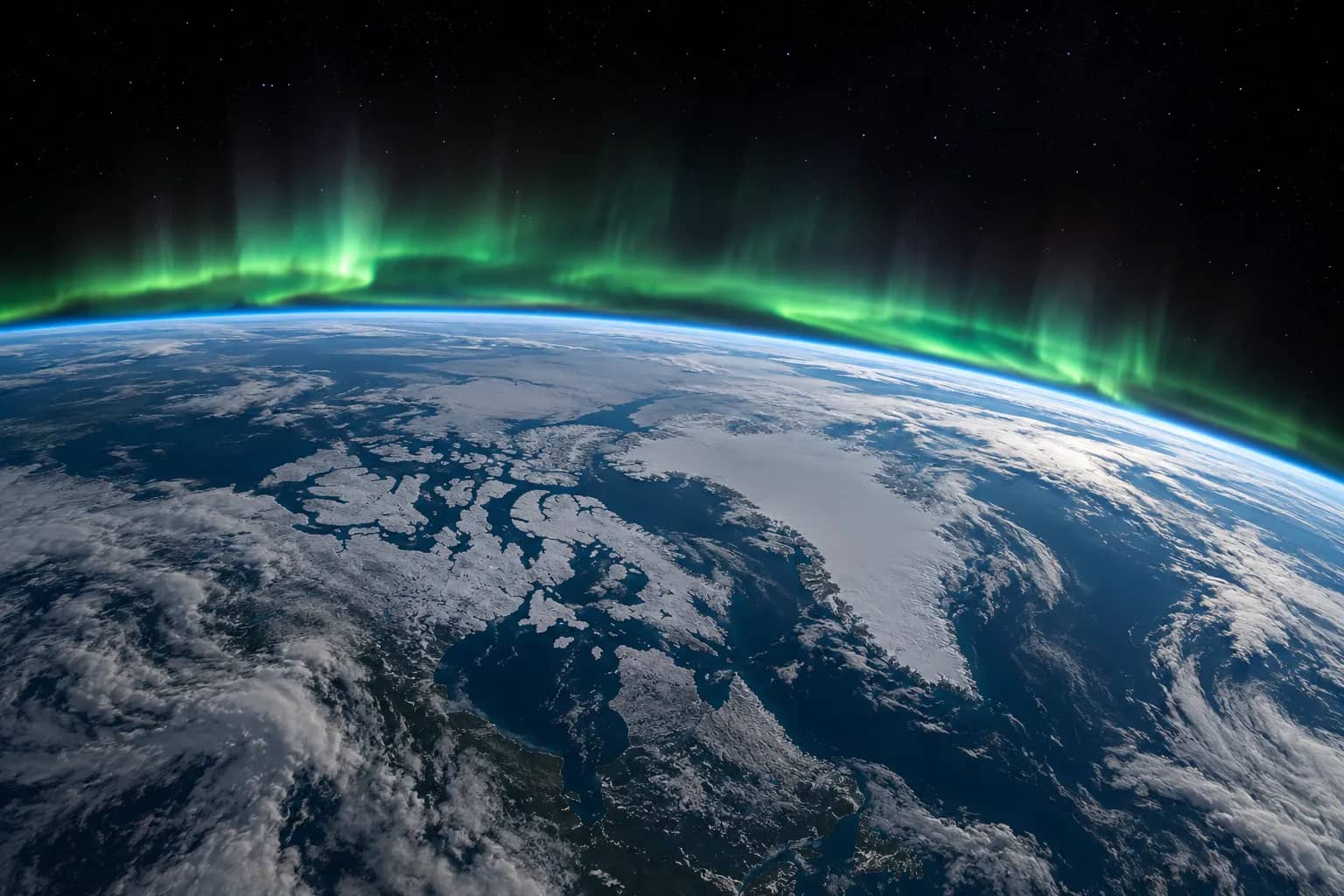
Earth's magnetosphere is the region shaped by its magnetic field. The solar wind consists of charged particles flowing from the Sun. Where the two magnetic systems interact, reconnection allows energy to pass between them. The polar cusps are funnel-shaped regions near the magnetic poles, concentrating particles and waves into a smaller area that spacecraft can repeatedly cross.
The University of Iowa's mission explanation sets out the difficulty with a single spacecraft: a changing measurement could reflect movement into a different region, or a change that happened while the spacecraft was travelling. Two satellites following each other provide closely spaced views of the same cusp, giving researchers a comparison that one passing sensor cannot supply. The mission combines particle observations with measurements of electric and magnetic fields and waves. Together, these describe the local plasma through several properties, rather than relying on particle counts alone.
The Analyzers for Cusp Ions look for a pattern in the particles' energies. As the satellites cross the cusp, the highest-energy ions tend to appear towards its equatorward edge. Rather than declining smoothly across the region, the measured energies often form steps, staying similar over a short latitude range before dropping to another level.
Iowa's instrument guide explains the test in practical terms. Steps appearing at the same latitude in both spacecraft's measurements indicate spatial variation. A shift in their latitude points to variation with time. The instrument samples every 0.312 seconds, allowing the team to compare fine details rather than treating an entire crossing as one measurement.
A changed observing plan
The route through the southern cusp followed a problem after launch. In a December 12, 2025 operational update, NASA reported that a power-subsystem issue had interrupted communication with one spacecraft. Controllers restored contact and changed its orientation so its solar panels could produce more electricity.
That update said the spacecraft's battery was no longer working properly. Active science observations therefore needed sufficient sunlight. Moving the observing target from the northern cusp to the southern cusp allowed the affected spacecraft to collect sunlight and power up on Earth's dayside before reaching the science region. This is the operational background to the new results, not a newly announced failure.
NASA's October 29 account says the satellites now observe the southern cusp several times daily. A mission extension approved in September allows the observations to continue into spring 2027. Those further measurements are intended to test and extend the initial findings.
Related reporting: two gas rings around a white dwarf and WMO greenhouse-gas measurements.