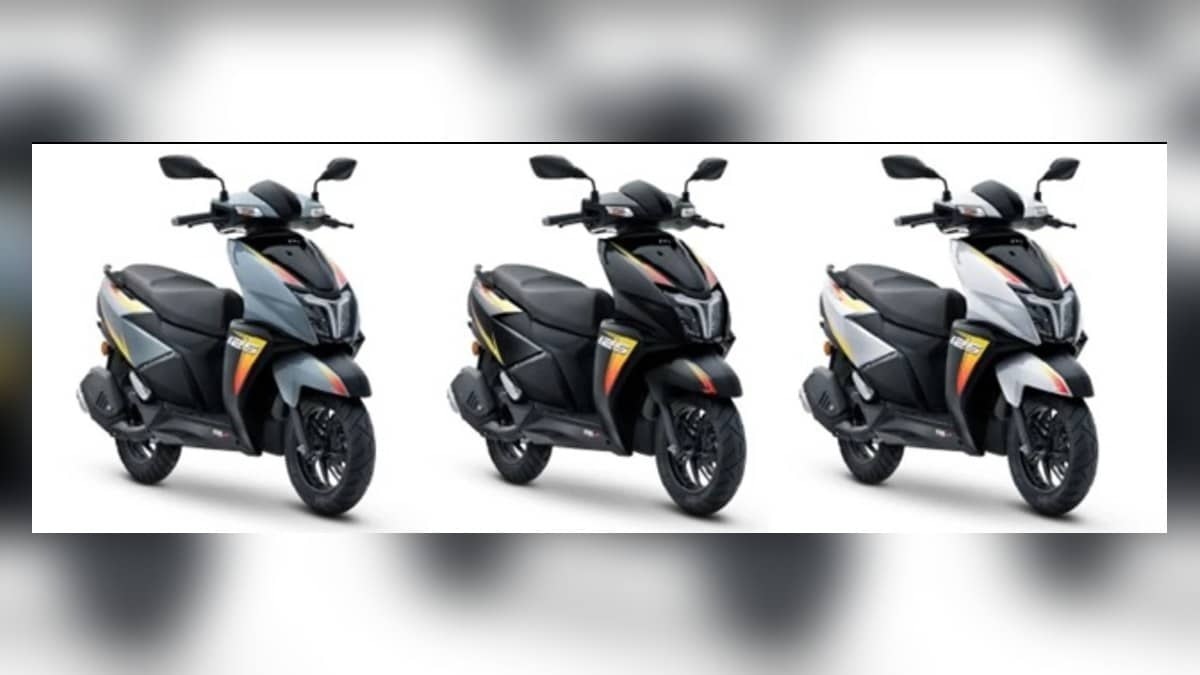
NEW DELHI: TVS identifies the NTORQ 125 Race XP as the higher-output version of its scooter family, with 10.2 PS and 11.5 Nm. The XT follows a different route, emphasising its display and connected equipment. Reading the variant names as a simple ladder of increasing engine performance would therefore miss how the range is organised.
| NTORQ 125 version | Distinction in TVS's range guide |
|---|---|
| Disc | Reverse LCD cluster, SmartXonnect; Midnight Black, Spiti White, Nardo Grey |
| Race Edition | Racing graphics; Drift Blue, Rush Green, Inferno Red |
| Super Squad | Marvel-inspired colourways, including Super Soldier |
| Race XP | 10.2 PS, 11.5 Nm; Street and Race modes |
| XT | Split TFT and negative LCD display; Neon colour |
Race Edition and Race XP mean different things
TVS's official range guide makes the distinction clear. Race Edition receives a racing-inspired visual treatment and a refreshed colour palette. Race XP has a retuned engine and the higher output figures. Similar naming does not make the versions mechanically interchangeable.
That difference is especially easy to miss when a scooter is identified casually by its graphics. An owner discussing an engine specification, a replacement panel or a connected feature should use the complete variant name. The broad NTORQ badge is not enough to establish every detail of the vehicle.
The Race XP specification is a peak-power figure at 7,000 rpm and peak torque at 5,500 rpm. TVS also lists Street and Race riding modes for it. These details establish the variant's performance positioning, but do not provide a measured fuel-consumption result for a particular route or traffic pattern.
XT focuses on the interface
TVS describes XT as its technology-focused NTORQ 125 variant. The official guide identifies a split display combining TFT and negative LCD, and lists Neon as its colour. That is a distinct equipment proposition from the Race XP's engine tuning.
A display photograph can dominate a brochure or product listing because the screen is immediately visible. Peak engine output is less obvious from a stationary image. Keeping a separate note of engine specification and instrument equipment prevents the most striking photograph from standing in for a full variant comparison.
The useful question for reading the range is therefore which difference is being described. A change to the dashboard concerns the interface. A retuned engine concerns output. A new graphic concerns appearance. They may all be advertised as features, but each changes a different part of the scooter.
Super Squad adds a different identity
The Super Squad line uses Marvel-inspired artwork. TVS's dedicated Super Soldier article describes a camo-inspired finish and updated seat fabric, and explicitly says there are no mechanical changes for that edition. Its appearance should not be treated as evidence of the Race XP's engine specification.
This is the range's clearest example of a design-led version. The visual reference is specific to the Super Squad collaboration, rather than a generic colour swap across the entire family. Someone trying to identify the edition should check the actual graphic treatment as well as the version recorded on the paperwork.
TVS's broader range article lists Iron Man, Stealth Black, Lightning Gray and Super Soldier under Super Squad. These names describe the design choices within that part of the range. They should not be mixed with the separate colour list for Disc or Race Edition when recording a particular scooter.
Disc remains a connected version
The guide describes the Disc variant with a reverse LCD instrument cluster and Bluetooth-enabled SmartXonnect. That means connected equipment is not confined to the XT name. The relevant comparison is the exact display and feature implementation, rather than a simple connected-versus-unconnected assumption.
For a shared household scooter, this distinction is practical: the rider using the instrument panel may care about a different feature from the person choosing the finish. A clear variant record lets those preferences be discussed separately without turning a model-name comparison into an unsupported verdict on which version is best.
The larger-capacity scooter is covered in our NTORQ 150 price list. Readers considering different TVS formats can consult the Jupiter range guide and XL100 variant guide. None of those model lists should be used to fill gaps in NTORQ 125 equipment information.
Official sources: TVS NTORQ 125 variant guide and TVS Super Soldier edition explanation.