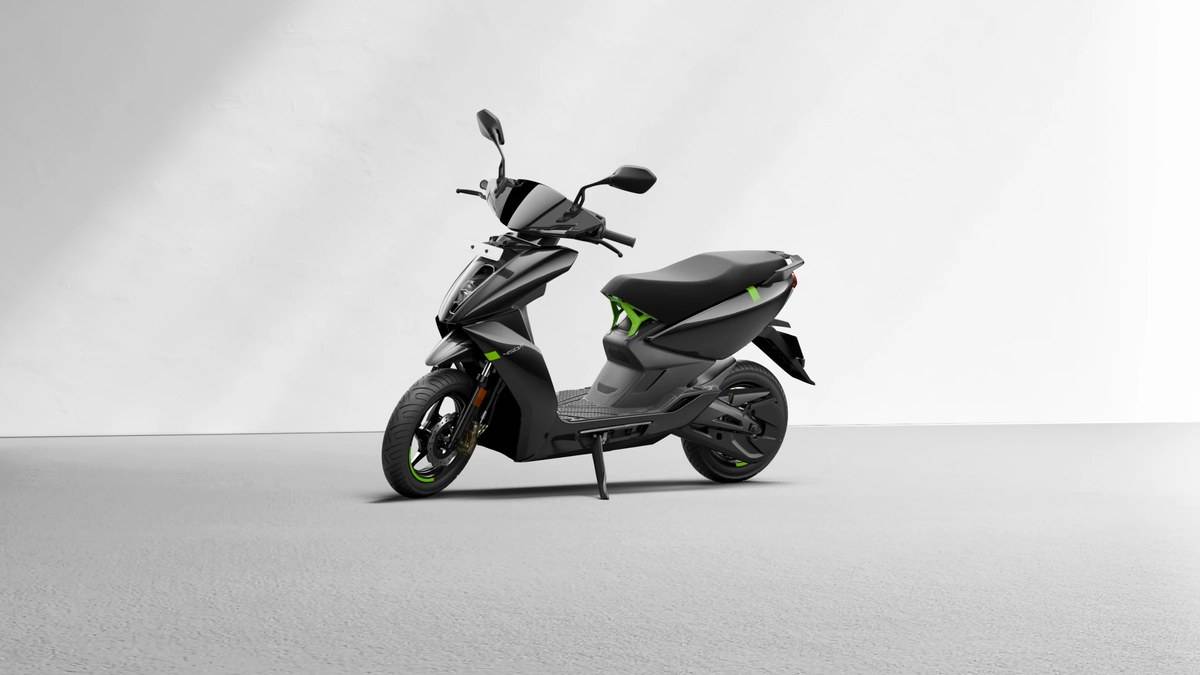

NEW DELHI: TVS iQube Battery as a Service separates the scooter's upfront price from a battery subscription lasting 12 to 60 months. TVS says there is no monthly kilometre cap, but commercial fleet or taxi use is excluded. Its official page advertises battery payments starting at Rs 1,242 a month; that is a starting figure, not a verified quote for every iQube variant.
| Question | Official BaaS position |
|---|---|
| Subscription tenure | 12 to 60 months |
| Monthly battery payment | Starting from Rs 1,242 |
| Monthly distance cap | None |
| Commercial use | Fleet operator and taxi use excluded |
| After the selected term | No further subscription payments; battery ownership transfers to customer |
| Five-year term warranty statement | Battery cover up to five years or 70,000 km |
Price as of 6 November 2026, 23:14 IST. The public page did not return a variant-and-state price for the selection displayed during this check. It therefore cannot support a complete iQube BaaS price list. Obtain a written quotation that identifies the battery version, term, upfront amount and monthly payment before comparing totals.
The battery payment has its own end date
The arrangement changes when the battery is paid for. TVS says customers can pay for the scooter outright and take the battery subscription separately. At the end of the selected term, battery subscription payments stop and ownership transfers to the customer. It also says there is no automatic buyback by the financier or manufacturer.
For someone comparing invoices, the useful starting point is a complete payment schedule. Keep the scooter payment and the battery payment on separate lines, then compare their combined obligation over the chosen period. A low upfront amount, viewed alone, cannot show what the whole vehicle will cost to acquire.
Ask the quotation to identify processing charges and the first collection date. TVS's delivery process includes an electronic payment mandate and a processing-fee payment, with the first subscription collected according to the agreement date. That makes the signed schedule more useful than an illustrative monthly figure on a banner.
Unlimited riding and limited warranty distance are different
No monthly kilometre cap does not mean the warranty has unlimited kilometres. The BaaS FAQ specifies battery cover up to five years or 70,000 km for the five-year term, and describes coverage as dependent on tenure. These are different boundaries: permission to ride without a monthly distance allowance, and eligibility for covered battery support.
This distinction is relevant to a rider whose commute varies through the year. A month of longer personal travel does not, under the published no-cap statement, use up a monthly distance package. It can still add to the odometer that is relevant to warranty limits. Neither statement should be substituted for the other.
TVS also says the subscription supplies the same battery and performance. BaaS should therefore be compared with outright ownership of the same iQube version. A comparison that switches battery capacities at the same time cannot show which difference comes from the payment arrangement and which comes from the scooter.
Commitment, registration and maintenance
The FAQ says customers choose and commit to their tenure when purchasing. Eligibility includes a valid driving licence, meeting credit requirements and accepting the terms. The vehicle registration is in the customer's name, while the vehicle including its battery is hypothecated to the financier providing BaaS.
Read the agreement for any proposed early exit, sale or change of plan. The public page's broad product description is not a replacement for those contractual details. In particular, knowing that ownership transfers after the scheduled term does not establish that an owner can end payments at any earlier point without conditions.
Maintenance remains the customer's responsibility under the official FAQ. Battery subscription, connected services and scheduled servicing are separate ownership questions. For example, the iQube's SmartXonnect page describes its own connectivity functions; paying a battery subscription should not be taken as proof of every app entitlement or service package.
Who it is for
The terms are relevant to a private-use rider who wants to spread the battery outlay and can assess a fixed payment commitment. They are also useful to a buyer who can pay for the scooter immediately but wants to understand the separately available battery arrangement. The published commercial-use exclusion matters for anyone planning fleet work.
Keep the comparison tied to your actual version. TVS's product page spans several iQube battery options, so an unspecified starting subscription cannot be assumed to describe the larger-battery scooter in a showroom. Matching model, battery and term on both quotations is the clearest way to make the numbers meaningful.
Related reading: our iQube city-price guide, 2.3 kWh charging explainer and iQube ST dashboard guide.
Official sources: TVS iQube BaaS terms and FAQs; iQube model overview; SmartXonnect information.