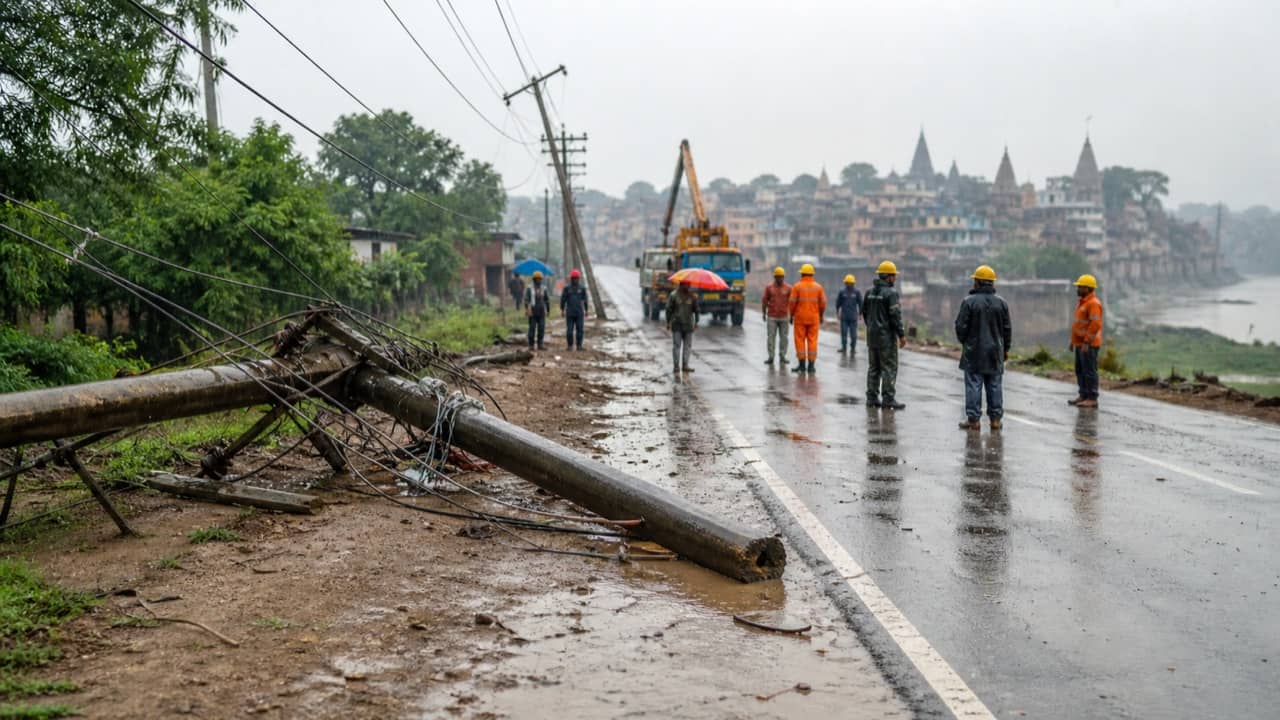
VARANASI: Three electricity poles fell near Krishna Nagar Darekh in the Rohaniya area after rain-softened ground reportedly subsided, interrupting power across a chain of villages and quickly creating a second problem: drinking-water supply. The outage affected Mohan Sarai, Bairwan, Kaneri, Basantpatti, Tadiya, Krishna Nagar, Darekh and surrounding settlements, according to the report.
Rohaniya MLA Dr Sunil Patel contacted the executive engineer and sub-divisional officer and asked for supply to be restored at the earliest. The source did not provide a restoration time or say whether conductors remained energised after the poles fell. Until the electricity department confirms isolation, residents should treat every wire and nearby wet surface as live.
A fallen pole is more than a power cut. Conductors can sag across fields and roads, and a broken line may be re-energised automatically by network equipment. Wet soil can carry leakage away from the visible cable. Crowds gathering to inspect the damage, moving branches or trying to lift a wire with bamboo create an immediate risk for residents and repair crews.
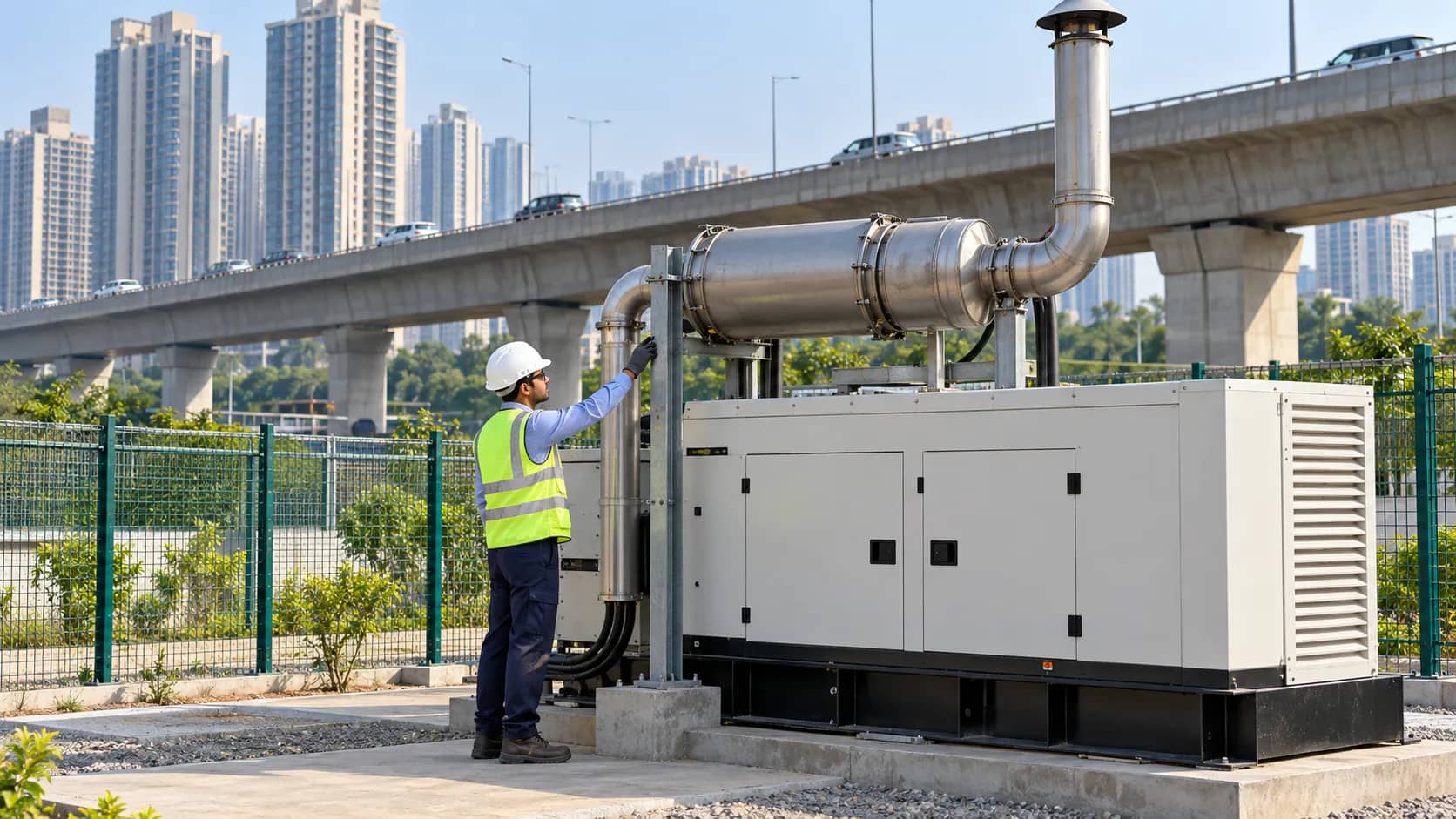
The water disruption shows how rural services depend on electricity. Pumps feeding overhead tanks and household borewells stop during an outage, so taps can run dry before a long repair is completed. Backup arrangements are often limited. Restoration plans should therefore identify both the electrical fault and villages needing tanker or generator support while poles are reset.
Ground subsidence around three poles also warrants inspection of the line, not just replacement at the same points. Drainage, foundation depth and soil erosion may have contributed. Engineers should check adjacent poles under tension because a falling span can pull on the next structure. Photographs and measurements before repairs will help determine whether the failure was weather alone or a maintenance weakness.
The electricity department should issue a locality update with isolation status, expected restoration and a complaint number. If work extends beyond the day, the administration should coordinate drinking-water supply. A post-repair patrol should check clearances and leaning structures across the feeder rather than close the complaint as soon as lights return.
Residents must keep at least several metres from a fallen line, stop vehicles from crossing it and call the electricity emergency number or local police. They should not touch a person in contact with current until supply is isolated. Sensitive appliances can be switched off before restoration, as voltage may fluctuate when a damaged feeder is brought back.
This report is based on a Live Hindustan account published on 26 August 2026. Dalimss News independently rewrote, checked and contextualised the available information. Where a claim, allegation or opinion is attributed to a person or institution, it remains their statement; no on-scene reporting or independent interview is claimed.