A Samajwadi Party councillors' delegation has handed municipal commissioner Himanshu Nagpal a memorandum listing dark stretches, damaged lanes and chronic sewer blockages in parts of Kakarmatta, Jolha South and Shivala, and asked for early repairs.
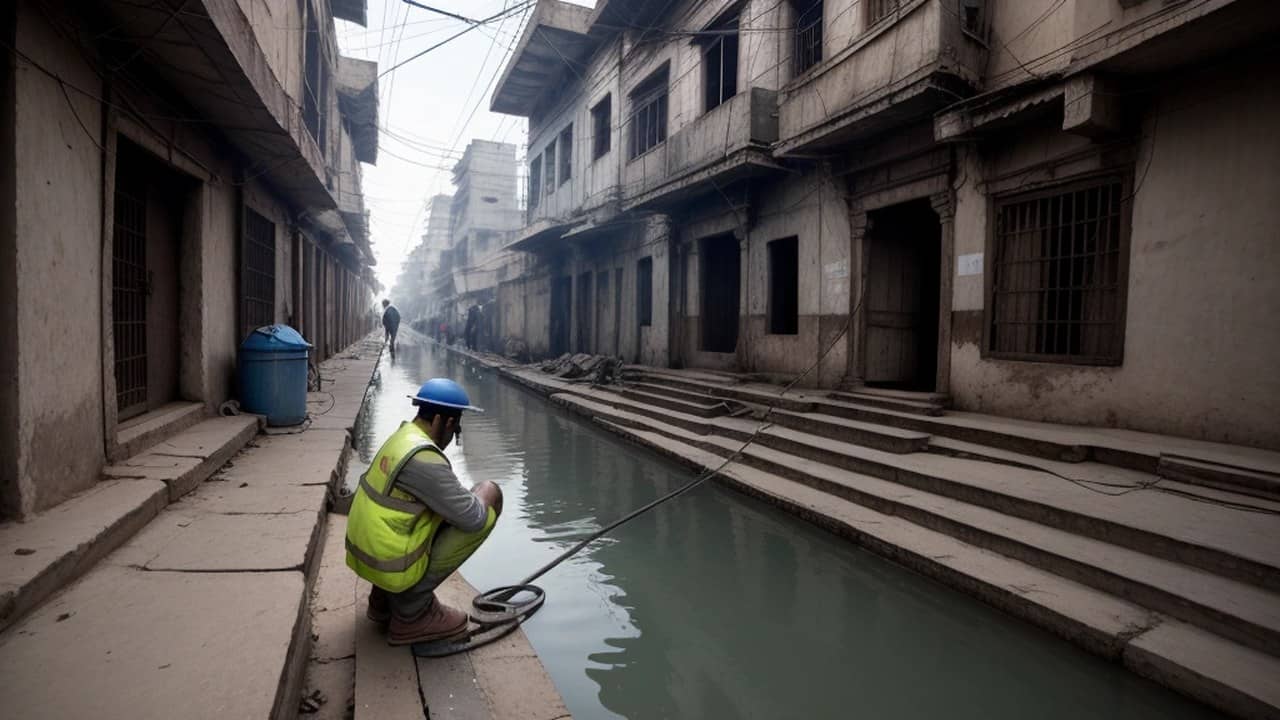
General secretary Yogendra Yadav and party councillor group leader Haroon Ansari led the group. They told the commissioner that streetlights failing in Kakarmatta leave residents navigating black lanes at night. In Jolha South ward they flagged sewer problems, broken gali surfaces and the same lighting gaps. In Shivala, they said repeated sewer clogs and damaged lanes are causing injuries and raising fear of street crime after dark.
Others present for the memorandum included Rajat Balmiki, Anil Sahu, Harish Narayan Singh, Aarti Yadav and Aman Yadav. Nagpal, according to the delegation's account of the meeting, assured them that the listed problems would be taken up soon. No ward-wise work order numbers were released with the memo itself.
Civic complaints of this kind are not new in a city where monsoon water and old pipe networks still meet narrow residential lanes. The municipal commissioner's recent field focus on immersion ponds and drainage pumps, reported in Dalimss coverage of his festival drainage round, shows the same office juggling festival infrastructure and everyday ward failures at once.
For households in the named wards, the memorandum is useful only if it turns into gangmen, jetting machines and working lamps. Residents can still dial the corporation's public grievance channels and keep photo records of overflow nights. Councillors' memos do not replace those complaints; they amplify them. Note the date and the officer who received the paper if you follow up later.
Streetlighting failures matter beyond convenience. Women returning from shift work, students on late tuition runs, and elderly residents walking to temples all calculate risk differently when a gali stays black. Sewer overflow adds disease risk to that list when monsoon residue lingers in open channels. Broken paving turns a short walk into an ankle hazard for anyone carrying a child or a gas cylinder.
Opposition councillors framing a list does not by itself indict the ruling side's entire civic record; it does put three neighbourhoods on a dated piece of paper in the commissioner's office. Readers should watch for follow-up: whether Kakarmatta poles are re-lamped, whether Shivala lines are desilted, and whether Jolha South's broken paving is marked for patching within a published timeline.
Related corridor stress elsewhere in the city, including construction jams on Lahartara and Manduadih approaches and rebuild notes such as the Dalmandi sewer-first sequence, shows how quickly local anger rises when basic movement and sanitation slip together. A memo on lights and sewers belongs to the same civic ledger as those jammed corridors.
What happens next is administrative. Zone officers will either receive written instructions tied to the memo or the paper will sit in a file. Dalimss News will treat only visible ward work, not assurances alone, as confirmation of progress. Residents who want action should keep lodging individual complaints even after the political delegation leaves the commissioner's room.
Until then, people in Kakarmatta, Jolha South and Shivala are left with the same nightly checklist: torch, careful step around open lids, and a complaint number saved on the phone. That is a thin substitute for working streetlights and clear drains, but it is what the gap between a memorandum and a work gang looks like on the ground.
Local trader associations in the same wards often keep parallel lists of poles and manholes. Aligning those lists with the councillors' memorandum would give the corporation a single repair map instead of scattered WhatsApp complaints. That coordination is unglamorous. It is also how dark lanes actually get lamps again.
If lamps return to Kakarmatta and jetting machines reach Shivala's choke points within a fortnight, the memorandum will have done its job. If not, the same delegation will almost certainly return with dated photographs. That cycle is how ward politics and civic repair still talk to each other in Banaras.