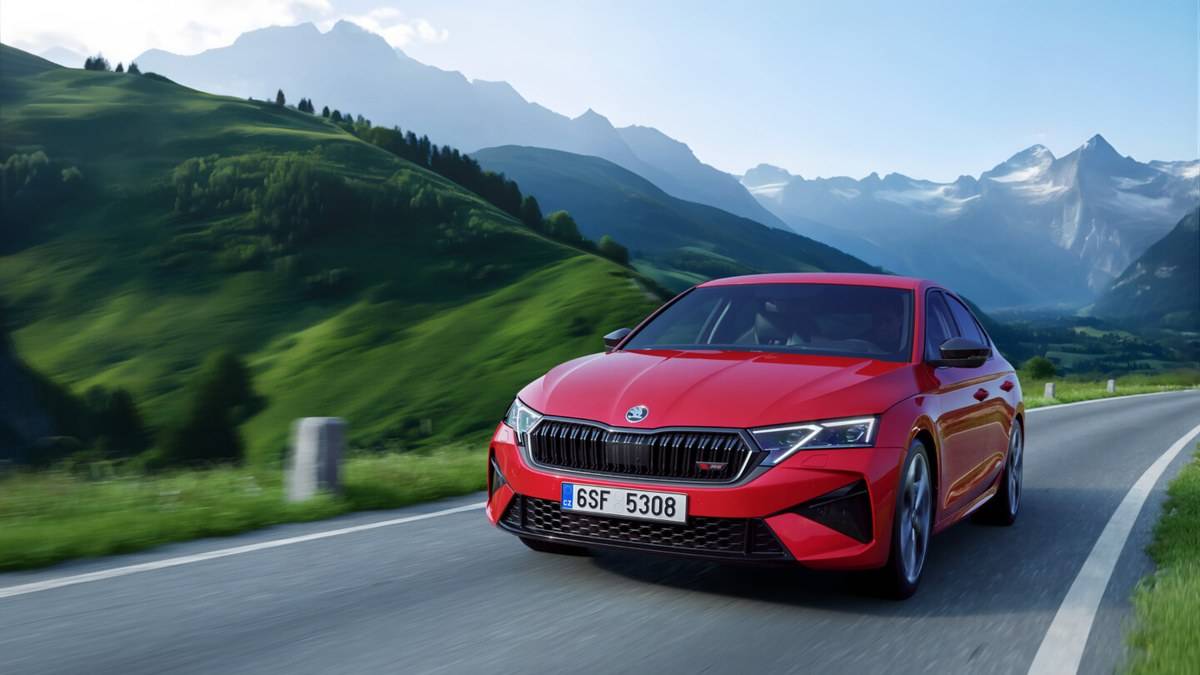
NEW DELHI: Skoda says the Octavia RS's Intelligent Park Assist can help park between parallel-parked vehicles or in a perpendicular row, and help the car leave a parallel parking space. Its India feature page lists control of steering, braking, acceleration and forward or backward travel. Understanding those specific manoeuvres is more useful than treating the feature as a general promise of autonomous driving.
| Item | Official detail |
|---|---|
| System | Intelligent Park Assist |
| Parking layouts named | Parallel and perpendicular |
| Exit manoeuvre named | Leaving a parallel-parked line |
| Vehicle controls listed | Steering, brakes, accelerator and direction |
| Detection described | Objects and pedestrians |
| Powertrain on India model page | 2.0 TSI, 195 kW, 7-speed DSG |
Start with the manoeuvre, not the badge
A parallel space beside a road and a perpendicular bay in a car park demand different movements. Skoda names both parking layouts, but its description of leaving a space specifically refers to a line of parallel-parked vehicles. That distinction matters when requesting a demonstration. Do not assume an exit function is supported in every layout simply because entry assistance is advertised.
The description also goes beyond steering assistance. It explicitly names the brakes, accelerator and direction of travel among the controls handled by the system. An owner moving from a car with parking sensors should therefore have the full interaction explained. A warning tone, a camera view and an assisted manoeuvre are different experiences even when all are discussed under the heading of parking aids.
Begin by asking for the exact owner instructions for the car and the appropriate demonstration procedure. This article explains the functions listed by Skoda, rather than supplying an invented sequence of button presses. The short feature page does not specify the complete activation process, the acceptable bay dimensions or every circumstance in which a manoeuvre may be unavailable.
A useful handover checklist
First, identify the system controls while the car is stationary. Ask how the driver requests a search, how a suitable space is indicated and what confirmation is required before movement begins. Those are questions for the demonstrator and owner documentation. Knowing the answers before approaching a busy parking area helps avoid learning the interface while other drivers wait behind.
Next, ask for the difference between the supported entry and exit functions to be shown. Have the demonstrator explain what the screen is asking the driver to do at each stage and which vehicle controls are being managed. A clear explanation should make the driver's role understandable even to someone who has never used a parking-assistance system before.
Finally, ask how to stop or cancel the manoeuvre and resume ordinary control. That information is essential to learning the feature properly, but Skoda's public summary does not provide the procedure. Use the instructions supplied for the actual vehicle rather than importing a sequence from another Skoda, a different model year or an online demonstration of an overseas specification.
Detection is not a clearance measurement
Skoda says the system detects objects and pedestrians as part of avoiding collisions. That is the brand's description of the assistance, not a guarantee that every possible obstacle in an Indian parking area will always be recognised. The page does not publish a detection-distance table or a minimum obstacle size, so neither can responsibly be attached to the claim here.
For a household, parking suitability still begins with the space itself. Assess the approach, the room to open doors and the ability of passengers to enter or leave comfortably. A system that helps position the car does not answer whether the resulting bay works for an older passenger or whether a pillar obstructs a door. Those are separate observations to make during a visit.
The Octavia RS is presented on its India model page with a 2.0 TSI petrol engine producing 195 kW and paired with a seven-speed DSG. Parking assistance concerns a different part of using that performance sedan: the final low-speed movement at home, work or a destination. A demonstration should therefore spend time on ordinary manoeuvring rather than only discussing acceleration.
Who should request a demonstration
This guide is for a prospective owner comparing assistance functions, or an existing owner preparing to use Intelligent Park Assist for the first time. It is especially relevant when more than one family member drives the car. Each regular driver should understand the system's requests and cancellation procedure instead of relying on another person's brief description.
The Octavia RS price report covers the separate purchase figure. Our Octavia RS chassis guide considers another practical aspect of the car, while the Octavia RS and Golf GTI comparison provides broader model context.
Use the feature's stated scope as the starting point for a demonstration: parallel entry, perpendicular entry and parallel exit. Then establish the exact operating instructions for the vehicle. That approach makes the assistance easier to assess without promising a parking capability beyond the manoeuvres Skoda actually describes on its India site.
Official source: Skoda Octavia RS official information.