
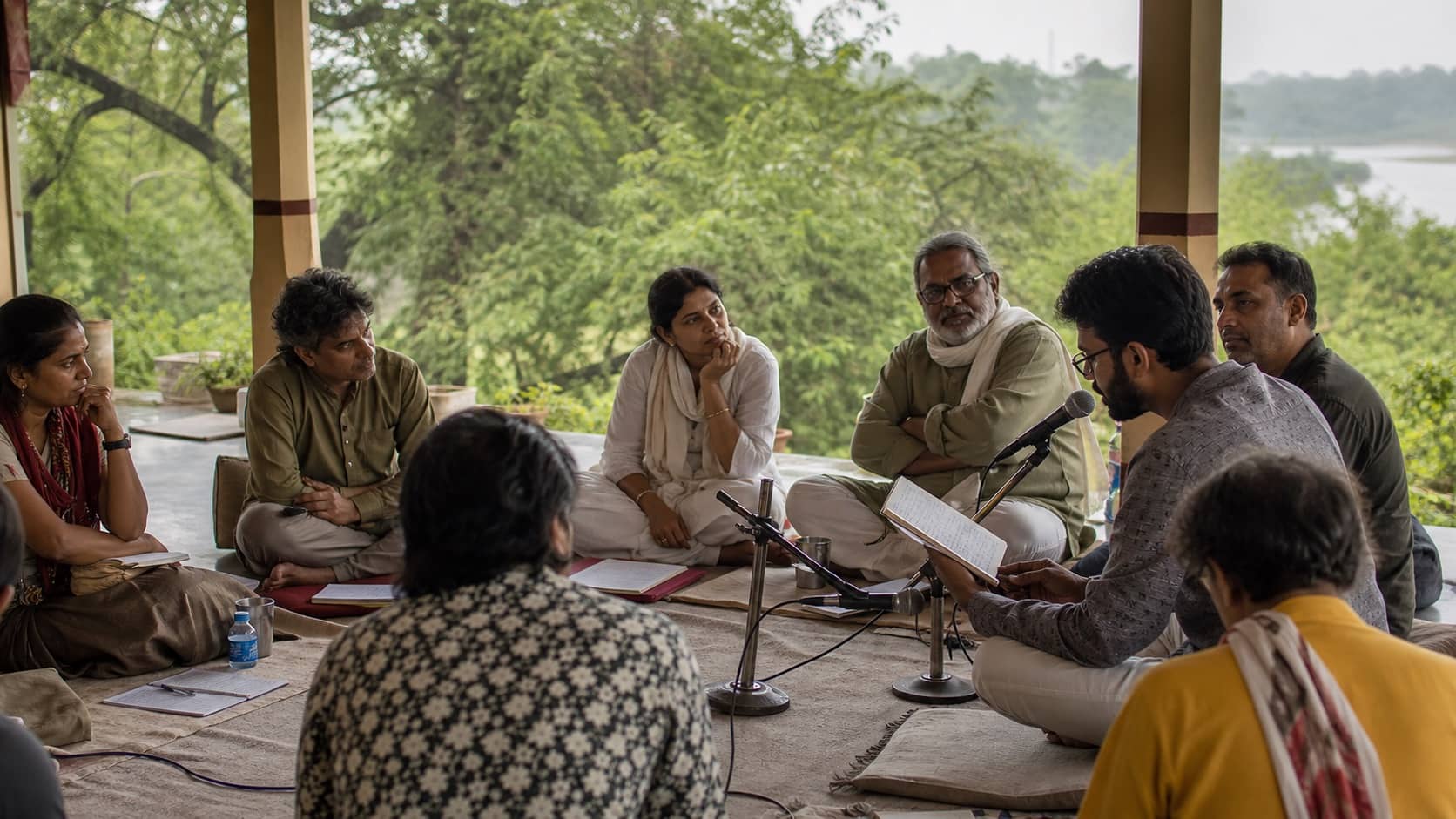
VARANASI: Rain, devotion and the living language of the Ramcharitmanas came together at the fifth monthly Sanatan Kavya-Dhara gathering held at Swaraj Ashram near Shooltankeshwar. Poets used the monsoon not just as scenery but as a way to speak about memory, faith, village life and the changing mood of the river belt south of the city.
Dr Ramanand Dixit attended as chief guest, while Pandit Gaurishankar Tiwari chaired the session. Paramhans Tiwari conducted the proceedings and Ritu Kapil delivered the vote of thanks. The format allowed invited writers and local participants to read original work in an atmosphere closer to a traditional baithak than a formal auditorium programme.
Several recitations drew imagery from the rainy season—darkening skies, wet earth, fields and the familiar pause before a heavy shower. Others turned to episodes and cadences from the Ramcharitmanas. In Varanasi, these streams overlap naturally: seasonal folk memory, classical allusion and everyday speech often occupy the same poem.
A monthly poetry series has a different purpose from a large literary festival. It gives writers room to test new work, hear how lines sound aloud and meet readers without the pressure of a crowded programme. The continuity matters. By the fifth edition, an event begins to develop its own audience, internal references and standards of listening.
The choice of Shooltankeshwar also moved the gathering beyond the city’s usual cultural venues. The southern edge of Varanasi has its own devotional and agricultural landscape, especially vivid during Sawan. Holding a reading there allows poetry to respond to a place directly rather than treating Kashi as a generic backdrop.
Ramcharitmanas-inspired verse can easily become repetition if it only reproduces familiar phrases. The more interesting challenge for contemporary poets is to enter into conversation with the text—drawing out questions of duty, exile, doubt or compassion in language that belongs to the present. Local gatherings create space for that experiment across generations.
They also preserve the oral dimension of poetry. A poem on the page and a poem heard in a room are different experiences. Pace, pronunciation, silence and audience response expose strengths and weaknesses that editing alone may miss. For younger writers, such settings can offer an education that no social-media post provides.
The organisers plan to continue the Kavya-Dhara as a recurring programme. Its fifth meeting showed why small cultural institutions matter to a city with a celebrated literary past: heritage survives when people keep making new work, not only when old names are remembered. On Sunday, the monsoon supplied the setting; the poets supplied the argument for returning next month.