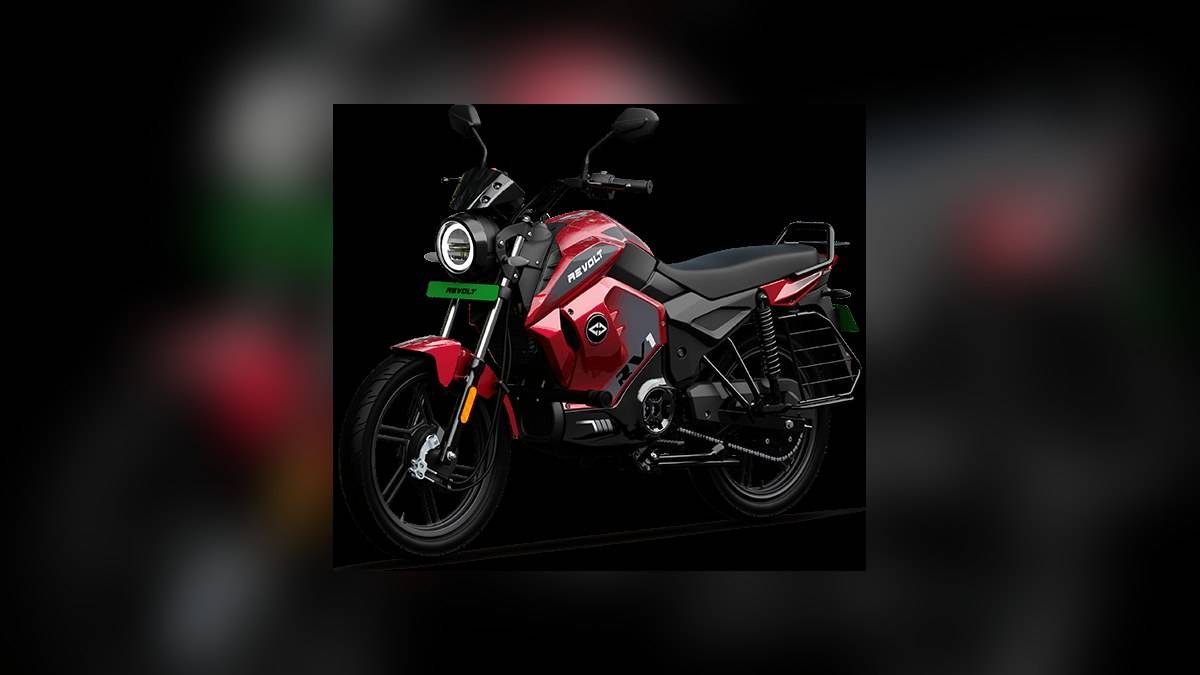
NEW DELHI: Revolt lists the RV1's home charging time at 2 hours 15 minutes from 0% to 80%, and 3 hours 15 minutes from 0% to 100%. Its removable battery and offboard charger let the charging location be separate from the parking space. The crucial detail is that the faster partial-charge claim is not a full-charge claim.
| RV1 fact | Official specification |
|---|---|
| Battery capacity | 2.2 kWh |
| Battery chemistry | LFP |
| Battery functionality | Removable |
| Charger type | Offboard |
| Charger rating | 10 A |
| Charging, 0% to 80% | 2 hours 15 minutes |
| Charging, 0% to 100% | 3 hours 15 minutes |
| Fast charging entry | No figure listed for RV1 |
| Certified IDC range | 100 km |
| Ex-showroom price | Rs 99,999 |
Price as of 11 November 2026, 23:15 IST. The charging figures were checked against Revolt's model page and its linked specification comparison. This guide concerns the RV1, rather than transferring a charging claim from the similarly named RV1+.
Start with the battery, not a public charger map
Revolt's RV1 FAQ says the portable charger works from a regular home power socket. Because the pack is removable, an owner can take it indoors rather than finding an electricity point beside the motorcycle. That is the model's practical distinction for a household with parking away from its charging location.
For an apartment resident, this changes the question to investigate. Instead of asking only whether a charger can be installed beside the bike, work through the journey between the motorcycle and the intended charging place. Doors, stairs, lifts and the space available indoors all belong in that assessment.
Removability is useful only if that journey is manageable for the person who will do it. Ask to see the pack removed and reinstalled during a demonstration, then consider the same task on an ordinary working day. A feature that appears convenient in a showroom still has to fit the household routine.
Keep the two charging endpoints apart
The official table supplies both a partial-charge duration and a full-charge duration. Choose the row that matches the question being asked. A rider planning to leave with the battery full needs the full-charge entry; the shorter figure answers a different question about reaching a lower state of charge.
Neither number should be converted into a promise for every top-up. A battery returning from a short journey starts from a different level than an empty pack. Use the published windows to understand the manufacturer's claim, then establish the normal charging routine from actual use.
The same caution applies when comparing scooters and motorcycles. Our Revolt bike price list: RV1 Rs 99,999, RV1+ Rs 1,19,990, RVX Rs 1,39,990 is useful background on reading the starting percentage. Comparing durations without checking their endpoints can make quite different charging tasks appear equivalent.
Do not borrow the RV1+ fast-charging figure
Revolt places the RV1 and RV1+ beside each other in its specifications. The fast-charging row contains no time for the RV1. A figure appearing in the neighbouring model's column therefore cannot be advertised as an RV1 capability simply because the names are close.
This is particularly relevant when reading a family-level advertisement or hearing a general description of the range. Keep the model name on the quotation, the battery specification and the charging claim together. An explanation that moves between versions without identifying them does not establish what the particular bike can do.
Our Revolt RV1 battery cover: what the 70% health condition means covers the broader range. Here the point is ownership logistics: the base motorcycle's battery can be charged away from the bike, but the specification table still needs to be read in the correct column.
That distinction should remain visible even when the motorcycle is being discussed mainly as an affordable commuter. Charging equipment is part of the specification, rather than a detail to infer from a nearby badge.
Who this charging arrangement is for
The RV1 arrangement is most relevant to a commuter who has dependable indoor electricity access and a workable way to move the battery. Someone whose parking space cannot accommodate charging may find that separation useful. Someone unable to carry the pack should test the handling process before treating removability as the solution.
Its certified range is a reference figure, not an instruction to schedule every journey right up to the limit. Leave room for a changed route or an extra errand. The sensible routine depends on the distance actually travelled and the opportunity to charge before the motorcycle is needed again.
Charging access and warranty protection answer separate questions. For the latter, read our Revolt RV BlazeX charging: 80 minutes requires the fast charger. For daily use, settle the physical charging arrangement first: who handles the pack, where it sits, and when the bike must be ready.
Official sources: Revolt RV1 product page and charging FAQ; Revolt RV1 and RV1+ specification table.