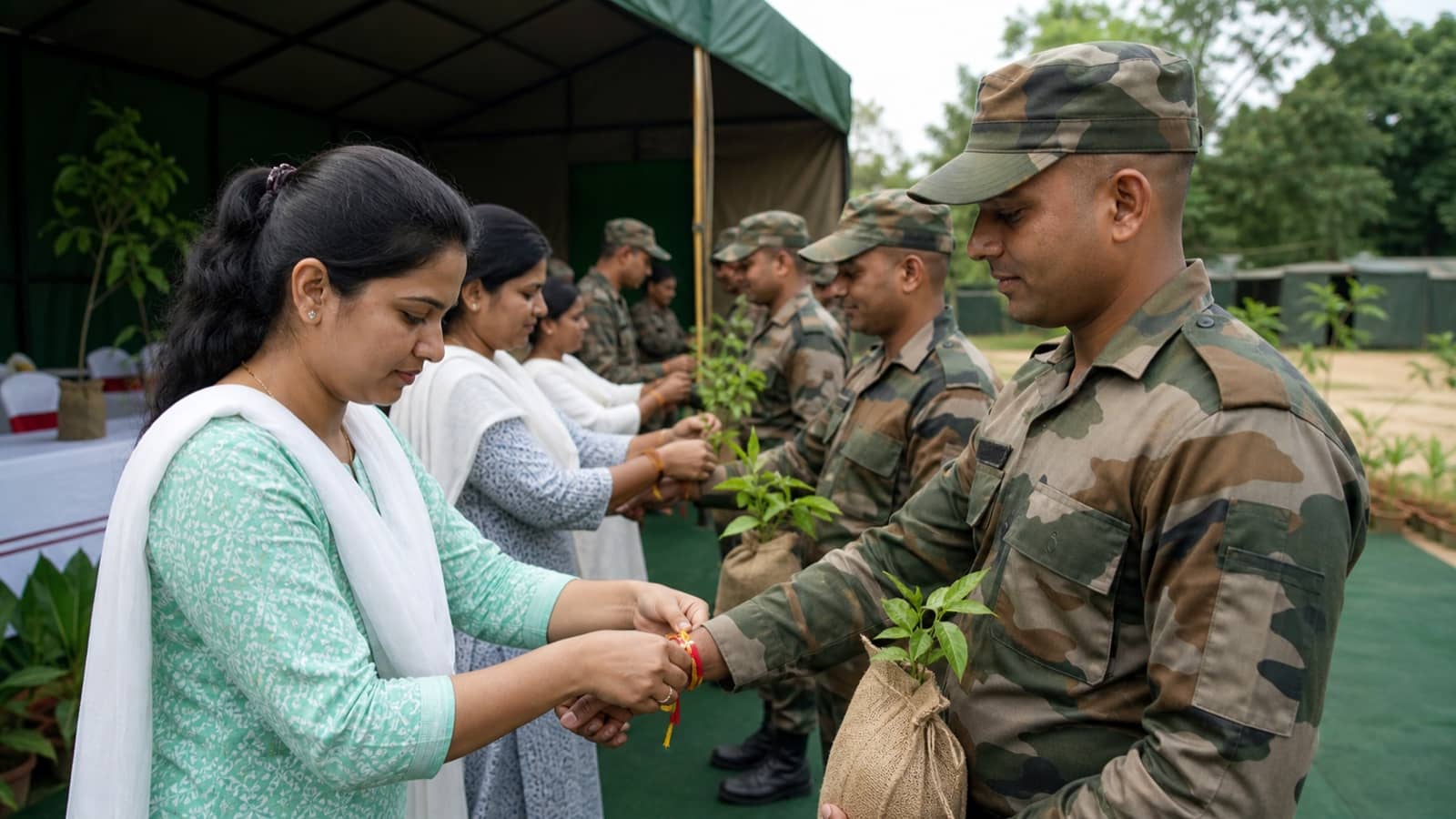
VARANASI: Women from several community organisations tied rakhis to personnel of the 137th Battalion, 39 Ganga Task Force, at its Cantonment camp on Thursday, while the soldiers returned the gesture with saplings and cloth bags. The programme, organised by the city unit of the Namami Gange Ganga Vichar Manch, combined a familiar festival ritual with an environmental message linked to the force's river-conservation role.
Some participants used rakhis made from kalava thread, flowers and leaves, avoiding plastic-heavy decoration. The task-force personnel's gifts made the exchange practical: a sapling can be planted and a cloth bag reused. Organisers also expressed condolences for people who died in the Nepal disaster, adding a note of mourning to an otherwise celebratory meeting.
Subedar Devendra Basnet and district coordinator Shivam Agrahari helped conduct the event. State Women's Commission member Meena Chaubey, BJP Mahila Morcha Kashi region president Namrata Chaurasia and representatives of local groups attended, according to the source report. Their presence gave the gathering a civic and political dimension, though no government decision or new conservation project was announced.
The Ganga Task Force is often encountered through plantation, awareness and riverbank activities. A ceremonial visit can introduce that work to people who know the battalion only by name. Still, the environmental value of a sapling depends on where it is planted, the species selected and who waters it after the event. Organisers can strengthen the message by recording planting locations and checking survival after the monsoon.
The women's promise to support work in the national interest was the programme's broadest statement. At a local level, that can mean reducing single-use plastic, keeping drains free of waste and treating riverbank cleanliness as a daily responsibility rather than an annual drive. Thursday's exchange worked because its symbols matched that idea: biodegradable rakhis, reusable bags and living plants. Its success will be clearer if at least some of those plants are still growing when the group meets again next Raksha Bandhan.
The condolences for Nepal's disaster added regional context to a Varanasi ceremony. Rivers and monsoon systems do not respect administrative borders, and environmental service has a cross-border dimension even when the programme is local. That does not make a festival gathering a disaster-response operation. It does remind participants that protection of water, soil and vegetation is linked to the safety of communities far beyond the camp where the rakhis were tied. That connection deserves sustained local attention.