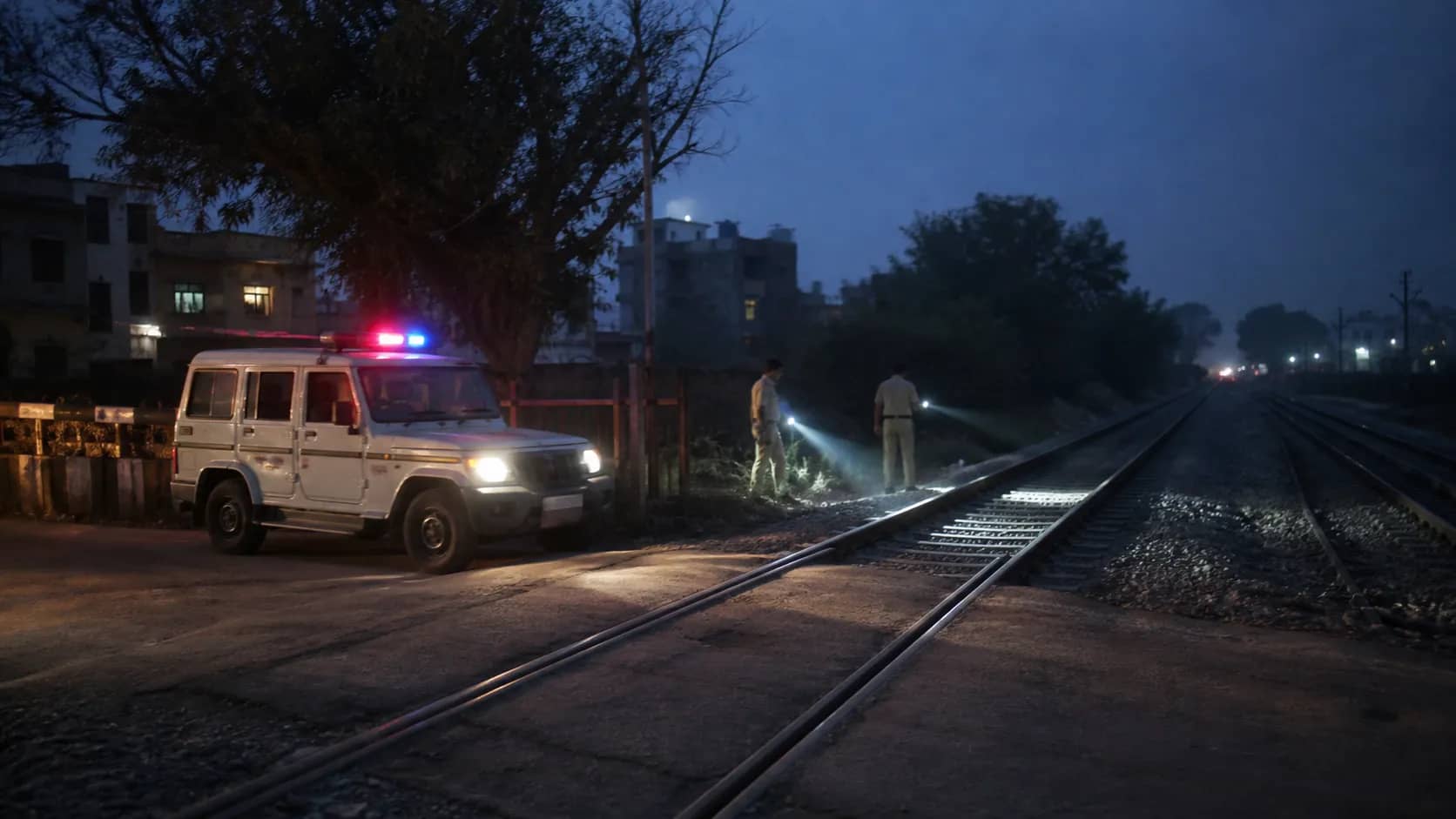
VARANASI: A young woman was pulled to safety from a railway track near Ashapur crossing late on Sunday after local residents noticed her and alerted police, according to a report from the Sarnath area.
Police said the woman had lain down on the track with the intention of harming herself. A team reached the crossing, moved her away from the line and spoke with her before arranging for her to return home. The intervention took place after an alert was received at around 11.30 pm, Live Hindustan reported.
The woman is originally from Bihta in Bihar and was working at a hotel near Havelia crossing while living in rented accommodation near Chandra crossing. Police were told that she had been upset after a disagreement with her brother over making Instagram reels. That account is based on the initial conversation after the rescue and should not be treated as a complete explanation of her distress.
Reducing a suicide crisis to a single argument can be misleading. Such moments are often shaped by several pressures that may not be visible to bystanders or even immediately expressed by the person involved. The priority after a physical rescue is a calm mental-health assessment, contact with a trusted support person and a plan that reduces the risk of another attempt.
Railway tracks are especially dangerous because train crews have limited ability to stop once a person is seen. Quick information from residents and a rapid police response were decisive in this case. People who encounter someone on or near a live track should alert railway and local emergency services immediately rather than attempting a risky rescue without warning approaching traffic.
The woman's name and other identifying details are not being published. Public interest lies in the rescue and the need for support, not in exposing a person during a vulnerable episode. Social-media disputes can become the visible trigger in a family conflict, but shaming or blaming the individual can deepen isolation.
India's Tele-MANAS mental-health service can be reached at 14416 or 1-800-891-4416. In an immediate emergency, people should call 112 or go to the nearest hospital emergency department.
The Ashapur episode ended with the woman alive and away from the track. That is the first outcome that matters. The next is quieter but equally important: ensuring she is not left to manage the crisis alone once the police vehicle has gone.
Newsrooms, families and police all have a role in avoiding sensational language after such rescues. A person in crisis needs privacy and follow-up, while readers need practical information about emergency help rather than intimate details that add no public value.