NER and GAIL Plan PNG Supply for Varanasi Railway Colonies
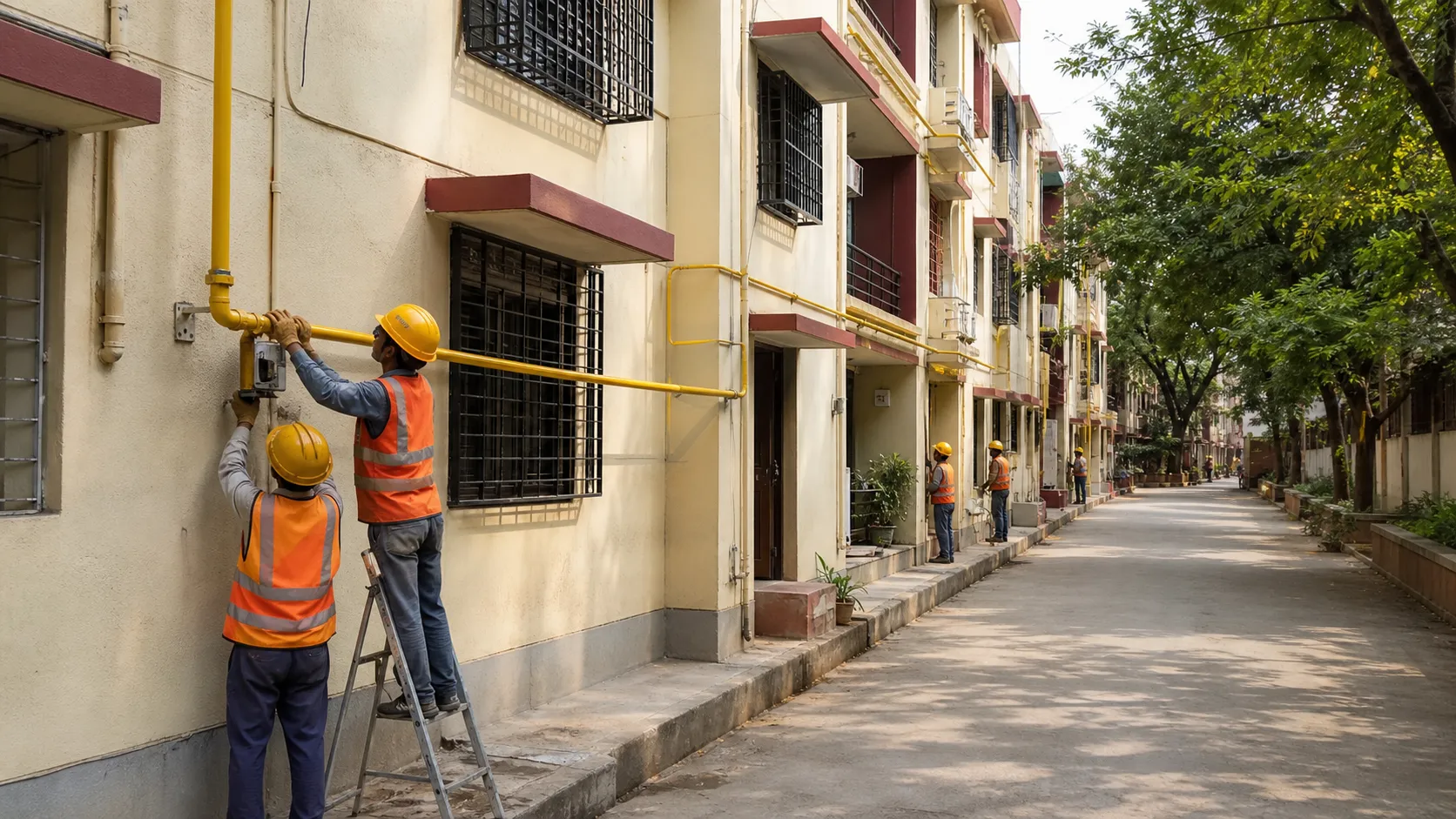
VARANASI: Railway households in the city are set to move towards piped cooking gas after the Varanasi division of North Eastern Railway signed an agreement with GAIL India Limited for domestic PNG supply in its colonies.
The memorandum of understanding was signed by Senior Divisional Engineer, Coordination, Vikas Kumar Singh and GAIL General Manager Sushil Kumar in the presence of Divisional Railway Manager Ashish Jain. Connections will be extended in phases to railway residences as well as railway institutions located in the division’s Varanasi colonies.
The shift is designed to replace the routine dependence on LPG cylinders with a metered pipeline service. Railway officials expect the system to provide a safer, cleaner and more continuous fuel option for employees and their families. Billing will be based on recorded consumption, giving households a clearer link between use and monthly cost.
For residents, the everyday change is easy to understand. A piped connection removes the cycle of checking cylinder levels, booking a refill and arranging delivery. It also reduces the need to store a full replacement cylinder in a kitchen or staff quarter. Supply reliability, however, will depend on the quality of the network, pressure management and a responsive maintenance system.
The agreement is a starting point rather than an instant citywide switch. A phased rollout normally requires route surveys, pipeline laying, safety clearances, meter installation and work inside individual premises. Railway institutions may also have different consumption patterns from homes, so their connections and safety arrangements will need separate assessment.
Residents should receive clear information before work begins in their block: the installation sequence, documents required, billing rules, emergency contact process and safety checks. Any internal fitting must be handled by authorised personnel. Households also need basic guidance on shut-off valves, ventilation and what to do if they suspect a leak.
PNG is often described as a cleaner household fuel because it burns with fewer local pollutants than several traditional alternatives. In this project, the environmental gain is paired with a service upgrade for a defined residential community. The railway colonies give the two organisations a manageable area in which to build the distribution network in stages.
The project will also be watched for disruption during construction. Colony roads and shared spaces may need trenching or access work, making advance notices and quick restoration important. A convenient final connection should not come at the cost of poorly repaired internal roads or unsafe exposed sections.
Once operational, the network could become one of the more noticeable upgrades to daily life in the colonies, even though most of its infrastructure will remain out of sight. For railway families, success will be measured less by the signing ceremony and more by a steady flame, accurate bill and prompt service when something goes wrong.
Related Stories

AISA’s Azamgarh meeting calls for teachers, laboratories and libraries

ABVP’s DUSU manifesto puts student housing and academic services on the campaign agenda

AP TET 2026 results released; check the correct examination cycle
Supreme Court Sets January 1 Deadline to Vacate Unsafe Chintels Flats
Human Rights Panel Orders Citywide Audit of Gurugram Drains