
Maharashtra Public Service Commission chair Vivek Bhimanwar has announced an internal high-level committee to recommend examination-security measures, while rejecting allegations that seek to attach him personally to the drug-inspector recruitment paper-leak episode.
In a public statement reported on Wednesday, Bhimanwar said the alleged leak occurred in January 2026 and that he assumed charge as MPSC chair in March. He urged that claims be assessed against official records and evidence, and said the episode should not be turned into a personal or political campaign.
The distinction in dates is relevant, but it is not the whole institutional question. The commission cancelled the recruitment process for Drug Inspector, Group B, in the Food and Drug Administration after a preliminary inquiry into complaints of malpractice in the screening test. Candidates now need clarity on accountability for the earlier process and safeguards for the replacement one.
Two panels, two different jobs
Bhimanwar said MPSC has formed an internal high-level committee to suggest preventive and security measures. Maharashtra has separately announced a state-level committee on reforms to recruitment examinations. Those exercises should not be treated as interchangeable.
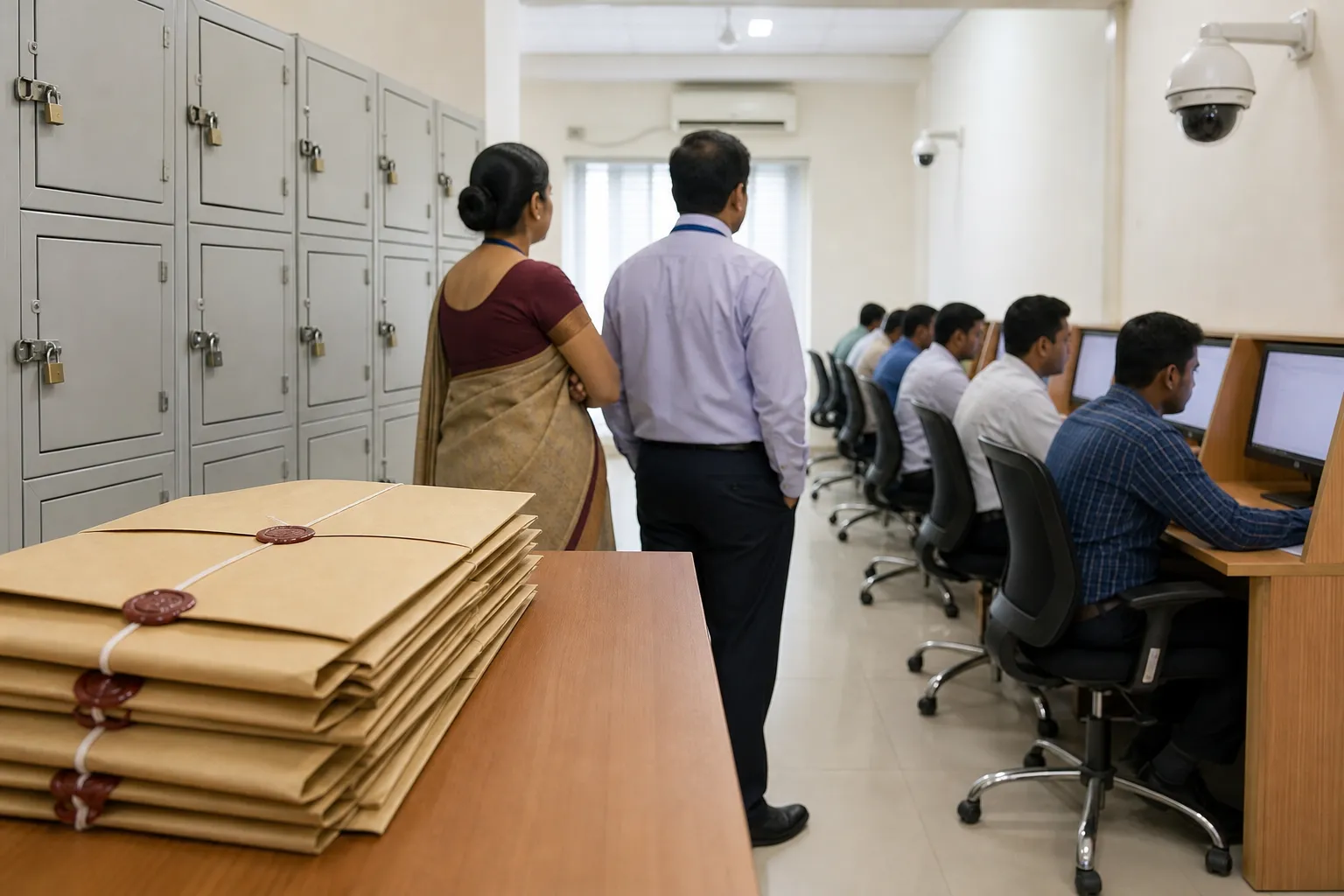
An internal commission panel can examine the operational chain: question setting, moderation, printing or digital transfer, custody, centre allocation, vendor access, incident reporting and the decision to cancel. A wider government panel can address common standards across recruiting bodies, procurement, criminal enforcement and permanent testing infrastructure.
Both will be useful only if their terms of reference and deadlines are clear. A committee described as high-level but given no publication date can become a way of postponing difficult answers. Candidates should know which findings will be public, which material must remain confidential for security reasons and who is responsible for implementing each recommendation.
What an exam-security review should test
The first requirement is a complete chain-of-custody map. Every person, system and vendor that can access a question paper or encryption key should be recorded, with time-stamped logs and separation of duties. No single official or contractor should be able to prepare, retrieve and distribute sensitive material without an independent control.
The review should examine how centres and service providers are selected, whether staff undergo verification, how devices and rooms are swept, and what happens when intelligence about a possible leak is received. It should also set a threshold for postponement or cancellation so that decisions are consistent rather than improvised under public pressure.
Candidate communication is part of security. Silence creates a market for screenshots, rumours and paid claims of access. MPSC should publish a dated incident note that separates what is established, what is under investigation and what has been rejected. It should not disclose details that would help offenders, but it can explain the procedural status.
Fairness after cancellation
When a recruitment examination is cancelled, honest candidates bear the immediate cost in travel, preparation and delayed employment. The commission should announce the replacement timetable as soon as it can do so safely and state whether existing applications and fees remain valid. Candidates should not have to register or pay again unless a legal or technical reason is explained.
The integrity of the next test also depends on preserving evidence from the first. Cancellation must not erase server logs, vendor records, centre footage, communication trails or candidate complaints. Investigators need those records to determine whether the problem was local, systemic or falsely alleged.
Bhimanwar’s statement welcomes questions from public representatives, candidates and citizens. The practical test of that assurance will be a documented grievance route and answers that address specific evidence rather than the tone of criticism.
Personal allegations should indeed be judged on evidence. Institutional accountability follows the same rule. The fact that the present chair joined after the January incident may rebut a claim about his role at that time; it does not reduce his current responsibility to repair the process and communicate the repair.
MPSC’s internal committee can be useful if it produces more than general recommendations about transparency. Candidates need controls they can recognise: protected custody, audited access, reliable centres, a rapid incident protocol, preserved evidence and a clear replacement schedule. Restoring trust will come from those visible changes, not from asking aspirants to move on from a cancelled examination.