
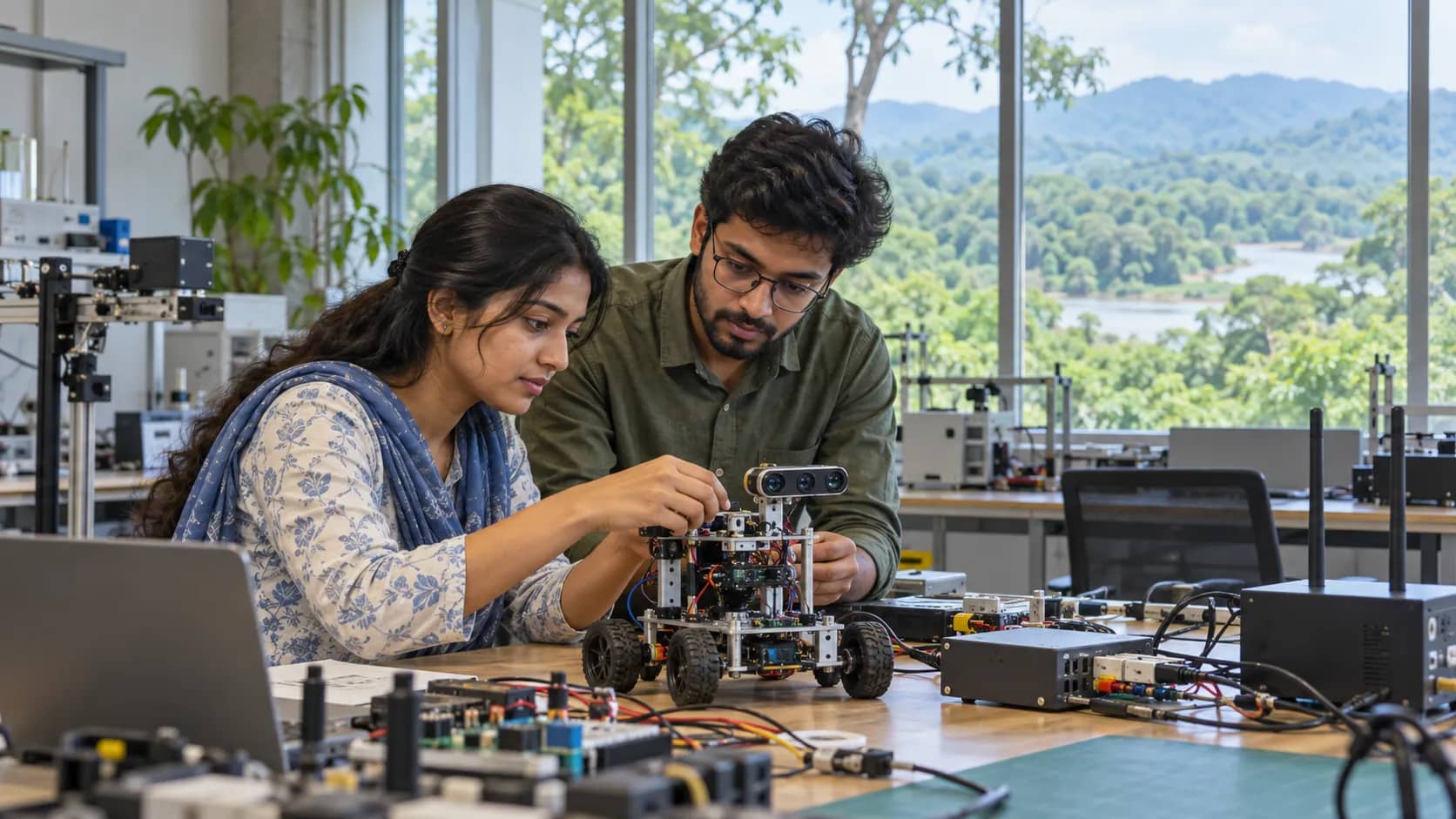
Tezpur University’s October 16 notice invites applications by October 26 for a part-time Electronics and Communication Engineering PhD place. The Autumn 2026 research areas are instrumentation, automation and robotics.
The October 14 notice offers one full-time Computer Science and Engineering place, covering 6G wireless networks and RL/MARL-assisted networking. Both 2026-27 opportunities come under the Visvesvaraya Phase II scheme.
Two places, different entry requirements
Electronics applicants need an ME/MTech in electronics, bio-electronics or allied specialisations, or an MSc in electronics or physics. BE/BTech applicants need electronics or an allied branch, 75% aggregate marks or equivalent CGPA, valid GATE score and at least two recommendations from their degree-awarding institution.
For computer science, the postgraduate list covers ME or MTech qualifications in computer science and engineering, IT or electronics, plus MCA or MSc qualifications in computer science or IT. Its BE/BTech route also requires 75% or equivalent CGPA, a valid GATE score and at least two institutional recommendations. Selection considers academic performance and the personal interview.
Electronics applicants must apply online despite the notice’s walk-in-interview wording. Its shortlist is due October 28, followed by interviews on October 30.
CSE also lists an October 26 deadline, October 28 shortlist and October 30 interviews. Required documents include age proof, school records, degree certificates and transcripts, category proof where applicable, and available test-score, publication and experience records. Semester marksheets and publications must be compiled as directed.
Application route and documents
The university directs applications through its 2026-27 admissions page. At checking, that page displayed a Visvesvaraya link labelled for CSE, alongside the separate ECE notice. The linked application system could not be independently checked for this report. ECE applicants should confirm the correct programme selection with the department before paying.
The non-refundable application fee is Rs 1,000, or Rs 500 for SC, ST and PwD candidates, separate from admission charges.
Funding is not the same for both routes
The scheme’s published guidelines distinguish monthly support from a completion award. Full-time support is listed at Rs 38,750 a month during the first two years and Rs 43,750 during years three to five, ending earlier if the PhD is completed. The part-time route instead provides a one-time Rs 3 lakh incentive after successful completion, subject to the scheme’s conditions.
The part-time scheme is intended for working professionals and excludes those receiving another Central or state government PhD fellowship, scholarship or stipend. Full-time support also has restrictions on other government PhD funding. Continued eligibility requires satisfactory standing; institutions submit annual performance reports. An admission offer therefore should not be read as unconditional funding for the maximum period.
Research-contingency support of Rs 1.20 lakh a year is routed to the institution, rather than added to the scholar’s monthly payment. International-conference assistance has separate conditions, including an accepted oral paper and eligibility from the third year. Overseas laboratory visits likewise require a separate proposal and approval, not merely admission.
Admission fees are separate
The linked 2026 prospectus lists admission-stage totals of Rs 23,993 for full-time hostellers, Rs 16,493 for full-time non-hostellers and Rs 17,850 for part-time scholars. Their semester-fee entries are Rs 17,143, Rs 12,643 and Rs 14,000 respectively. Figures checked October 20, 2026, at 12:36 pm IST. SC/ST students are exempt from the Rs 675 semester hostel-seat rent. Students up to age 30 pay an additional Rs 143 per semester for health insurance.
The totals include a one-time Rs 1,850 non-refundable component and a refundable caution deposit, Rs 5,000 for hostellers or Rs 2,000 for the other two categories. They are not a quotation for the complete doctorate or all living expenses. The prospectus also requires original supporting documents, self-attested copies, a character certificate, a medical certificate and the migration certificate at the relevant admission stage.
Fellowship administration is separate from university admission. The National Scholarship Portal’s 2026-27 fellowship page lists both Visvesvaraya categories and says One Time Registration is required to receive fellowship support. The portal describes OTR as a single identifying number that remains valid throughout the candidate’s academic career. It does not replace the university’s application or selection process.
Readers comparing research opportunities can also consult Dalimss News’ separate reports on Calicut’s PhD application window and IBAB’s January intake. Each institution sets its own qualifications, selection steps and funding conditions.