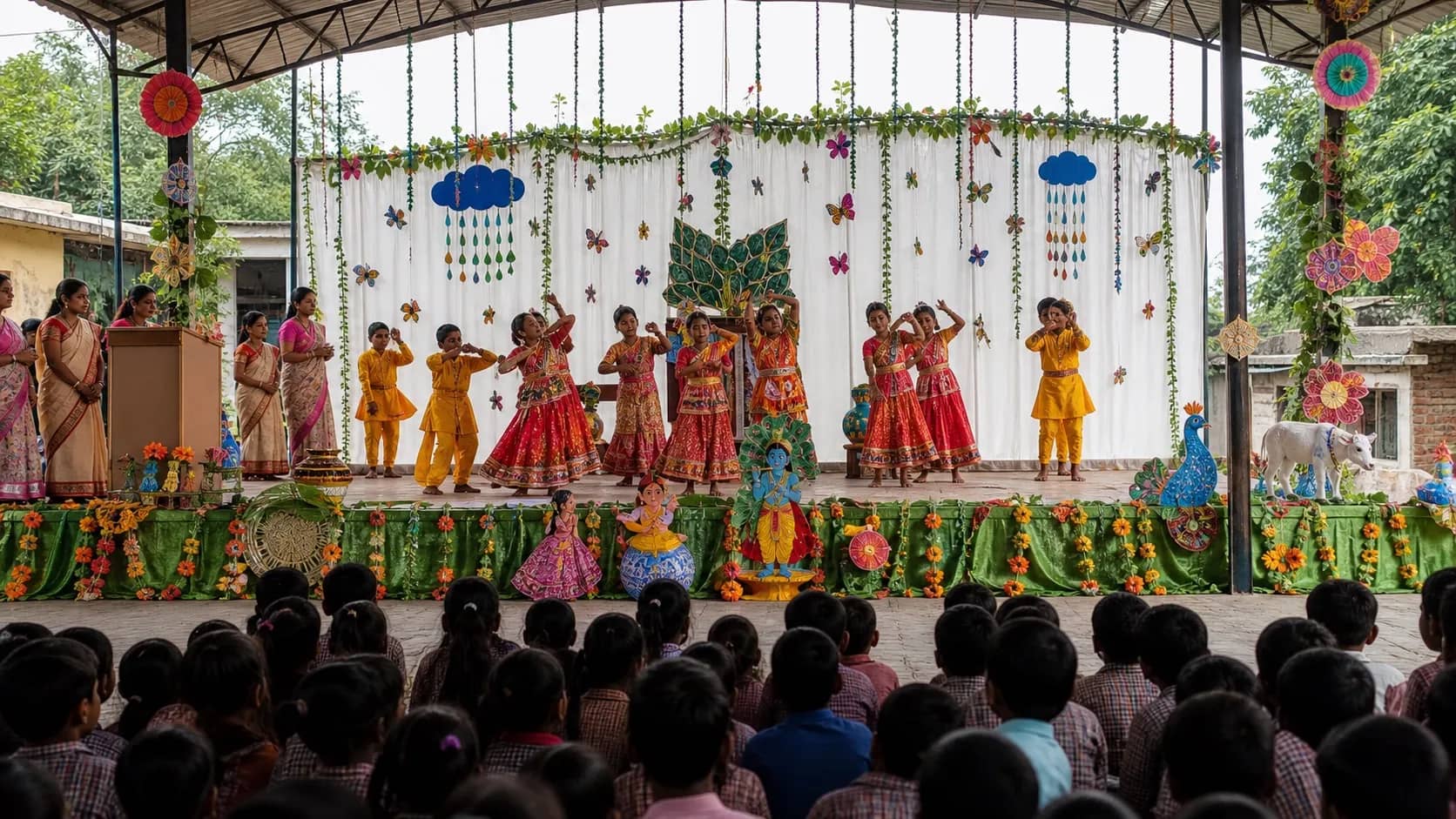
VARANASI: Students at PS Public School in Mehdiganj marked the Sawan season with a combined Raksha Bandhan and Janmashtami cultural programme, using dance, music and short dramatic presentations to connect two festivals that arrive close together on the school calendar.
The event opened with the lighting of a lamp and Saraswati Vandana. Classrooms and the performance area were decorated with green balloons and flowers, echoing the colour traditionally associated with the rains. Students then presented scenes from Krishna’s childhood, Radha-Krishna performances, Sawan songs and dances centred on the bond celebrated at Raksha Bandhan.
Chairman Amarnath Patel, director Dinesh Patel, principal Kalpana Sharma and manager Uttam Patel attended the programme. Prizes were distributed to participating children. Teachers worked behind the scenes on costumes, music and rehearsals, turning the celebration into a collaborative exercise rather than a sequence of isolated performances.
School festivals can appear light beside examinations and classroom targets, but they teach skills that formal lessons rarely capture. A child who learns a group dance must keep time, remember a position and recover when a cue is missed. A student on stage learns to speak before an audience; those working on props discover that a performance depends on preparation no one sees.
Combining Raksha Bandhan and Janmashtami also allowed the school to discuss festivals as stories and social practices, not simply holidays. Teachers can use such programmes to explain regional variations, the role of music and craft, and the values families attach to celebration. That approach is more inclusive than expecting every child to arrive with the same experience.
The green Sawan theme gave the programme a local seasonal anchor. In the Varanasi region, monsoon songs, swings and Krishna imagery are part of a shared cultural vocabulary. Children encounter them in homes, temples, television and neighbourhood events; school provides a place to interpret those references creatively.
Organisers also have a responsibility to keep competition proportionate. Recognition can encourage effort, but participation should not become a test of expensive costumes or parental spending. Reusable decorations, school-provided materials and group awards can keep the focus on performance and learning.
The Mehdiganj programme ended with prizes and photographs, but its useful result will surface later: in children who are a little more confident, attentive to one another and curious about the stories they performed. Parents and teachers can build on that curiosity through music, reading and conversation after the event. For a school cultural day, that is a stronger outcome than spectacle alone.