Maharashtra Plans High-Level Panel to Reform Recruitment Exams
The Maharashtra government will constitute a high-level committee to recommend reforms to the system used for public recruitment examinations, Chief Minister Devendra Fadnavis said on Wednesday. The initiative is intended to examine the process across the state and strengthen safeguards around competitive tests taken by large numbers of young job seekers.
The committee is expected to visit each division and consult stakeholders rather than work only from Mumbai. That is a useful design choice if it is carried out seriously. Recruitment conditions differ across districts: candidates may travel long distances, test centres may have uneven digital infrastructure and local administrators may face different security pressures. A reform plan needs to account for those realities without creating different standards for different places.
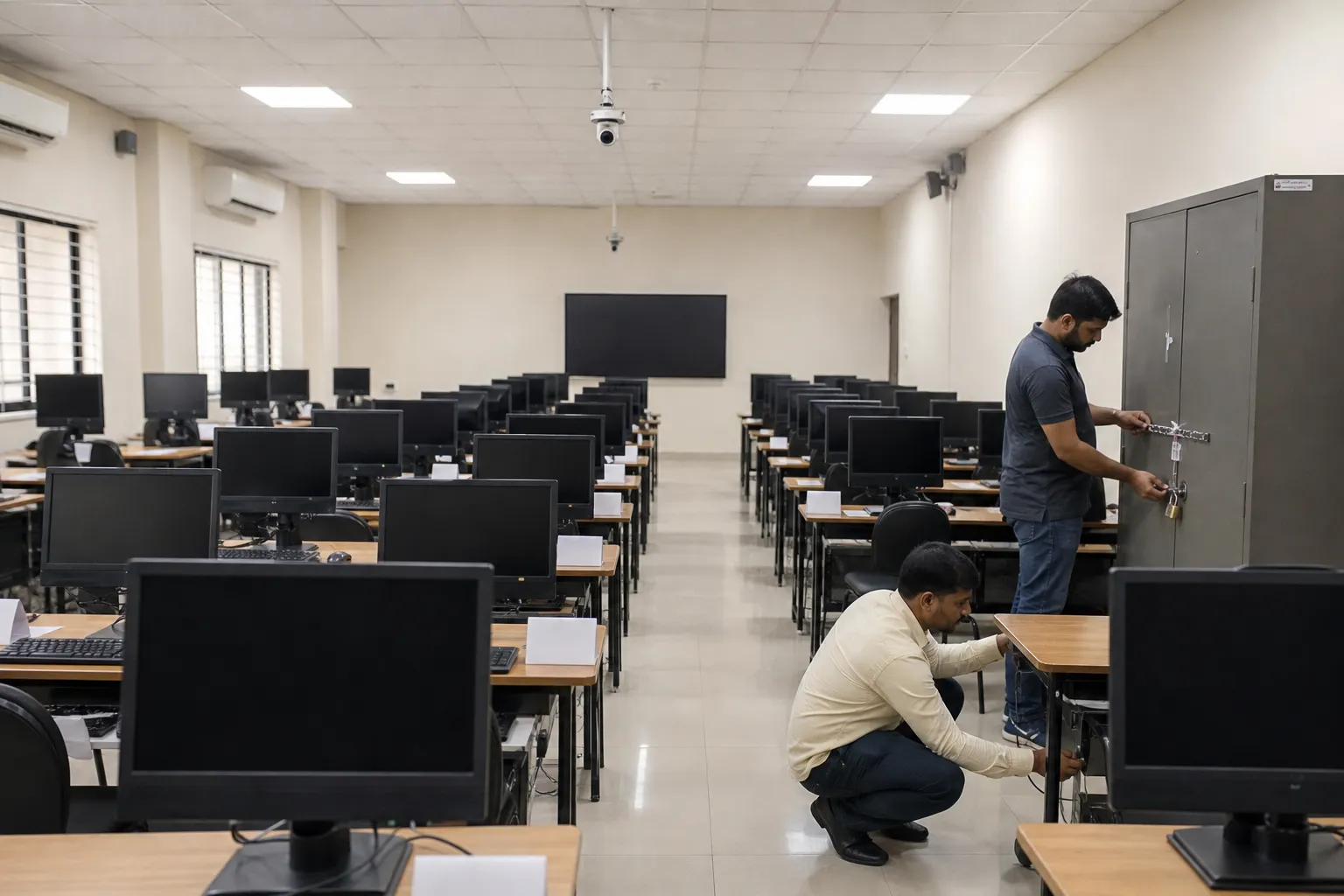
The government has also discussed establishing a large network of secured classrooms for competitive and recruitment examinations. Reports put the proposed number at at least 25,000. A permanent, monitored test-centre network could reduce dependence on hastily contracted venues, but hardware alone will not guarantee integrity. Identity checks, staff selection, question-paper handling, server security and an audit trail are equally important.
For candidates, the announcement comes after repeated anxiety about paper leaks, alleged irregularities and shifting examination schedules in public recruitment. A government job examination is not a casual attempt. Many applicants spend months on preparation, travel and application fees. When a process fails, the loss includes both money and an opportunity that may be limited by age rules.
The panel should begin by mapping the entire examination chain. Who creates and moderates questions? How are vendors selected? What happens when a technical incident occurs at one centre? Which official can order a cancellation, and what evidence must be published? A system is easier to trust when responsibility is visible before a crisis.
Vendor accountability deserves particular scrutiny. Computer-based testing can improve speed and standardisation, but outsourcing can also fragment responsibility among a recruiting department, examination agency, software provider and centre operator. Contracts should specify security benchmarks, penalties and access to logs. The state should remain accountable even when a private firm performs part of the work.
Candidate communication is another reform area. A single portal should carry the notification, syllabus, city information, admit card, answer-key window and result. Important changes need a date and version number. Applicants should not have to compare a social-media post with an older PDF to discover which instruction applies.
The committee will also need a deadline. A prolonged review can freeze recruitment or allow departments to continue with the same weaknesses while recommendations are pending. Interim measures—such as common incident reporting, a help desk and minimum centre standards—could be introduced before the final report.
Maharashtra's announcement is ambitious, especially the proposed secure infrastructure. Its success will be measured through ordinary details: whether an admit card is accurate, whether a centre functions, whether objections are answered and whether a result can withstand scrutiny. The committee has an opportunity to replace crisis-driven fixes with a recruitment system designed around integrity, transparency and the time candidates invest in it.
Sources and reporting
Based on the Maharashtra chief minister's announcement and contemporaneous reporting published on 12 August 2026.
Related Stories
Sector 17 Food Court Fire Blasts Two LPG Cylinders
Signature Global Plans 194-Acre Farrukhnagar Villas

Malda Arrest in Chakkarpur POCSO Case
Army Officer Flags Sector 106 C&D Waste Centre

Registrar Tells Aura RWA to Open Park to EWS