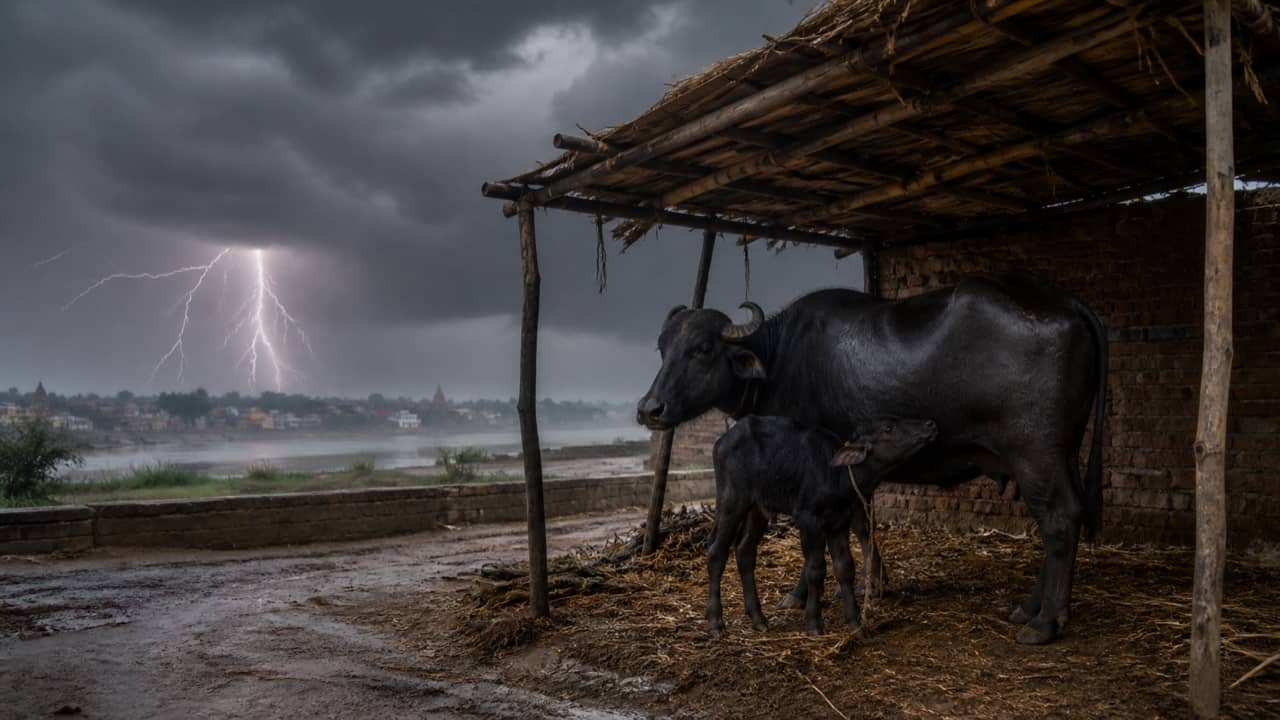
VARANASI: A buffalo and a young calf died after lightning struck close to a cattle tethering area in Babhanpura village of Chirai Gaon during Tuesday night's rain. The animals belonged to farmer Ganesh Yadav, for whom the loss is not simply the disappearance of livestock but a direct blow to household income, milk supply and the savings represented by two valuable animals.
Yadav had fed the animals and tied them near his doorway as on an ordinary evening. During the rain, a lightning strike hit the area and both animals died at the spot, the report said. He informed police and the animal husbandry department on Wednesday. Veterinary officer Dr R A Chaudhary visited after receiving the information and completed the required death certification and post-mortem formalities before the carcasses were buried.
The incident occurred in a familiar village setting where cattle are kept close to the home for security and daily care. That arrangement is practical in dry weather, but an exposed tether, wet ground and nearby metal fittings can become dangerous during a thunderstorm. Lightning does not have to strike an animal directly; current can travel through the ground, fencing, a tree or a conductive tether and affect livestock several metres away.
Cattle remain working assets for many families on Varanasi's rural edge. A milch buffalo can support regular cash flow, nutrition and creditworthiness, while a calf represents future value. Compensation processes therefore matter, but they depend on prompt reporting, veterinary certification, photographs and proof of ownership. The visit and post-mortem recorded in this case are important administrative steps, not ceremonial paperwork.
For Yadav's family, the immediate questions will be whether disaster-relief or livestock-insurance assistance applies and how quickly any claim can be processed. Delays often force a household to borrow for a replacement animal or abandon dairying for a season. Local officials should explain the applicable scheme in writing, identify every document required and provide a receipt when the application is submitted. That is the point at which relief becomes usable rather than theoretical.
The village can also reduce repeat risk before the next storm. Livestock should be moved into a substantial enclosed structure when thunder begins, away from isolated trees, wire fences, electric poles and open water. Metal chains should not be handled during lightning activity. Where shelters have earthing or electrical fittings, those systems need professional inspection; improvising a conductor around a shed can make the danger worse.
The India Meteorological Department's basic rule is simple: when thunder is heard, seek a proper building and remain there until the storm has passed. Farmers caught in open fields should avoid the highest point and should not crowd together under a tree. After any suspected lightning injury, a person or animal may be touched safely—the body does not retain charge—but urgent medical or veterinary help is still essential.
This report is based on a Live Hindustan account published on 26 August 2026. Dalimss News independently rewrote, checked and contextualised the available information. Where a claim, allegation or opinion is attributed to a person or institution, it remains their statement; no on-scene reporting or independent interview is claimed.