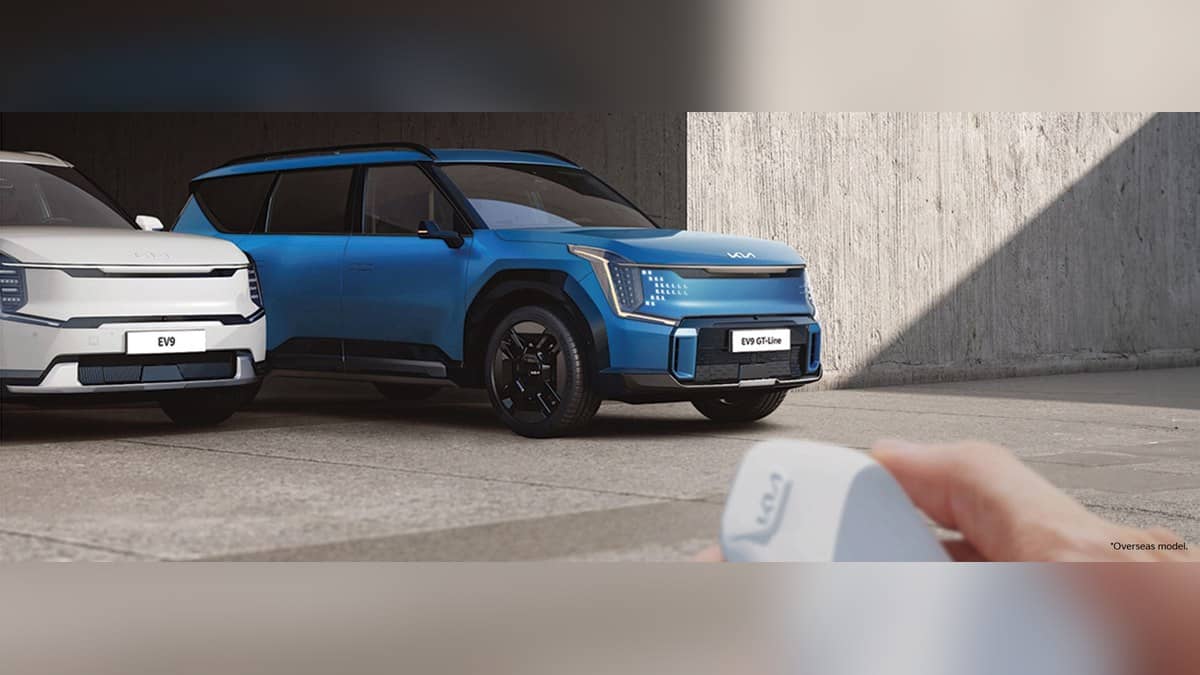
NEW DELHI: Kia's EV9 charging claim is 24 minutes from 10% to 80% using a 350 kW DC charger. It is a defined fast-charging window for the SUV's 99.8 kWh battery. Owners planning a journey should keep the starting charge, finishing charge and charger rating attached to that headline time.
| Charging or battery detail | Official figure |
|---|---|
| India trim | GT-Line AWD |
| Battery capacity | 99.8 kWh |
| DC charging window | 10% to 80% |
| Published time | 24 minutes |
| Charger specified for that claim | 350 kW |
| Certified range | 561 km, ARAI MIDC-Full |
| Vehicle-to-load output | Up to 3.68 kW |
Keep the charging window in the calculation
The specification page explicitly puts the 350 kW rating beside the 10% to 80% interval. The showroom page repeats the time and adds the same charger qualification. Read together, they describe a particular charging scenario. They do not provide a full-charge time or establish how long an arrival at a different battery level will take.
For a family using the EV9 on a highway trip, this changes the question to ask before choosing a stop. Check the charger intended for the visit and the battery level expected on arrival. A location described simply as having fast charging does not, on its own, establish the conditions used for Kia's published time.
There is also a practical distinction between time connected to a charger and the entire halt. Getting into the charging bay, preparing the session and returning to the road are separate parts of the journey. The 24-minute claim cannot be used as a promise that the complete stop, with every activity included, will take that long.
Range and charging answer different questions
Kia publishes 561 km under the ARAI MIDC-Full test description. That certified range is a separate specification from the charging interval. It should not be converted into a guaranteed distance available after the advertised stop, because the two figures describe different measurements. This article does not calculate an assured highway distance from them.
The EV9 also has a substantial electrical and mechanical package around that battery. Kia lists all-wheel drive, two motors and combined torque of 700 Nm. Its showroom material describes the E-GMP architecture and 800-volt charging technology. Those details explain the vehicle's technical positioning, but the explicit charger condition remains essential when quoting its charging time.
Home charging needs a separate plan
Kia's home-charger page lists 7.4 kW single-phase and 11 kW three-phase units. Those are home-charger offerings, not alternative ratings for the DC charging claim. The page does not provide an EV9-specific home charging time, so it would be misleading to attach the 24-minute figure to either home unit.
The same page says installation depends on a site inspection by the charger manufacturer or its designated partner. Installation must be handled by authorised personnel. For someone considering the EV9 for regular use, the useful first step is to establish what the parking space and electrical supply can support before making assumptions about overnight charging.
Kia also describes app-based charging controls and specifies that home-charger support comes through the charger manufacturer via its authorised dealer network. That distinction deserves attention in the paperwork: a vehicle warranty and a separately supplied charger warranty are different documents. Keep the installation record with the charger terms.
Who it is for
This explainer is for EV9 users planning long journeys and households checking whether their regular parking arrangement can support charging. The SUV's large battery, published DC charging window and home installation requirements need to be considered together. A favourable fast-charge headline cannot settle the home-parking question.
Vehicle-to-load is another separate function: Kia lists up to 3.68 kW for supplying external devices. That is an output capability, rather than the speed at which the battery is replenished. Keeping charging input and appliance output apart prevents two very different figures from being confused.
For other ownership details, read our EV9 model guide. Our Kia EV6 overview and Hyundai IONIQ 5 coverage offer related reading for an electric-car shortlist.
Official sources: Kia EV9 showroom, Kia home-charger terms and EV9 technical specifications.