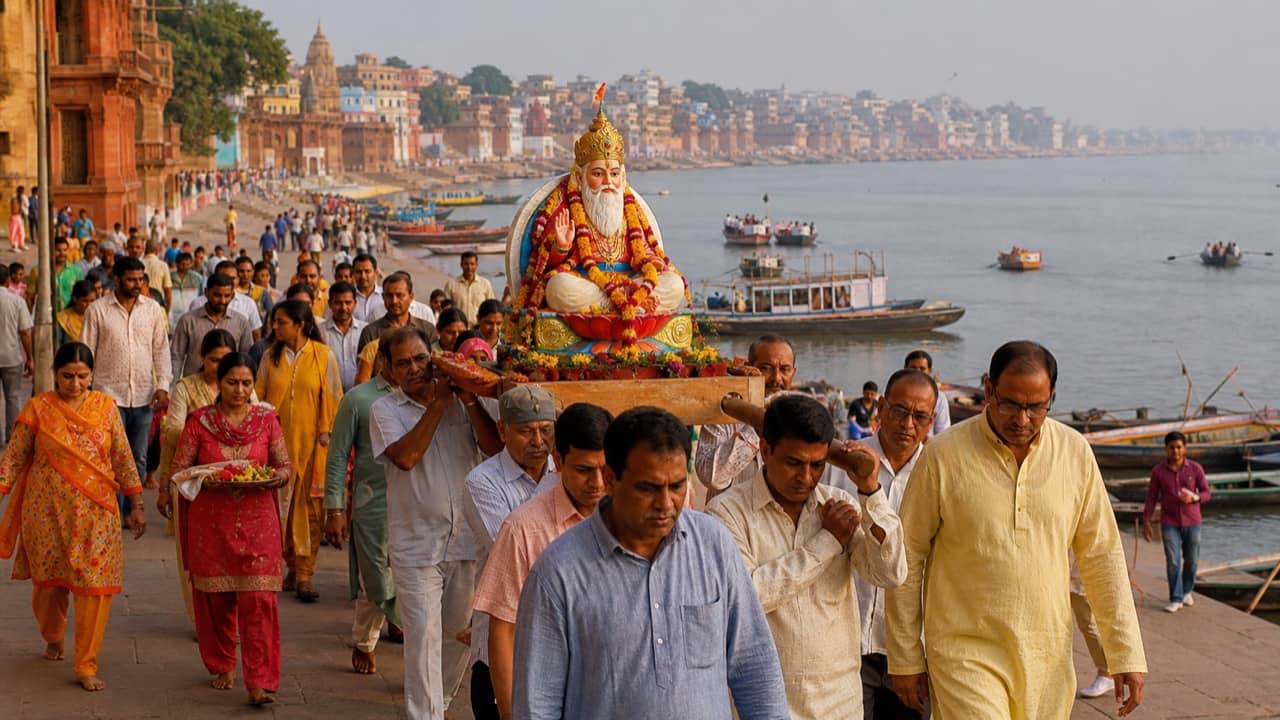
VARANASI: The city's Chalia festival concluded on Tuesday with a Jhulelal procession travelling from the temple in Luxa to Rajendra Prasad Ghat, where devotees performed aarti and worshipped the Ganga. The closing ceremony combined public devotion with a distinctly Sindhi community table: dal pakwan, sai bhaji and Sindhi kadhi were distributed as prasad after the riverside rituals.
The procession moved through Girjaghar, Godowlia and Dashashwamedh before reaching the ghat, the report said. Members of the Jhulelal Bhakt Seva Samiti and local trading bodies took part. At the riverfront, an image of Jhulelal was honoured with aarti and participants joined Ganga pujan. The account listed several community organisers and market representatives involved in the programme.
A route from Luxa to the ghats passes through the city's tourist and commercial centre, where a few minutes of stoppage can reshape movement across multiple lanes. The procession's final descent also requires attention to wet, crowded steps. Volunteers positioned at turns and on the riverfront can prevent elderly participants from being pushed by a group still arriving behind them.
Chalia is associated with devotion to Jhulelal and carries particular importance for Sindhi communities. In Varanasi, its conclusion at the Ganga allows a migrant and trading community's tradition to meet the city's shared river culture. Food is not an accessory to that identity; named dishes and communal distribution make the observance legible to younger generations who may not speak Sindhi fluently.
The programme supports cultural continuity, but the riverfront setting creates environmental responsibilities. Prasad should be served in reusable or compostable material, and flowers, plastic and food waste should not be placed in the river. Organisers can assign a clean-up team before the event begins instead of leaving the task to municipal workers after participants disperse.
A permanent community record should include the route, prayers, food traditions and names of volunteer groups, not only photographs of dignitaries. Oral histories from older Sindhi residents could explain how the festival was observed after families settled in Banaras. That would turn an annual procession into a documented chapter of the city's modern social history.
Visitors at a crowded ghat should keep away from the unguarded water edge and follow instructions from police, boatmen and volunteers. Children should remain with an adult, and footwear should not block steps. The Chalia finale demonstrates how Varanasi absorbs many traditions without making them identical; preserving that openness requires equal care for the route, river and neighbours.
This report is based on a Live Hindustan account published on 26 August 2026. Dalimss News independently rewrote, checked and contextualised the available information. Where a claim, allegation or opinion is attributed to a person or institution, it remains their statement; no on-scene reporting or independent interview is claimed.