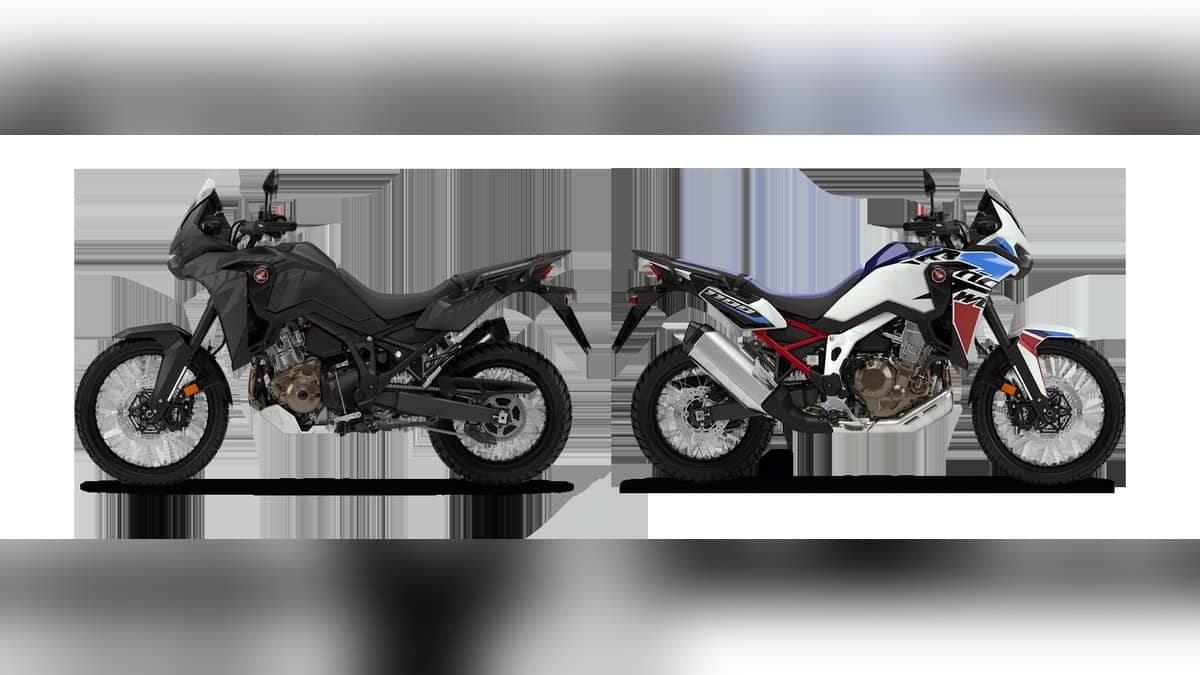
NEW DELHI: Honda Africa Twin owners can check the listed ECU software campaign through Honda India's recall page using their motorcycle's 17-digit VIN or chassis number. The manufacturer says recall repairs are free even outside warranty. The Africa Twin entry concerns unexpected wheelie-control intervention during acceleration, which Honda says can cause loss of balance.
| Check | What the official information says |
|---|---|
| Model entry | Africa Twin (CRF1100) |
| Campaign | ECU software update |
| Identifier | 17-digit VIN or chassis number |
| Repair charge | Free regardless of warranty status |
| Service channel | BigWing or BigWing Topline |
This guide checks a campaign that remains on Honda's public listing, rather than claiming a new announcement today. The manufacturer entry in SIAM's Indian register is dated 24 November 2024. An old campaign date and an individual motorcycle's completion status are different things.
Start with the motorcycle's identity
Locate the VIN on the registration certificate, insurance document or sales or service invoice. Honda also identifies the number stamped on the motorcycle's frame as a source. Open the Africa Twin entry on the official recall page and use its VIN-check function.
Copy the identifier carefully from the document being used. The registration number on the number plate is a different identifier. Keeping the document beside the screen makes it easier to catch a transcription error before treating a failed search as a reliable result.
The purpose of this check is narrow: establish whether Honda associates that particular motorcycle with the campaign. A matching model name, a similar paint scheme or a discussion about another owner's bike cannot provide that answer. If the website result is unclear, have the service centre verify the identifier and campaign record.
Why this is a software campaign
Japan's transport ministry published a related Africa Twin notice on 21 November 2024. It describes an unsuitable anti-wheelie control program that can prevent the motorcycle accelerating as intended when the rider opens the throttle again after slowing. It identifies a potential fall while turning under insufficient acceleration.
That explanation helps distinguish the concern from ordinary changes in throttle feel between riding modes. The issue described by the regulator is the control program's response in a particular riding situation. Its Japanese vehicle totals and model-year entries are not an eligibility list for India.
For that reason, changing a dashboard setting should not be treated as proof that a software campaign has been completed. The relevant question for the workshop is whether the manufacturer-prescribed ECU action has been performed and recorded against the motorcycle. This follows from the campaign's stated remedy, rather than from a suggested home adjustment.
Wheelie control and DCT do different jobs
Honda's technical background for the Africa Twin describes a six-axis inertial measurement unit working with traction control, wheelie control and cornering ABS. Its account of the earlier model development identifies three wheelie-control levels. These systems are part of the motorcycle's electronic riding assistance.
The same Honda background explains that Africa Twin models were offered with manual transmission or Dual Clutch Transmission. DCT manages clutch operation and gear changes, while wheelie control addresses a different part of the motorcycle's behaviour. The presence of automatic shifting therefore does not, by itself, answer an ECU-campaign question.
This distinction matters particularly on the Africa Twin, where an owner may know the machine primarily as the manual or DCT version. Those labels are useful descriptions of the transmission. The VIN and recorded campaign action provide the more precise basis for identifying an affected vehicle.
Keep a clear completion record
When arranging the visit, identify the ECU campaign by name and ask how the workshop will record its completion. Keep the resulting service document with the motorcycle's history. This is practical record keeping, especially when a previous owner or an earlier workshop may already have dealt with the same campaign.
Do not infer completion from a routine service stamp alone. A service record that names the software action is easier to interpret later than a general maintenance entry. Equally, a recall listing is not a diagnosis that every motorcycle bearing the Africa Twin name has the fault.
Other relevant reading includes our Honda Rebel 500 recall report, Ducati Multistrada V2 guide and Honda XR300L and XR300 Rally report. This Africa Twin check concerns its published software campaign, with the result determined for each motorcycle.
Official sources: Honda India recall page and instructions, manufacturer recall register, Japanese regulator's ECU notice and Honda Africa Twin technical background.