Gurugram Trails Haryana in Electoral-Form Digitisation
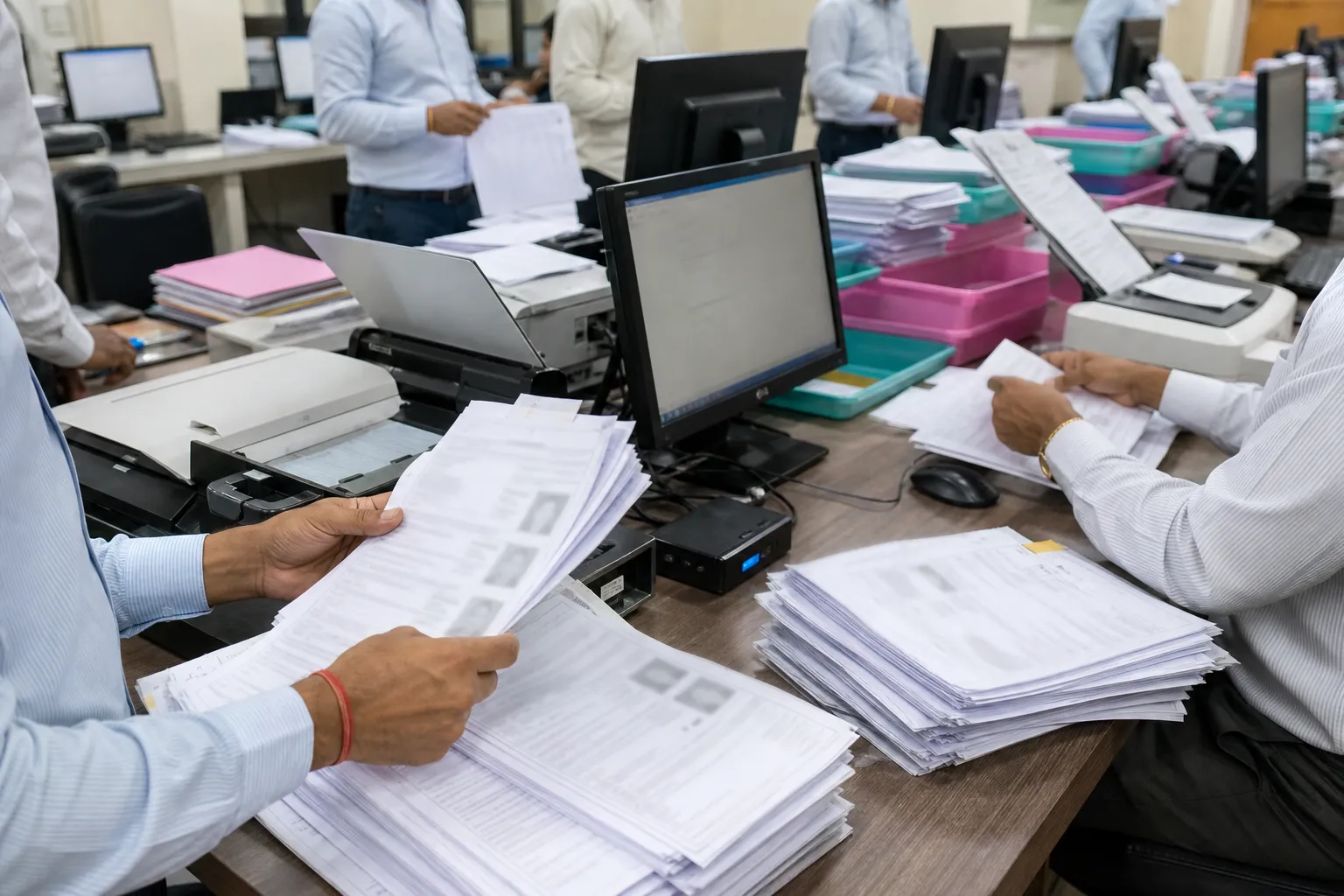
Gurugram has emerged as Haryana's slowest district in the digitisation stage of the electoral-roll revision, with 4,55,128 enumeration forms still pending in the latest district-wise count. Only 70.73 per cent of forms had been digitised, nearly 13 percentage points below the statewide completion rate.
The backlog is unusually large for Gurugram's share of the electorate. The district contains about 7.5 per cent of Haryana's voters but accounted for 13.45 per cent of the state's undigitised forms. Across Haryana, 33,84,336 forms remained pending out of an electorate of approximately 2.06 crore.
The pressure is concentrated in the urban constituencies. Gurugram Assembly constituency had digitised about 60 per cent of 4,50,200 forms, leaving 1,80,078 pending. Badshahpur had improved to 67.41 per cent but still had 1,76,590 forms awaiting digitisation. Sohna, at 80.86 per cent, and Pataudi, at 84.44 per cent, were further ahead.
Digitisation is not the same as voter approval or deletion. It is an administrative step that converts collected enumeration forms into the election database for scrutiny. A pending form therefore should not be casually described as a cancelled vote. Eligibility and roll status depend on verification, claims, objections and decisions taken under the prescribed election process.
Gurugram also had 19,205 forms submitted by electors but awaiting verification by booth-level officers. That second backlog matters because speeding up data entry without resolving verification could simply move the queue from one column to another. Officials need to track collection, scanning, digitisation, anomaly resolution and verification as separate tasks.
The city's population pattern makes the exercise difficult. Large gated communities, rental housing, migrant households and frequently changing addresses complicate door-to-door contact. Residents working long office hours may be unavailable during visits, while booth-level officers can struggle to access secured societies without prior coordination.
RWAs and election officials can reduce that friction by announcing booth-level camps, publishing help-desk schedules and explaining which documents are required. Messages should clearly distinguish this revision from new enrolment, correction and transfer applications so that voters do not submit the wrong form or assume an old address will update automatically. Multilingual notices and evening camps would help tenants, domestic workers and shift employees who are often missed by daytime visits.
The data snapshot identifies a capacity problem, not a verdict on the final roll. Gurugram's administration should now publish frequent constituency-wise updates and a simple way for residents to check whether their form is collected, digitised, under verification or flagged for correction. In a mobile city, transparency is the best defence against both genuine exclusion and unnecessary panic.
Sources and reporting
Based on district and statewide electoral-roll revision data reported at 4 pm on July 24, including constituency-level digitisation and pending BLO verification figures.
Related Stories
Court Issues Arrest Warrant for HSVP Brass
MCG Finalises Sohna Site for Fresh Waste

GMDA Seeks Station-Wise Metro Parking Plans

Thar Rams Rapido Cab After Sector 89 Quarrel
FDA Raids 3 Outlets Over Paneer Quality